AR Optics · Upgrade Guide · 2026
Quick Answer
A red dot sight is built for 0–100 yards and fast target acquisition. For distance, stability, and consistent zero, three upgrades actually matter: a 3x or 6x magnifier (or an LPVO past 200 yards), a bipod matched to your handguard (M-LOK, Picatinny, or Arca Swiss), and properly torqued scope rings at the right height. Most red dot zero-shift complaints are a rings problem, not an optic problem.
Key Takeaways
- A red dot sight is a starting point, not the end. It is purpose-built for fast, both-eyes-open close-quarters work, usually inside 100 yards.
- Magnifier is the cheap distance upgrade. A 3x or 6x magnifier sits behind the red dot, flips out of the way, and preserves your 1x speed. Cheaper than an LPVO.
- Bipod is the cheapest accuracy gain. A mlok bipod, Picatinny bipod, or arca swiss bipod removes human wobble. Choice depends on handguard and tripod workflow.
- Scope ring mounts are the silent zero-shift cause. Most red dot complaints trace to wrong-height or under-torqued rings, not the optic itself.
- Re-zero after every mount change. A $25 ring set, installed correctly, often fixes problems a $300 optic upgrade won't.
01The red dot ceiling
A red dot sight does one thing exceptionally well: fast, both-eyes-open target acquisition inside 100 yards. Outside that, a 1x optic is doing identification and hold work it was never built for. At 200 yards, a 2-MOA dot covers a 4-inch circle — a coyote can be a fencepost, a whitetail a stump.
Past 100 yards, the answer is either an LPVO, a magnifier behind the red dot, or accept the limitation. The third option is fine for the range. Not for hunting or defensive work, where the answer has to be right the first time.
02Upgrade 1: a magnifier (or an LPVO) for distance
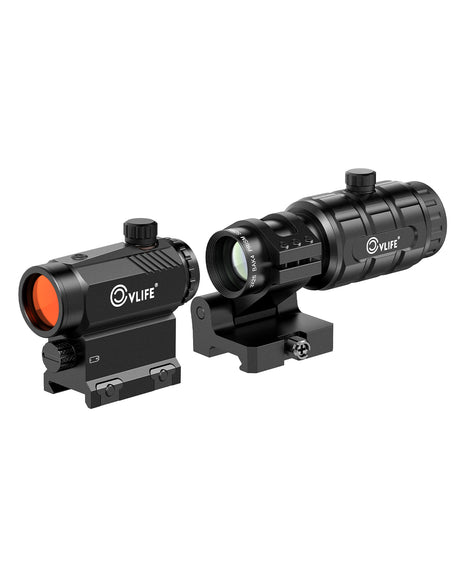
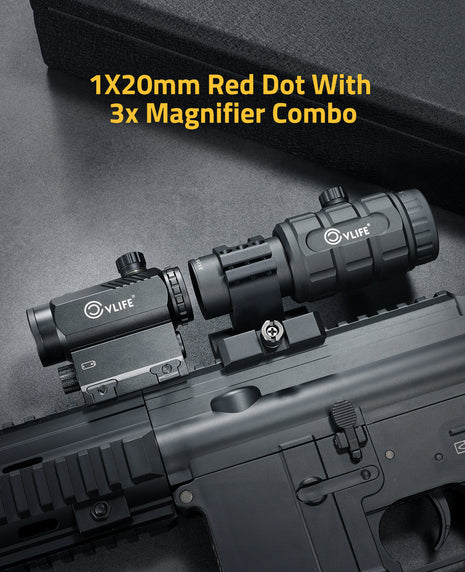
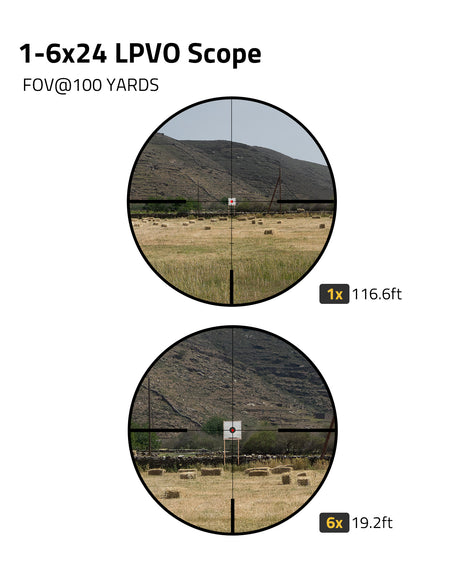
A magnifier is a 3x or 6x optic that sits behind the red dot on a flip-to-side mount. Down, you have a 1x red dot at full speed. Up, you have 3x or 6x for identification and hold work. Magnifiers have no reticle and need no separate zero — the red dot's zero carries over because the magnifier sits in a fixed position behind it.
For most AR users, a magnifier is the right first upgrade: cheaper than an LPVO, preserves close-quarters speed, adds the distance a red dot alone cannot deliver. Past 200 yards, or for shooters who want a single variable optic, an LPVO is the better replacement.
 Red dot + magnifier on the flattop. The magnifier flips out of the way when you don't need it.
03Upgrade 2: a bipod for stability
A red dot is only as accurate as the platform it sits on. A bipod removes human wobble and is the single cheapest accuracy gain. Three mounting styles cover the field:
- M-LOK bipod — for modern M-LOK handguards. Slim, sits close to the rail. The right default for most ARs built in the last five years.
- Picatinny bipod — for traditional rails or replaceable-rail sections. Heavier, but more universal.
- Arca Swiss bipod — for shooters who also run a tripod with an Arca clamp. The bipod becomes a quick-detach handle that shares the same clamp interface as the tripod head.
For hunting, an M-LOK bipod is usually the right choice. For competition or precision work off a tripod, Arca Swiss pays back the weight in workflow speed. Off a bench, expect 1-MOA groups from a 1-6x LPVO on a bipod — off-hand, even a 3x magnifier will not fix wobble.
04Upgrade 3: proper scope ring mounts
Most red dot zero-shift complaints are not about the optic. They are about the rings. Two failure modes dominate.
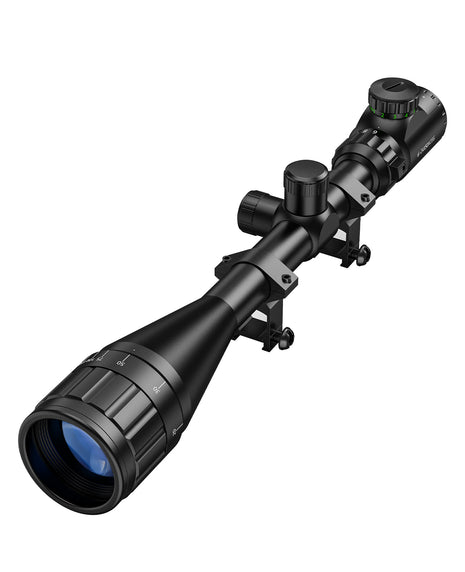
Wrong height. Rings that are too tall push the optic up off the rail, changing head position and exposing the sight to more leverage under recoil. Rings that are too low (or that bottom out on the rail) lock the optic unevenly across the two caps. For a red dot, low rings or absolute co-witness (about 1.5″) are the default. For an LPVO, mid-height rings (about 1.7″, lower 1/3 co-witness) keep the ocular bell clear of the rail.
Wrong torque. Ring cap screws are almost always under-torqued. Steel: 65–80 in-lbs. Aluminum: 20–30 in-lbs. A quarter-turn past snug is not enough — it is the cause of more red dot complaints than any other single factor. A $20 inch-pound torque driver is the cheapest piece of reliability gear in your range bag. If your red dot loses zero after every range session, the rings are the problem before the optic is.
054 common mistakes with a red dot setup
- Skipping the magnifier and going straight to an LPVO. If you do most of your shooting inside 50 yards, the LPVO at 1x is heavier and slower than a red dot. Add a magnifier instead.
- Mounting the bipod on the wrong interface. A Picatinny bipod on an M-LOK handguard requires a Picatinny rail section. Mismatched mounts are the leading cause of bipod walk under recoil.
- Under-torquing the ring caps. Snug is not enough. Use a torque driver.
- Not re-zeroing after a mount change. Every mount, ring, or rail change shifts the red dot. Three-shot groups at 25 yards should land inside the dot's MOA; if they don't, fix the mount.
064-step upgrade plan
- Add a magnifier first. Lowest cost, highest immediate payoff. Preserves your existing red dot zero.
- Mount a bipod matched to your handguard. M-LOK for modern, Picatinny for traditional, Arca Swiss for tripod workflows.
- Replace or re-torque your rings. Low rings for a red dot, mid rings for an LPVO. Torque to spec.
- Re-zero and confirm. Three-shot groups at 25 yards inside the dot's MOA. The red dot is now earning its weight.
07FAQ
Is a magnifier or LPVO better for an AR red dot?
A magnifier is cheaper and lets you keep your existing red dot. An LPVO costs more but gives you true variable magnification in one optic. For most AR users, the magnifier is the better first upgrade; an LPVO is the better replacement if you shoot past 200 yards regularly.
What bipod mounting style should I choose?
M-LOK bipod for M-LOK handguards (most modern ARs). Picatinny bipod for traditional or replaceable-rail setups. Arca Swiss bipod if you also use a tripod with an Arca clamp — the bipod becomes a quick-detach handle that shares the same interface as the tripod head.
Do I really need a magnifier if I have a red dot?
Not always. A red dot alone is enough for 0–100 yard work. The moment you push past 100 yards — or you need to identify a target before shooting — a magnifier earns its weight. The cost of a 3x magnifier is much less than re-training on a different optic.
What scope ring height should I use for a red dot?
Absolute co-witness rings (about 1.5″) or lower 1/3 co-witness (about 1.7″) if you also run backup iron sights. If you don't run BUIS, low rings keep the red dot at natural cheek height and reduce the visual profile.
What is the cheapest meaningful upgrade for a red dot setup?
Proper scope ring height and torque. Most red dot zero-shift complaints trace to rings that are too tall, too short, or not torqued to spec. A $25 ring set, installed correctly, often solves problems a $300 optic upgrade won't.