What the base carbine actually is
Four specifications, and each one decides something downstream.
| Spec | Value | What it decides |
|---|---|---|
| Barrel length | 14.5 in | The longest length that keeps the weapon a carbine under the regulation definition, without the velocity loss of a 10.3 in short barrel |
| Twist rate | 1:7 | Stabilises the heavier 5.56 projectiles, notably the 62-grain class and tracer loads |
| Gas system | Carbine length | Shorter dwell than mid-length; reliable in the cold and with a suppressor on, less soft than a mid-length |
| Receiver | Flat-top, rail | Defines the mounting interface that all the optics on this page attach to |
The accessory system, not the accessory list
SOPMOD is the reason two issued rifles look different in the same year.
SOPMOD — Special Operations Peculiar Modification — is a programme for making the M4A1 modular, and its central design idea is that the accessories are a kit rather than a fixed package. A unit draws what its mission needs from the kit, which is why there is no single correct issued configuration, only correct configurations for particular kit blocks.
| Kit element | What it is | What it changes about the rifle |
|---|---|---|
| Rail interface | Free-float rail replacing the drop-in handguard | Lets accessories mount without touching the barrel, protecting zero and grouping |
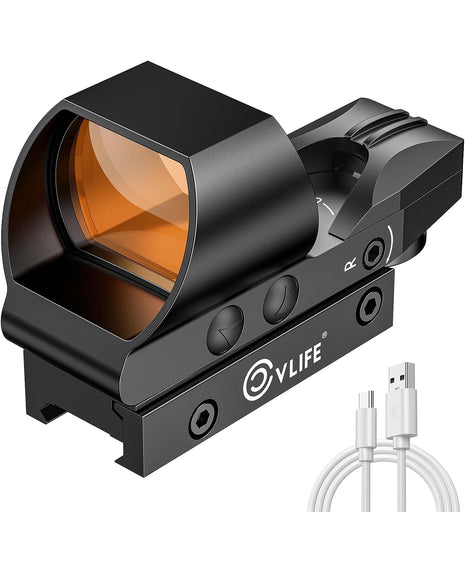
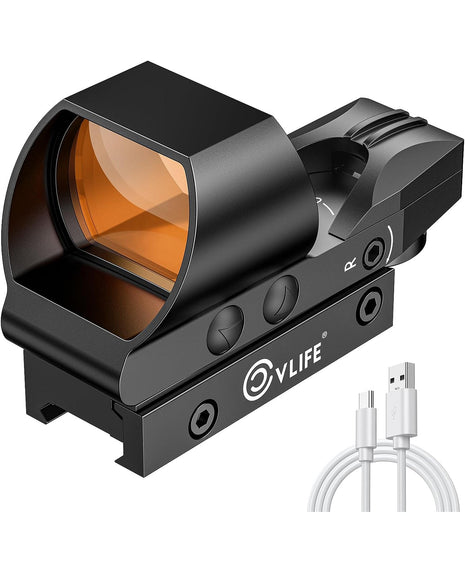
| Day optic | Sighted optic in the Block II kit, holographic or magnified, unit-dependent | The single largest difference between two "standard" setups |
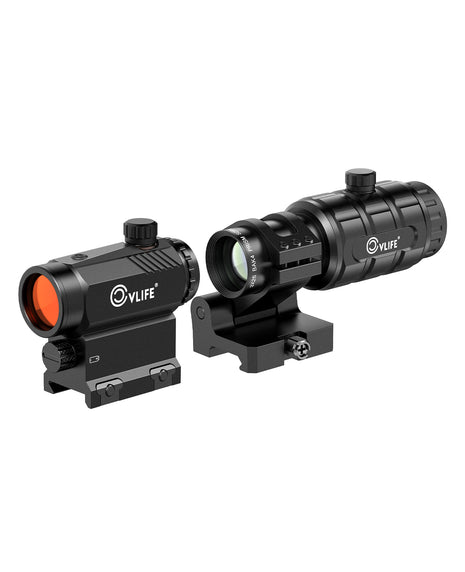
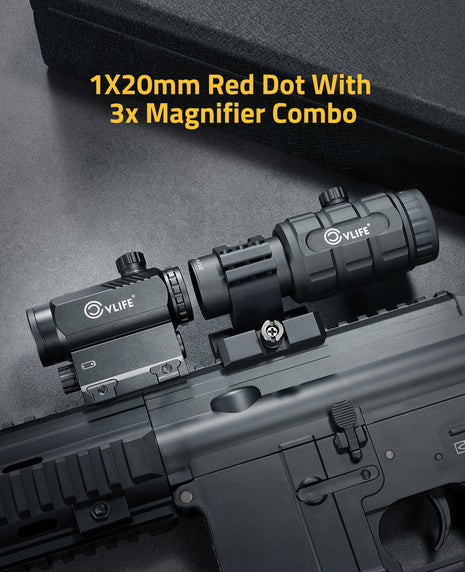
| Magnified optic | Dual-role sight in the kit for units that need mid-range reach | Adds target identification and holdover capacity at the cost of weight |
| Laser and illuminator | Pressure-switch laser designator | Passive-aiming and designation capability, not a shooting aid |
| Weapon light | Rail-mounted white light | Target identification in structures, and the weight that goes with it |
| Suppressor | Quick-attach can | Signature reduction, and a change to gas behaviour and point of impact |
URG-I: the upper that replaced Block II
An upper conversion kit, not a new rifle.
The URG-I is often described as a new carbine. It is not: it is an upper receiver group that replaces the previous one, built around a standard M4/M4A1 upper with a Geissele MK16 free-float rail and a Daniel Defense barrel, plus a pinned low-profile gas block. It was originally specified in two lengths — a short variant and a 14.5-inch variant — and the 14.5 is the one most clone builds reference.
| URG-I element | Detail | Compared to Block II |
|---|---|---|
| Rail | Geissele MK16, picatinny top, M-LOK compatible on the sides and bottom | Lighter mounting interface, fewer sharp edges, wider accessory choice |
| Barrel | Daniel Defense government-profile, 14.5 in, pinned gas block | Comparable length, revised profile and gas block arrangement |
| Gas | Low-profile pinned block; mid-length on the 14.5 variant | Softer cycling than the carbine-length Block II arrangement |
| Muzzle | Pinned-and-welded four-prong device for civilian length compliance | The 16 in rule is satisfied at the muzzle rather than the barrel |
| Charging handle | Ambi latch design | Practical improvement for one-handed operation |
The practical takeaway for anyone building a reference gun today: the URG-I configuration is the modern one, and the mounting interface is easier to accessorise than the free-floated Block II rail it replaced. The M-LOK compatible slots on the MK16 are the reason modern builds reach for M-LOK parts instead of the older systems.
What changed in 2026: the replacement story moved twice
2022. The Next Generation Squad Weapon programme selects a 6.8mm rifle and a companion automatic rifle. The rifle is first designated XM5, then XM7.
March 2024. First unit fielded with the M7: 1st Battalion, 506th Infantry Regiment.
May 2025. Type Classification – Standard is announced for the M7 rifle and the M250 automatic rifle. Fielding expands across the close combat force to replace the M4A1 and the M249.
March 2026. The carbine variant of the M7 is designated XM8 and assigned a national stock number — a shorter, lighter configuration for close combat handling.
April 2026. First XM8 delivery accepted under the NGSW programme.
October 2026. Fielding of the M8 is confirmed to begin in December 2026, with early units at Fort Bragg. The M8 is described as more than a pound lighter with a barrel about 3.5 inches shorter than the M7.
The correction
The M4 is not being replaced by the M7
It is being replaced by a shorter, lighter 6.8mm carbine designated M8, fielding from December 2026. The M7 was type-classified and fielded, and its carbine variant became XM8 in March 2026 — but the weapon that will actually stand where the M4 stood is the lighter variant.
- Most published answers still describe the M7 as the M4 replacement, because that was accurate through 2025
- At least one service branch has said it will keep its own infantry automatic rifle rather than convert
- The 5.56mm M4A1 remains in wide service and is not being withdrawn wholesale
Sources for the 2026 timeline: Defense News on the M8 fielding date and Army Recognition on the M8 configuration.
The round, and why the change is not only about the rifle
6.8mm is the part that survives every redesign.
The cartridge is the 6.8x51mm Common Cartridge, commercially sold as .277 Fury. It is intended to replace 5.56mm for close-combat units, and it is the one element that has not changed as the rifle has been redesigned twice: a shorter barrel and a lighter receiver change how the weapon handles, but the cartridge is what changes what the weapon can do at distance and against barriers.
Weight is the recurring objection, and it is a real one: a heavier rifle, a heavier magazine and a heavier round compound across a full load. That is the tension the lighter M8 variant is designed to relieve, and it is the honest reason a fielding programme that began in 2024 has already been redesigned before it finished.
How the issued optic line actually evolved
Three phases, and each one answers a question the previous phase could not.
| Phase | What sat on the rail | Problem it solved | Problem it left |
|---|---|---|---|
| Iron sights only | Rear aperture and front post | Zero cost, zero battery, no failure mode | No advantage in low light, no target discrimination past 100 yd |
| Holographic day optic | Non-magnified holographic sight with a magnifier available | Fast both-eyes-open aiming at close range | Magnifier must be flipped in and out; the far role remains compromised |
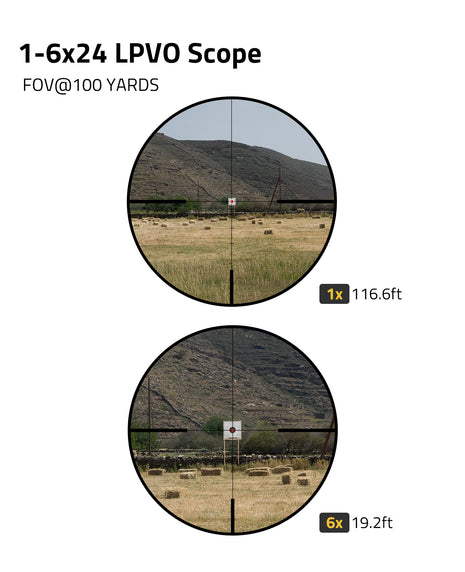
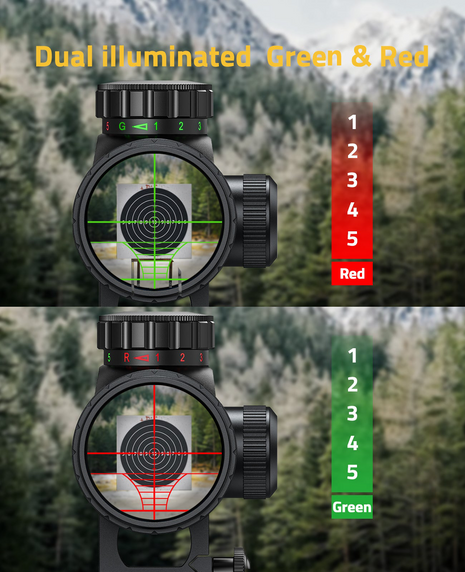
| Dual-role magnified | Low-power variable sight, 1x at minimum, magnified at maximum | One optic that covers the room and the field edge | Weight, cost, and a reticle that must be usable at both ends |
That progression is the same one a civilian buyer walks through, at a much lower price, and it is the reason the low-power variable format dominates modern carbine recommendations. Each phase is a correction to the previous phase's limitation rather than an improvement in absolute terms — a holographic sight at 1x is still faster than a variable at 1x, which is why units kept both for a long time.
What a civilian buyer should take from this
Reference, not imitation.
The issued configuration is a set of choices made under procurement constraints — weight limits driven by load carriage, cost limits driven by volume, and optics chosen from a qualified supplier list. Copying those constraints onto a sporting rifle usually costs function, because the constraints no longer apply.
Variable optic over fixed magnification
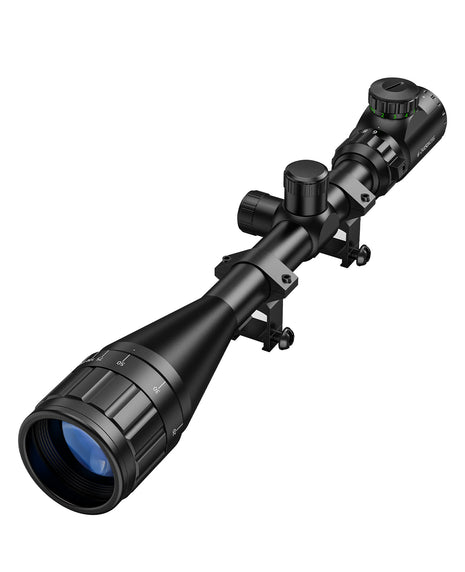
The era's magnified kit sights were heavier and less flexible than a current variable. A 1-6x24 second-focal-plane covers the same two jobs at a fraction of the weight.
Dot sight for the close role
Motion-awake enclosed dot sights answered the battery question that older designs never solved.
Support gear that matters more than the rifle
A bipod and a stable rest improve practical precision more than a marginally better receiver does.
Range bag and carry
Transport and organisation are the parts of a kit that get used every session, and the parts that most buyers under-budget.
If you want to read the actual optics categories rather than a clone list, start with the rifle scope collection, the dot sight collection and the bipod collection. If what you are really chasing is the look, the LPVO configuration is the closest modern equivalent to the magnified kit sight, at a weight the era's version could not manage.
November 27
A surprise offer is opening on Black Friday
A surprise offer opens on Black Friday itself and will be posted on the store front page on the day — no third-party code required.
- Details drop on November 27, 2026
- Watch the store front page
- Decide which piece of your setup is missing now, so the window is one page rather than forty
Where issued configuration stops and safety starts
A configuration file is not a training programme.
Knowing what is issued does not tell you how to run a rifle safely. Mounting, zeroing, confirming holds and muzzle discipline are separate skills, and the NSSF shooting safety material is the reference for the range procedure.
Questions this raises
Eight, in the order they get asked.
What is the standard M4 setup?
14.5 in barrel, 1:7 twist, carbine-length gas, collapsible stock, flat-top rail. Accessories come from SOPMOD kit blocks rather than one fixed package.
What replaced SOPMOD Block II?
The URG-I upper receiver group: a standard upper with a Geissele MK16 rail, Daniel Defense barrel and pinned low-profile gas block. An upper conversion, not a new rifle.
Is the M4 being replaced, and by what?
On paper by the 6.8mm NGSW. In practice the specific weapon changed: M7 type-classified in 2025, carbine variant designated XM8 in March 2026, lighter M8 fielding from December 2026.
What round does it use?
6.8x51mm Common Cartridge, sold commercially as .277 Fury. Intended to replace 5.56mm for close-combat units first.
Is 5.56mm going away?
Not wholesale. The M4A1 and M16A4 remain in wide service, and the new round is being fielded to the close combat force before anyone else.
Block I versus Block II?
Block II introduced the free-float rail that lets accessories mount without contacting the barrel, plus the sight, laser and light set. Block I accessories fit a drop-in rail.
Why does my clone build disagree with a photograph?
Because an issued rifle is modified over its service life. The photo is likely a later state than the reference date your parts list is built to.
Should a civilian rifle copy this?
Only as reference. The issued choices exist under procurement constraints that no longer apply to you, and copying them usually costs weight and money for no functional gain.
Written in November 2026; procurement programmes change without notice, and the M8 fielding schedule is stated as announced rather than as completed.