A mount is a height decision before it is a brand decision. The rail sets one fixed line, and everything between the rail and the optic is deciding where the optic sits relative to your eye, the bore, and the primary sight. Get the height and the offset length right and a cheap mount behaves like an expensive one. Get them wrong and a premium mount will still hurt.
01 What a mount is actually doing
Every optic mount on a Picatinny rail performs three jobs. It fixes the optic to a standard rail, it holds that optic at a specific height above the bore line, and it either centers the optic or displaces it forward or sideways. Only the first job is about compatibility. The second and third decide whether the rifle is comfortable to shoot, whether the objective clears the barrel, and whether a close-range shot lands where the reticle says it will.
It is worth separating mounts from sighting hardware in general, because the two get discussed as if they were the same purchase. A pair of offset mounts does not add magnification or light transmission; a red dot mount does not improve an emitter. What a mount buys is position: height, forward displacement, and cant. Everything else in the optics budget is buying glass, and the two are easy to confuse when the same page sells both.
The rail itself is a known quantity: a 1913 Picatinny pattern offers a repeating slot geometry, and a mount's locking plate or recoil lug indexes into that pattern. That means mount selection is rarely a rail question. It is a scope question, an eye-relief question, and a how-the-rifle-is-shot question.
02 Cantilever mounts: the eye relief problem
An AR-15 rail starts at the receiver and extends forward over the handguard. A shooter's eye sits behind the charging handle, which means the natural position of a scope's eyepiece is well behind the point where the rail begins to ride over the handguard. A one-piece cantilever mount solves this by pushing the grip portion forward, extending the mounting surface out over the receiver, so the scope body can sit where the eye needs it.
Cantilever length is a measurement, not a marketing word. A common design moves the ring assembly roughly 2 inches forward of the mount's base. The number to keep in mind is not that figure but the consequence: a mount that is too short puts the eyepiece behind the shooter's cheek and forces a strained neck at high cheek weld; a mount that is too long puts the objective over the handguard with limited room, and can push the scope body past the point where its turret saddle sits at mechanical center.
- Check eye relief first. Fit the empty mount, slide the scope to the point where the full field of view appears with the eye relaxed, then check that the mount's base still covers the rail underneath.
- Keep the scope at its tube center. A scope mounted near the edge of its tube travel will not track as consistently after adjustment, and turret clicks will stop doing what the numbers say.
- Weight is a secondary number. One-piece precision mounts commonly land between roughly 5 and 9 ounces depending on height and material; a lighter mount helps on a light build, a heavier one helps on a hard-recoil build.
03 Offset mounts: why 45 degrees is a geometry problem
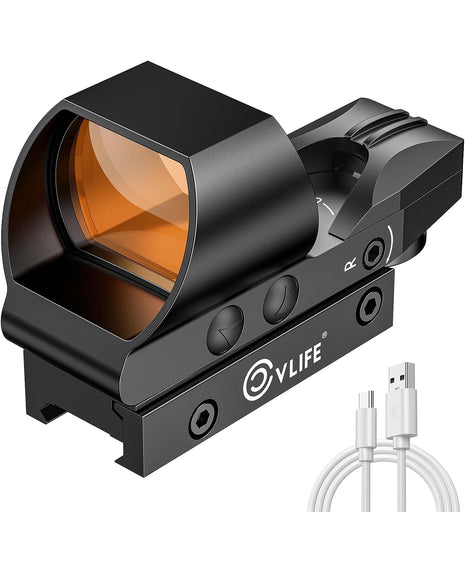
A 45-degree offset mount places a second sight beside the primary instead of above it. The purpose is fast switching without shutting the primary off: with a magnified primary (an LPVO or a conventional scope), the shooter rotates the rifle slightly, brings the eye to the offset dot, and takes the close shot without changing magnification or re-establishing an eyebox. Shooters comparing a 45 degree offset mount for a red dot against a vertical riser are usually deciding between speed and simplicity, and speed is the only reason to accept the geometry cost below.
The geometry has three consequences that are worth planning around:
- Height over bore grows in the horizontal direction too. The dot's optical axis is now offset laterally from the bore. At close range the error appears as a windage shift rather than purely vertical, and the amount grows as the distance shortens. Typical offset designs place the secondary sight center roughly 1 to 1.5 inches from the primary's axis, but the exact figure is the mount's own datum.
- The zero distance changes what "correct" means. A secondary dot sighted at 25 yards will print low at 100 and left at 10. Sight the offset dot at the distance you actually expect close shots, and know where it prints outside that window before you rely on it.
- Cant angle and rail space interact. A 45-degree set consumes horizontal rail space and pushes the sight into the shooter's peripheral view. Some rifles and some handguards simply do not provide the real estate; check the footprint before buying.
04 Risers: when raising a sight is the right answer
A riser lifts an optic vertically on the same rail. Common heights land around 0.8 to 1 inch, and some adjustable stems move further. The reasons to raise a sight are specific:
- Cheek weld and stock design. An AR 15 scope riser earns its place when a stock with a high comb leaves a low sight buried in the cheek: the riser brings the optic to eye level rather than lowering the head into the stock. On a traditional sporter stock the same riser may make the cheek weld worse.
- Backup sights under a primary. A riser can bring a dot to a lower-one-third reference so the backup iron is visible under the dot instead of behind it.
- Mask, helmet, or high-mount eye line. A higher sight line keeps the eye clear of gear that sits near the cheek and reduces neck strain over a long session.
What a riser does not do: it does not shorten the rifle, does not reduce weight, and does not improve accuracy. It raises the sight line, which raises the height-over-bore figure, which makes very close shots land measurably low. If the rifle's realistic engagement distances are short, a riser is often a net loss.
05 The numbers that decide compatibility
Some of the numbers below belong to the mount. The rest belong to the accessories that come with it in the same order: a scope leveling kit that holds a bubble level against the turret housing, and scope ring mounts in a height that matches the objective. A mount is the beginning of a fitting problem, not the whole of it, and the accessories are cheaper to get right before checkout than after.
| Item | Typical figure | What it controls |
|---|---|---|
| Tube diameter | 1 inch, 30 mm, 34 mm | The only hard fit; a 30 mm mount will not accept a 34 mm tube under any torque |
| Objective clearance | Determined by objective diameter plus barrel contour | Whether the bell clears the barrel or handguard with margin |
| Centerline height | Common 30 mm cantilever mounts sit around 1.5 to 1.9 in | Cheek weld, clearance, and height over bore |
| Cantilever offset | Often around 2 in of forward displacement | Eye relief placement on an AR-15 rail |
| Ring cap torque | 15–18 in-lb on most aluminum rings | Holding the tube without crushing it; never exceed the scope maker's limit |
| Base torque | 25–65 in-lb depending on the fastener and the rail | Holding zero under recoil; check the specific mount sheet |
The torque figures above are the general pattern, not a universal value. Any specific mount's instruction sheet overrides them, and any scope with a stated allowable tube torque overrides the mount's ring figure. Also: a fastener torque value is only meaningful when the thread is clean and when a torque tool is actually used.
06 Mounting procedure that produces a stable zero
A leveling kit turns step four below from a judgement call into a measurement. A two-piece ring set or a one-piece base with a mismatched height turns it into a re-order. Either way, the optics on the rail are a system: mount, rings, leveling aid, and the sight itself.
- Degrease the rail and the mount's bearing surface. Oil under a mount plane is a slow zero drift, not a clean slip.
- Seat the whole locking plate in one rail slot. Partial engagement is the most common cause of a mount that moves after a session.
- Torque the base first, then the ring caps, in a crossing pattern. Base first means the ring alignment is measured against a mount that is already fixed.
- Level the reticle, not the rifle. Use the turret housing with a plumb line or a scope-level bar; a rifle that is canted on the bench produces a reticle that is level to the bench and not to gravity.
- Fire a confirmation group, then re-check the torque values. A mount that has taken a few rounds is the only mount whose figure is worth trusting.
07 Holiday buying: mounts are the last thing to buy on discount alone
The Black Friday deals window is genuinely the widest discount period of the year on mounts, rings, and risers, and it lands roughly on the front half of the whitetail season in much of the northern half of the country, where breeding activity concentrates in early-to-mid November.
A checklist that keeps a discounted mount from becoming a return:
- Know the tube diameter of the scope already owned, or of the scope being bought in the same order. A discount on the wrong diameter is not a discount.
- Know the required centerline height. A large objective over a sporter barrel can leave the bell resting on the barrel at 1.4 inches, regardless of what a banner says.
- Know the cantilever need. Bolt-action rifles rarely need a cantilever; a semi-auto with a long forward rail usually does.
- Confirm the return window. A mount that arrives after the return window closes is a sunk cost if the height is wrong.
- Prefer a listed centerline height over a vague height class. "High" is a word, not a measurement, and two brands' high mounts can differ by several millimeters.
- Reconcile the order with what is already mounted. A best AR 15 scope mount shortlist from a forum is useful context, not a fit check: half of the recommendations assume a tube diameter or an objective the rifle in your safe does not have.
08 Answers to the questions people actually search
- Is the "best AR-15 scope mount" always a cantilever?
- On a rifle whose rail sits forward of the eye, yes — cantilever is what restores eye relief. On a bolt-action with a traditional receiver, the same money is usually better spent on a rigid one-piece base at the height the objective needs. The answer also depends on the whole fitting: a correct cantilever with a wrong ring height is a wrong mount. Mount selection is a geometry question, not a popularity question, and the same logic applies to whether a Picatinny bipod or a swivel-stud bipod belongs on the fore-end of the same rifle.
- Can a red dot mount be used with a magnifier?
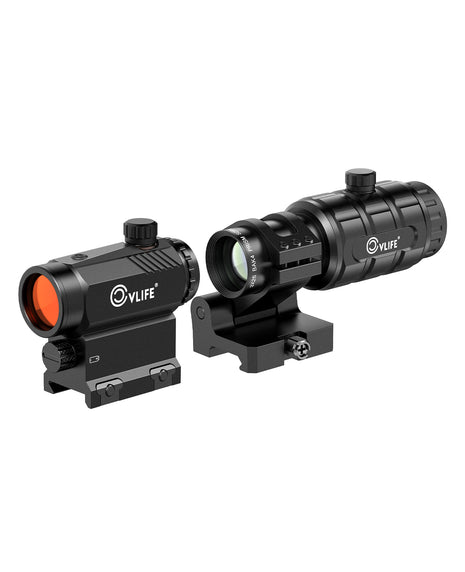
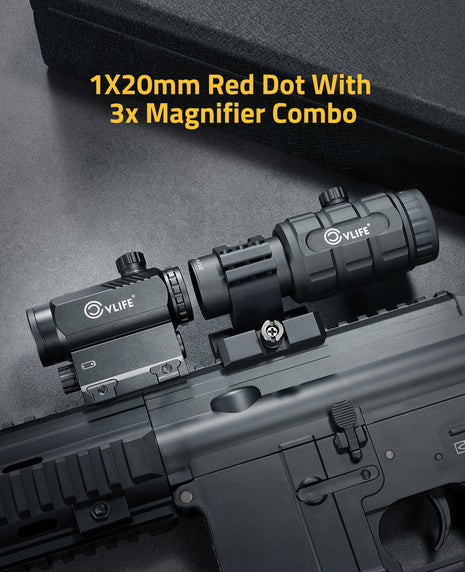
- Usually yes, with a caveat. A magnifier has its own eye relief and its own position on the rail; a mount height that puts the dot comfortably high can leave the magnifier's eyebox poorly placed. Plan the pair as one system rather than as two purchases.
- Does a riser change point of impact?
- It changes height over bore, so yes, at close distances. Raising a sight by roughly 1 inch moves the impact point low by roughly 1 inch minus the bullet's drop at that distance. Beyond a couple hundred yards the effect is mostly irrelevant compared with drop and wind, but a very close shot shifts noticeably.
One-line summary. Cantilever buys eye relief, offset buys a fast close shot at the cost of a lateral error, and a riser buys sight line at the cost of height over bore. Pick the problem you actually have, then buy it.