
Featured collection
-
-
$159.99 $129.59
-
-
$76.39

Red dots and LPVOs serve different purposes on an AR-15. A red dot is built for speed inside 100 yards — lightweight, both eyes open, fastest target acquisition you can get. An LPVO trades some weight and close-range speed for versatility, letting you reach past 200 yards with holdover marks and variable magnification. If you need both, a red dot with a flip-to-side magnifier is a solid middle ground. The choice isn't about which is better — it's about your typical shooting distance and what you're willing to carry. Match the optic to your actual use case, not the hype.
The AR-15 accessory market might be the most crowded in the firearms world. Optics alone give you red dots, holographics, prism scopes, LPVOs, fixed-power scopes — and each category has different magnifications, reticles, and tube sizes. For a first-time builder, it's easy to get lost.
This article covers one thing: should you put a red dot or an LPVO on your AR-15?
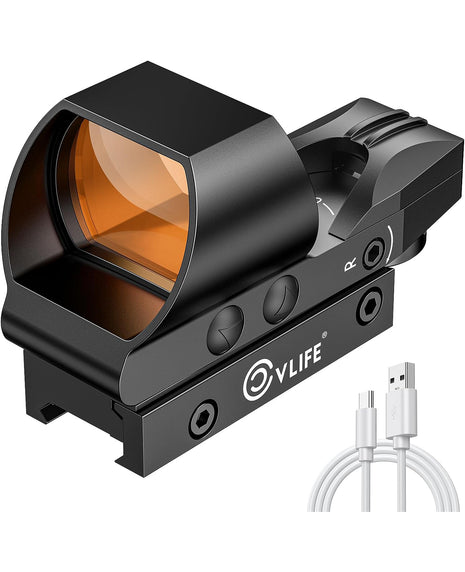
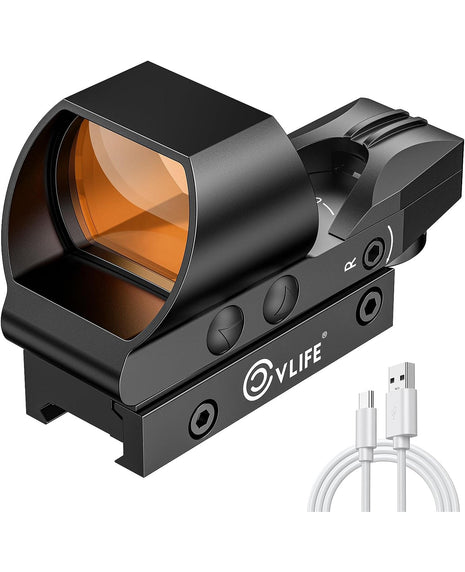
A red dot sight is a 1× (non-magnified) optical aiming device. What you see is just a red dot projected onto your target — no magnification, no reticle marks. It's built for one thing: fast aiming at close range. Both eyes open, put the dot on the target, break the shot. That's it.
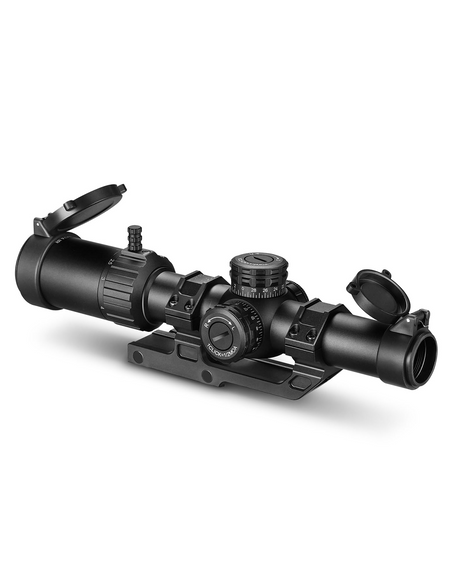
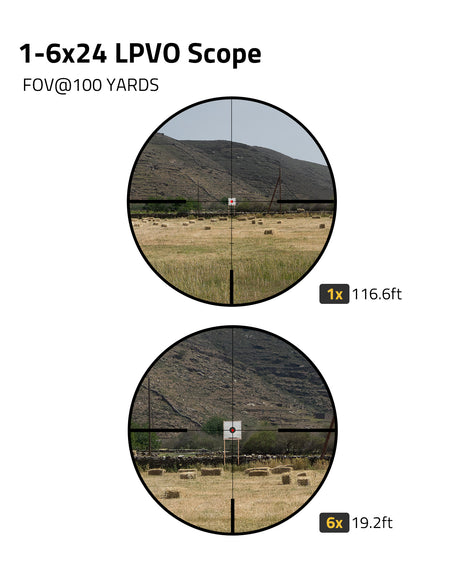
An LPVO (Low Power Variable Optic) is essentially a scope with adjustable magnification. Common specs are 1-6×, 1-8×, and 1-10×. At 1×, it works like a red dot — both eyes open, fast target acquisition. Crank it to 6× or 8×, and you have a precision scope for medium distances. LPVOs give you variable magnification — low power up close, high power for distance.
The core difference: red dots do one thing to perfection (speed at close range). LPVOs are built to cover more ground (from close to far).

A red dot's biggest advantage is speed. No magnification means no eye relief restrictions — your eye doesn't have to be in a specific spot to see the full picture. From any angle, any position, as long as you see the dot, you can hit what you're aiming at. Inside 50 yards, a red dot is faster than any magnified optic.
But the limit is clear: it only excels at close range.
Past 100 yards, all you see is a dot covering your target. No detail. No holdover marks. According to CVLIFE's field guide, most red dots are effective for hunting between 50 and 150 yards. Beyond that, magnified optics have a clear advantage.
LPVOs fix the red dot's "can't see far" problem. At 1×, you still get both-eyes-open speed. At high magnification, you see target detail, hold for bullet drop, and reach out further.
But there's a cost. LPVOs usually weigh more than double a red dot. They have eye relief limits. At 1×, the field of view and acquisition speed still aren't quite as fast as a dedicated red dot.
Go with a red dot if:
You mainly shoot inside 100 yards.
Home defense or close-quarters training is your priority — speed beats precision.
You want your rifle as light as possible.
You need maximum situational awareness and peripheral vision.
Go with an LPVO if:
You shoot past 100 yards on a regular basis.
Your rifle has to do a bit of everything (close-range work + medium-distance range time).
You're willing to trade some weight and close-range speed for versatility.
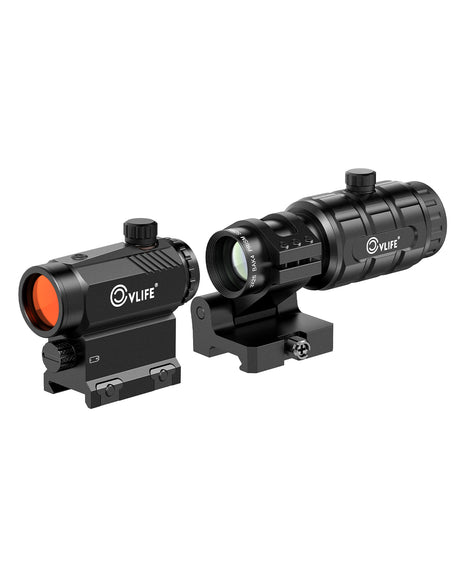
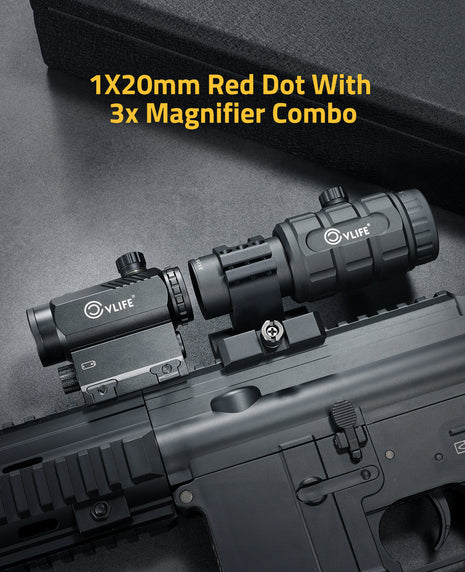
If you don't want to pick one or the other, there's a compromise: red dot plus flip-to-side magnifier.
Day to day, it's still a red dot — all the close-range speed you're used to. When you need to reach out, flip the magnifier up and you've got a 3× or 5× optic in an instant. It's lighter than an LPVO and switches fast.
Red dots and LPVOs aren't about "which is better." One gives you speed at close range. The other gives you precision at distance. Figure out your typical distance and use case first — then pick the one that fits.
If you mostly shoot inside 100 yards and want speed, a red dot is enough. If you'll regularly shoot past 200 yards and need versatility, an LPVO is the better call. If you're on the fence, a red dot plus magnifier is a solid middle ground worth considering.
$159.99 $129.59
$76.39


