Platform guide
Short answer. The 1911 is a frame-and-slide design with a short-recoil operating system, not a single caliber or a single model. Production pistols are built today in .45 ACP, 9mm Luger, 10mm, .40 S&W, and .38 Super, and the specific model designation matters mainly because it tells you whether the slide has a machined pocket for an optic or only a rear sight dovetail.
The practical takeaway. Before shopping for a red dot sight or a laser for a 1911, identify two things: the caliber, which sets capacity and recoil, and the rear sight cut, which decides whether any optic will physically fit. Everything else on a 1911 purchase is preference.
01How the 1911 platform actually got here
The 1911 was designed by John Browning and produced starting in 1911, and it entered U.S. military service the same year. It remained the standard-issue sidearm of the U.S. armed forces for 74 years before the M9 replaced it in 1985. That service record is a large part of why the design still carries weight in conversations about handguns today, and it is covered in most basic handgun safety curricula.
- 1911 The original model enters military service, chambered in .45 ACP.
- 1926 The 1911A1 enters service as an improved version: shorter trigger, longer slide stop and ejector, and an automatic slide stop that releases after the last round.
- 1985 The M9 replaces the 1911 as the standard-issue sidearm, ending the 74-year run.
- Today The pattern spans multiple manufacturers and calibers, with optics-ready models now common on the upper end.
One historical detail worth correcting, because it comes up constantly in search results: the common consumer description of the 1911 as "the .45 handgun" is a shorthand, not the technical picture. Colt's early catalog included .38 ACP variants alongside the .45, and the pattern's defining feature has always been the operating system rather than the cartridge.
02The caliber families you will actually see
Wilson Combat, one of the larger 1911 manufacturers, lists its 1911-pattern pistols in .45 ACP, 9mm Luger, 10mm, .40 S&W, and .38 Super. That list is a reasonable proxy for the caliber families the market supports, and understanding what each one changes is more useful to a buyer than any brand ranking.
| Caliber | What changes | Where it fits |
|---|---|---|
| .45 ACP | The original chambering. Largest frame demands of the group, lowest magazine capacity in a standard-length frame, and the heaviest of the common 1911 loads. | Pistol-caliber competition, duty carry where recoil management is a priority, and traditional 1911 ownership. |
| 9mm Luger | Smaller case diameter allows higher capacity and a shorter grip, with noticeably less felt recoil. Requires a barrel and recoil spring sized for the round. | Everyday carry, training, and competition where capacity and controllability matter. Colt lists a 1911 Classic Government in 9mm at 8+1 rounds. |
| 10mm Auto | Larger case than 9mm with more energy at lower pressure. Fewer manufacturers build frames specifically for it, so availability is narrower. | Shooters who want 9mm-like capacity with more energy per round. |
| .40 S&W | Similar recoil to 9mm with a stronger case. Availability is narrower than the other two mainstream options. | Police-service legacy and cross-training use. |
| .38 Super | An older flat-case round with a long record in 1911 frames. Ammunition is the limiting factor rather than the pistol. | Classic 1911 collectors and target shooting where available ammunition exists. |
Two practical consequences follow from that table. First, caliber is a frame decision, not a barrel swap in most cases: a 9mm 1911 has a smaller grip and a different slide profile than a .45, and they are not interchangeable. Second, if you plan to run a red dot sight, caliber affects the sight picture indirectly through slide mass and recoil impulse, which is a factor in mount torque rather than in optic selection.
03Model designations: what the names tell you
Within the 1911 pattern, model names are not standardized the way caliber designations are. Colt's own 1911 lineup is a useful illustration, because it shows how the same pattern gets described in several ways: a 1911 Classic Government in 9mm, and an optics-ready Government model in .45 ACP listed under a separate designation. Wilson Combat's 1911 handgun range covers the same pattern across five calibers.
What those names signal for an optics buyer:
- Optics-ready means the top of the slide is machined with a pocket that accepts an adapter plate. Nothing permanent is required to mount a red dot sight.
- Standard or non-optics-ready means no pocket exists. Optics go on a dovetail plate that replaces the rear sight, or on a frame-mounted solution.
- Model year or generation numbers usually track cosmetic and feature changes rather than performance. They rarely change how an optic mounts.
04The rear sight cut is the detail that decides your optic
This is the part most 1911 shopping guides skip, and it is the reason a red dot purchase sometimes ends in a returned part. A 1911 slide carries a rear sight, and that sight sits in a cut. The cut determines what mount will fit.
- Novak dovetail. The most common cut on modern production 1911s, found on pistols from Colt, Springfield Armory, Rock Island Armory, and Ruger among others. This is the dovetail a red dot mounting plate is designed to slide into.
- GI-style cut. A simple notch rather than a full dovetail, common on military-specification and entry-level 1911s. It needs a GI-specific mount rather than a Novak mount.
- Bomar and LPA. Adjustable rear sight cuts typical of competition and target 1911s. An adjustable rear sight and a red dot mount are usually mutually exclusive on the same slide unless the cut allows both.
- Proprietary cuts. Some manufacturers use their own dovetail spacing that does not match the industry standard. Bolt Armory 1911s are a documented example. Confirm the cut with the manufacturer, or use a universal plate designed to tolerate loose fit.
Once the cut is settled, the next decision is the optic footprint. Common handgun footprints are Docter, FastFire, and ACRO, and mounts are sold to fit one or several of them. If your priority is a broad selection of optics without changing mounts, look for a plate that accepts more than one footprint rather than committing to a single pattern.
Matching the setup to how the pistol is used
- Duty or concealed carry where the optic must sit low. Choose an optics-ready slide and a plate that bolts directly into the milled pocket. Low mount height keeps the sight line near the bore axis and makes co-witness with backup irons practical.
- A standard slide with a Novak or GI cut where reversibility matters. A dovetail plate replaces the rear sight, installs without permanent modification, and can be removed to return the pistol to its original configuration. Expect a slightly taller sight line than a milled setup.
- One pistol, several optics, no slide work. An adapter plate system in the milled-pocket style gives you swappable footprints from a single slide. Verify that the plate's cut matches your slide exactly before ordering.
- A frame-mounted solution for a slide with no usable dovetail. A side or frame mount does not reciprocate with the slide and works on slides that cannot take a dovetail plate, but it typically needs a gunsmith and adds bulk above the slide line.
05What to check before ordering anything
Most problems with 1911 optics come down to one number: the cut. Confirm the rear sight cut on the specific serial-numbered pistol rather than on the model page, because manufacturers change cuts between production runs and model years. Then confirm the plate footprint matches the optic footprint, and confirm the two screws included with the plate are the length the slide pocket expects.
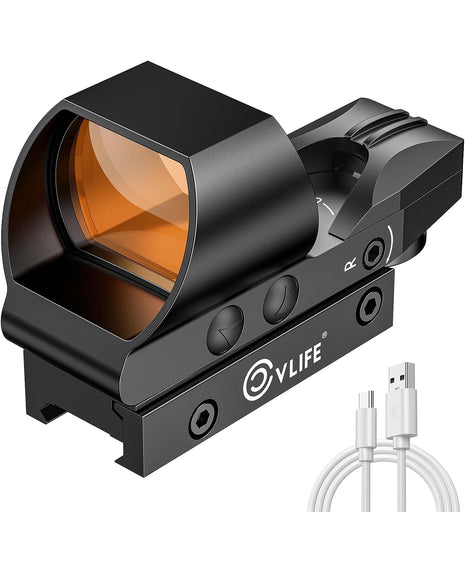
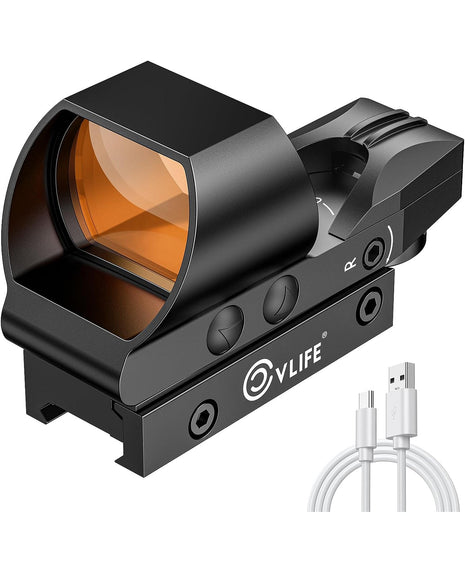
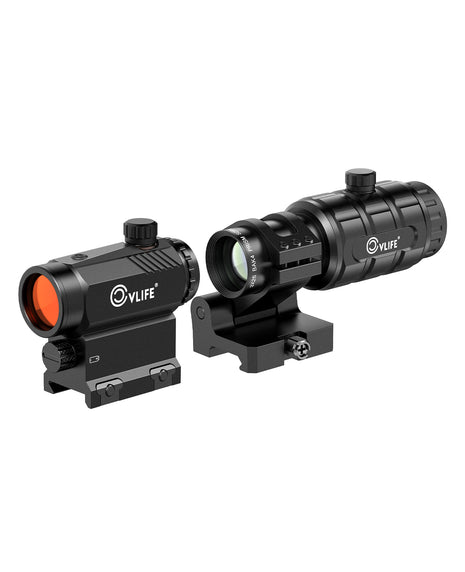
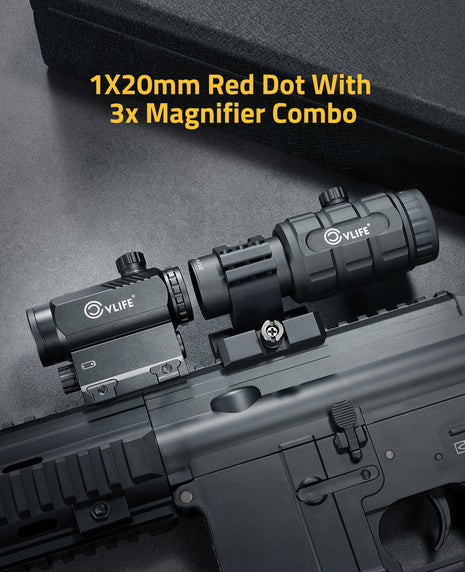
On the accessories side, the same pattern applies. Gun lasers, red dot sights, and low-profile mounts for 1911-pattern pistols are widely available, and mainstream examples include CVLIFE's handgun optic and laser lines. The point is not the brand: it is that the accessory category has matured enough that fit, not availability, is the constraint worth spending time on. The American Gunsmithing Institute publishes practical reference material on optics mounting and slide work that is worth reading before committing to a cut.
Frequently asked questions
Is a 9mm 1911 still a 1911?
Mechanically, yes. The 1911 designation refers to the operating system and the frame and slide design, not to a specific cartridge. Wilson Combat, for example, builds 1911-pattern pistols in .45 ACP, 9mm Luger, 10mm, .40 S&W, and .38 Super. What changes with caliber is magazine capacity, recoil, barrel diameter, and the strength requirements on the slide, not the operating principle.
What is the difference between a 1911 and a 1911A1?
The 1911A1 entered U.S. military service in 1926 as an improved version of the original 1911. Practical differences include a shorter trigger, a longer slide stop and ejector, and an automatic slide stop that releases the slide after the last round. The operating principle and the .45 ACP chambering were unchanged.
What is an optics-ready 1911?
An optics-ready 1911 has a machined pocket milled into the top of the slide so a red dot can be mounted with an adapter plate and two screws, with no permanent modification. A standard 1911 does not have that pocket, so optics on a standard slide are usually mounted on a dovetail plate that replaces the rear sight. Colt lists an optics-ready Government model in .45 ACP alongside its 9mm 1911 Classic Government.
How do I know which rear sight cut my 1911 has?
The most common cut on modern production 1911s is the Novak dovetail, found on pistols from Colt, Springfield Armory, Rock Island Armory, and Ruger. Military-specification and entry-level 1911s more often use a GI-style cut, which is a simple notch rather than a full dovetail. Competition and target 1911s frequently use Bomar or LPA adjustable rear sights. Some manufacturers use proprietary dovetail spacing that does not match the industry standard, so check the cut before ordering any mount.
Do I need a gunsmith to put a red dot on a 1911?
It depends on the slide. An optics-ready 1911 accepts a bolt-on plate without any machining. A standard 1911 with a Novak or GI cut accepts a dovetail mount that replaces the rear sight and installs without permanent modification. A standard slide with no usable dovetail requires milling work. Bolt Armory 1911s use proprietary dovetail spacing that differs from the industry standard, so confirm the cut with the manufacturer or use a universal adapter.