The mistake almost everyone makes first
Buying in the order that is interesting rather than the order that works.
The accessories conversation centres on optics, because optics are the visible upgrade: a scope changes what the rifle looks like and what it can do. So the first purchase is usually a scope, chosen carefully, reviewed thoroughly — and then attached to whatever rings were available, torqued with a guess, on a rail nobody checked was seated.
That is the origin of the most common complaint in the whole category: "it won't hold zero." Almost always the scope is fine. The mount is not. And the mount cost a fraction of what the scope did.
The six groups, and what each is for
Ordered by function, not by popularity.
| Group | What belongs in it | The job it does | What it costs when chosen badly |
|---|---|---|---|
| Mounts and rings | Base, rings, cantilever, riser, leveling kit, torque wrench | Attaches the optic and protects the zero | Over-torqued caps or a bottomed screw turn a good scope into one that will not hold |
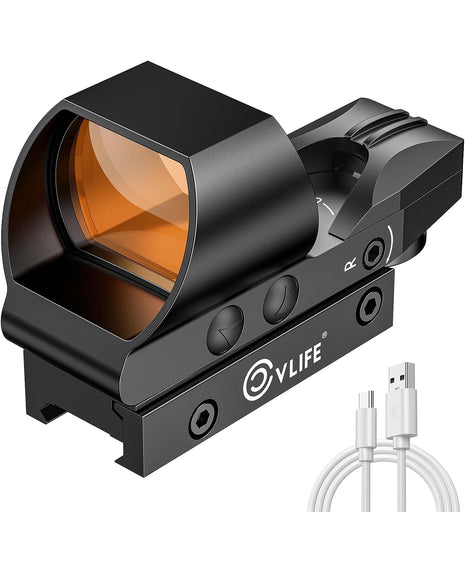
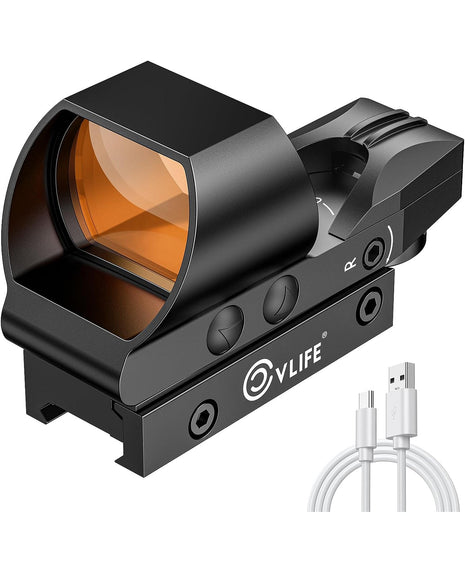
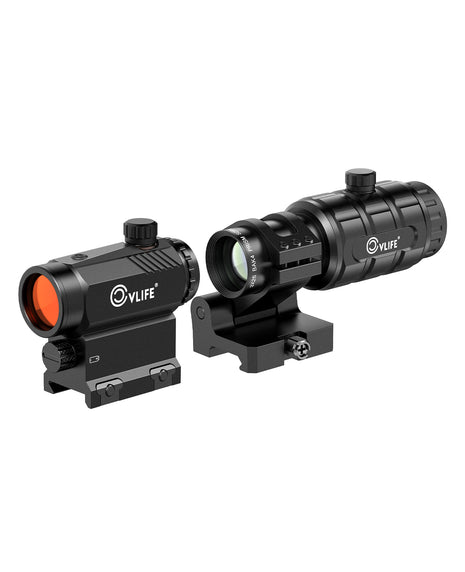
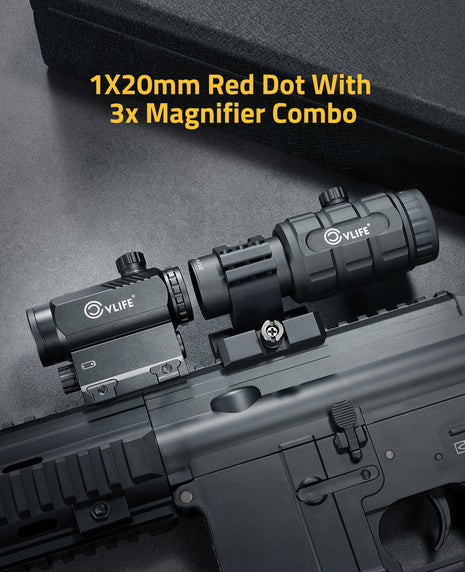
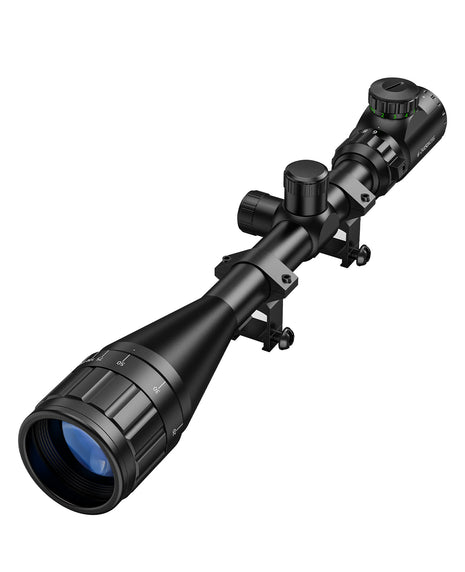
| Optics | Magnified scopes, dot sights, prism sights | Lets you aim at what you can already see | The largest line item, and the one most often bought before the mount question is settled |
| Maintenance | Cleaning kit, tools, threadlocker, bore guide | Keeps the rifle working and prevents the failures above | Cheapest group, and the one that most affects whether the rest lasts |
| Support | Bipods, rests, shooting sticks, bags | Steadies the rifle where the ground allows | Precision lost at the point of contact, where the rifle meets the ground |
| Illumination and back-up | Weapon lights, back-up iron sights | Identification and redundancy | Not performance features until the moment they are, and then they are essential |
| Carry and storage | Packs, range bags, cases, slings | Moves the rifle and everything it needs | A load that sits badly turns a stable position into a rushed one |
Notice the asymmetry. The optics group is the most visible and the most discussed; the mounts and maintenance groups are where most failures originate. A rifle that will not hold zero is almost always a mount problem, and the remedy costs less than the scope it protects.
Group one: mounts and rings, the part that decides everything
Ring height is set by the objective, the barrel and your cheek — in that order.
Ring height is decided by the objective diameter, the barrel contour and the shooter's face, not by the scope's brand. A 50 mm objective on a heavy contour needs more clearance than a 40 mm on a sporter, and a stock with a high comb needs less height than one with a low comb. Getting that wrong produces the two symptoms that always get blamed on the scope: a cheek weld that lifts off the stock, and an eyepiece that crowds the eye.
| Objective | Typical ring height | The compromise it forces |
|---|---|---|
| 40 mm | Low to medium | Keeps the sight line near the bore; least forgiving of a thick barrel |
| 44–50 mm | Medium | The common hunting balance; needs checking against the stock comb, not just the barrel |
| 50–56 mm | Medium to high | Low-light advantage, at the cost of a raised cheek position |
Then the torque question. Two numbers matter and they are different: ring caps clamp the tube, while base and crossbolt fasteners clamp the mount to the rail. Ring caps typically run 15 to 18 in-lb on aluminium and 20 to 25 in-lb on steel, while crossbolts and base screws run higher, roughly 25 to 65 in-lb depending on the fastener. Where the ring maker and the scope maker disagree, the lower figure wins — the ring is replaceable, the tube is not.
Group two: optics, chosen against the job
Four situations, four different answers.
| Situation | Usable magnification | What decides it | Category |
|---|---|---|---|
| Room to a couple hundred yards | 1x | Fast, both eyes open, no target identification needed | Dot sight |
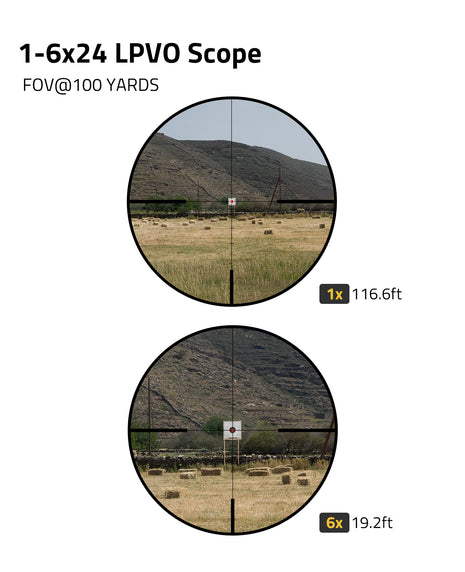
| Mixed close and moderate distance | 1–6x | One optic for two jobs; the format that replaces a dot plus a fixed scope | Low power variable |
| Timber and field edges | 2–10x | Low end matters more than the top; a scope starting at 4x is wrong for timber | Mid-range variable |
| Open country and precision | 4–16x or 5–25x | Target identification at distance; first focal plane if you use holdovers | First focal plane |
Two of those specifications decide satisfaction and neither is the maximum magnification. The first is the low end: a scope whose minimum is 4x is a poor choice in timber regardless of what it does at 16x. The second is low-light performance, which is decided by objective diameter and coating quality together — a 50 mm objective with mediocre coatings loses to a 44 mm with good ones at the same price.
Second focal plane or first
Magnification ranges are printed on the box. What is not printed is how the reticle behaves across that range. A second focal plane reticle keeps a fixed apparent size while the image grows, so holdover marks are calibrated at one magnification and wrong at every other. A first focal plane reticle grows with the image, so the marks are valid throughout — which is a real advantage if you use holdovers, and an expense you do not need if you dial for range.
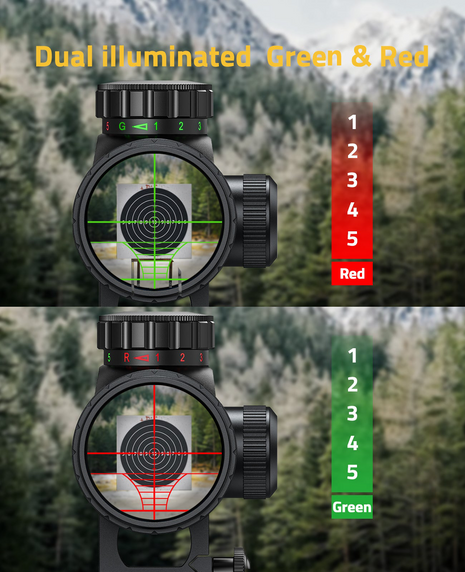
For any BDC-style reticle in either focal plane, one rule applies: the marks are a starting reference calibrated to a cartridge, often to a specific barrel length and velocity, to be verified on paper rather than trusted.
Group three: maintenance, the cheapest and most decisive
The group almost nobody budgets for, and the one that prevents the rest failing.
A cleaning kit, a set of proper tools, threadlocker and a bore guide cost a fraction of any optic. They also prevent the failure modes the other groups create: a screw that works loose, a bore that fouls and shifts point of impact, a mount that was never seated. In our experience this is the highest-value group per dollar in the entire category, and it is consistently the one buyers skip because nothing about it feels like an upgrade.
Group four: support, which changes the zero
Add it after zeroing, then recheck.
Support comes in two forms and they solve different problems. A bipod gives you a stable position from the ground: field edges, cutovers, and any hunt where you can wait behind the rifle. A pack, rolled jacket or natural rest covers timber and awkward ground where a bipod has nothing to stand on. Most hunters eventually carry both, and the bipod is the one with a weight cost on the forend.
Because anything attached to the forend changes how the rifle settles and where it recoils from, support belongs after zeroing rather than before. Add it, then confirm the zero — and if it moved, the cause is the support or the fasteners, not the optic.
Short bipod, 6–9 in
Covers seated and prone positions and adds least weight forward. The common choice for a rifle that also gets carried.
Tiltable bipod, 7.5–9 in
Pivot and cant adjustment for uneven ground, with quick release for moving between positions.
Long pivot bipod, 13–23 in
For sitting and kneeling shots in tall cover, where a short bipod cannot reach the ground.
Group five: illumination and back-up, the redundancy group
Not performance features until they are essential.
A weapon light and a set of back-up iron sights are the two accessories that do nothing for accuracy and everything for the situations where accuracy is not the problem. A light is for identifying what you are looking at, which comes before the decision to shoot. Back-up sights are for the case where the optic fails — a dead battery, a cracked window, an impact that ended the sight's usefulness.
The practical point is that both occupy rail space that the rest of the category also wants. Decide the rail layout before buying, or you will end up with a light where the bipod was meant to go and folding sights that cannot fold because something is in the way.
Group six: carry, the group that decides whether the rest is used
Capacity should match the trip, not the collection.
A day pack holds layers, water, a small tool kit and the range essentials. A larger pack is for multi-day trips where the rifle is carried for hours. Buying one oversized pack for everything means carrying weight on every short trip, and a load that sits badly turns a stable shooting position into a rushed one — no optic compensates for that.
Day pack
Enough for layers, water, a small tool kit and range essentials without defeating the point of carrying it.
Large pack
Multi-day capacity with a frame that puts weight on the hips rather than the shoulders.
Range bag
Bench sessions need their own organisation: rests, targets, tools, cleaning and the small parts that go missing.
The build order, stated once
Five stages, in the sequence that produces a rifle you can trust.
- Mount and rings first. Confirm the rail interface, choose ring height against the objective and your cheek, and buy the torque wrench with them rather than after.
- Then the optic. Choose against the closest and furthest shot you will actually take, not against the largest magnification available.
- Zero with the system you will keep. Establish a zero at 50 yd, then at the distance you will actually shoot, and write the click value down.
- Add support, then recheck. A bipod or rest changes how the rifle settles; confirm the zero after it is on.
- Build the maintenance kit before the season, not after. Cleaning, tools, threadlocker and a bore guide are the cheapest part of the whole setup and the part that keeps it working.
Where the money should go if the budget is fixed
Three priorities, and the third is the one people argue with.
| Priority | Buy this | Before this | Why |
|---|---|---|---|
| 1 | Mount, rings, torque wrench | Any optic | Protects the zero; costs a fraction of the scope it protects |
| 2 | Maintenance kit and bore guide | A second optic or an upgrade | Highest value per dollar in the category; prevents the failure modes the rest create |
| 3 | Support that matches your ground | An expensive scope upgrade | Practical precision improves more from a stable position than from a small step in magnification |
The third row is the one that gets argued about, because a bipod is not as satisfying to buy as glass. But the comparison is not emotional: a rifle that settles will outshoot a rifle that does not, whatever the scope cost.
Buying accessories in the holiday window
Entry and mid-level optics, mounts, bipods and carry gear are the categories that discount hardest in the last week of November.
November 27
A surprise offer is opening on Black Friday
A surprise offer opens on Black Friday itself and will be posted on the store front page on the day — no third-party code required.
- Details drop on November 27, 2026
- Watch the store front page
- Decide which group you are actually missing now, so the window is one page rather than forty
Where each group lives
Read as a list rather than as a sequence, if that suits you better.
Rifle scopes
Variable and fixed magnification, second and first focal plane, rimfire through long range.
Dot sights
Open and enclosed, motion-awake, multi-reticle, and pistol-mount footprints.
Bipods and rests
Short 6–9 in, tiltable 7.5–9 in, and long pivot designs for tall cover.
Low power variable
1–4x, 1–6x, 1–8x and 1–10x, the format covering room to field edge.
First focal plane
ED glass and holdover precision at one magnification, for long range work.
Questions buyers actually ask
What accessories does a rifle actually need?
Three groups before anything else: a correct mount to attach an optic, a cleaning and maintenance kit, and a way to carry the rifle and its necessities. Optics, support, illumination and back-up sights follow, and each has a specific job rather than being a general upgrade.
What should I buy first for a new rifle?
The mount, the rings and the torque wrench. A scope in a bad mount loses zero, and no spending on glass fixes that. Those three cost far less than a scope and prevent the most common failure in the category.
Is an expensive scope wasted on a cheap rifle?
Not wasted, but the order matters. A mid-price scope in a correct mount outshoots a premium scope in a bad one. If the budget is fixed, spend on the mount and the maintenance kit before upgrading glass.
Do I need a bipod for hunting?
Yes if you shoot from the ground. It does not replace a pack or jacket rest in timber, and it costs weight on the forend. A short 6 to 9 inch bipod covers most seated and prone hunting positions.
What is the biggest mistake people make?
Buying the most visible group first. Optics are the most discussed and most expensive, while mounts and maintenance are where most failures originate.
How much should accessories cost relative to the rifle?
There is no fixed ratio, and any published percentage is arbitrary. A workable principle: buy the mount, rings and maintenance kit before any optic upgrade, because they protect the zero rather than improve the view.
Do bipods and rests change the zero?
They can. Anything on the forend changes how the rifle settles, so add support after zeroing and recheck afterwards. A shift after adding a bipod is the support, not the optic.
When do accessories go on sale?
Entry and mid-level optics, mounts, bipods and carry gear discount hardest in the last week of November. The main date in 2026 is Friday, November 27.
Torque figures are published general ranges and vary by manufacturer; the firearm and accessory maker's own specification always takes precedence. Prices, promotions and product specifications change — confirm the current listing before buying.