2 Konfigurationen · 3 Standardhöhen · welche funktioniert mit einer Vergrößerung
Die AR-15-Community hat sich auf drei Montagehöhen standardisiert: 36 mm absolut, 38 mm dazwischen und 40 mm für das untere Drittel.
Was bedeutet Co-Witness eigentlich?
Wenn du durch ein Rotpunktvisier blickst, siehst du zwei Dinge: den LED-Punkt (ein virtuelles Bild in optischer Unendlichkeit) und die Welt durch die Linse. Wenn deine Montage die richtige Höhe hat, siehst du im selben Sichtfeld auch das Korn und die hintere Lochkimme der mechanischen Visierung. Diese gemeinsame Sicht ist das Co-Witness.
Die beiden Co-Witness-Varianten positionieren das Korn an unterschiedlichen Stellen im Sichtfenster des Rotpunktvisiers. Der praktische Unterschied: Beim absoluten Co-Witness sitzt das Korn genau in der Mitte und ist auf den Punkt ausgerichtet; beim unteren Drittel befindet sich das Korn im unteren Drittel des Sichtfensters, während der Punkt in klarem Glas steht und die Visierung zwar sichtbar ist, das Ziel aber nicht verdeckt. Die Wahl betrifft die Höhe - 36 mm gegenüber 40 mm bei Standardmontagen.
Welche Variante solltest du wählen?
Es hängt davon ab, ob du eine Vergrößerung verwendest und was du sehen möchtest, wenn das Rotpunktvisier ausfällt.
| Merkmal | Absolutes Co-Witness | Co-Witness im unteren Drittel |
|---|---|---|
| Höhe der optischen Achse | Etwa 1,4-1,42 Zoll / 36 mm über der Montageschiene | Etwa 1,5-1,6 Zoll / 38-40 mm über der Montageschiene |
| Was du durch das Visier siehst | Korn genau in der Mitte, auf den Punkt ausgerichtet | Korn im unteren Drittel, Punkt in klarem Glas |
| Mit eingeschwenkter Vergrößerung | Korn mittig im vergrößerten Sichtfeld - kann das Ziel verdecken | Korn am unteren Rand des vergrößerten Sichtfelds - das Ziel bleibt frei |
| Wangenauflage an einem standardmäßigen AR-15-Schaft | Niedrigere Montage = natürlicherer Kontakt zur Wange | Höhere Montage = der Kopf hebt sich leicht, bleibt mit einem passenden Schaft ergonomisch |
| Am besten für | Traditionelle Konfiguration nur mit Rotpunktvisier, ohne Vergrößerung | Modernes Rotpunktvisier + Vergrößerung, holografisches Visier oder LPVO im oberen 2/3 |
Schnellregel: Wenn du eine Vergrößerung verwendest, wähle das untere Drittel (40 mm). Wenn du nur ein Rotpunktvisier verwendest, sorgt absolut (36 mm) für eine natürliche Wangenauflage. Der moderne Industriestandard hat sich seit etwa 2015 zum unteren Drittel verschoben, weil die meisten AR-15 inzwischen eine Vergrößerung oder ein LPVO verwenden.
Die 3 Standardhöhen (36/38/40 mm)
Drei Höhen entsprechen drei Anwendungsfällen. Die mittlere (38 mm) ist ein Hybrid - nahe am absoluten Co-Witness, aber mit dem Korn bereits in Richtung unteres Drittel verschoben. Wähle nach deinem Visier, nicht danach, was dein Freund verwendet.
| Höhe | Co-Witness-Typ | Am besten für |
|---|---|---|
| 36 mm (1,4 Zoll) | Absolut | Nur Rotpunktvisier, keine Vergrößerung. Wangenauflage an einem standardmäßigen A2- oder Klappschaft. |
| 38 mm (1,5 Zoll) | Hybrid / „1/2 Co-Witness“ | Rotpunktvisier mit gelegentlicher Vergrößerung oder holografische Visierungen, bei denen der obere Teil des Sichtfensters frei bleiben muss. |
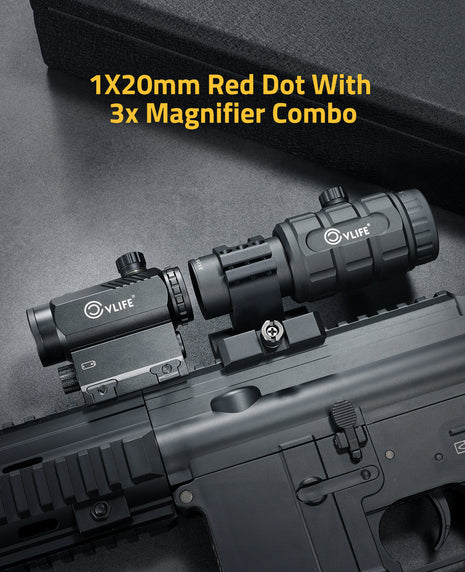
| 40 mm (1,6 Zoll) | Unteres Drittel | Rotpunktvisier + 3-fach-Vergrößerungskombi, holografisches Visier im EOTech-Stil oder LPVO bei 1-facher Vergrößerung. |
Es gibt außerdem eine vierte Höhe: 1,93 Zoll / 49 mm ("Heads-up"), die verwendet wird, wenn Sie Platz für eine große Objektivglocke (LPVO bei hoher Vergrößerung) oder eine Nachtsichtmontage vor dem Zielfernrohr benötigen. Das gehört nicht zum Co-Witness-Konzept von Rotpunkt und Vergrößerungsglas, sondern zu einer anderen Montagefamilie.
Wo CVLIFE-Vergrößerungsgläser in die jeweiligen Höhen passen
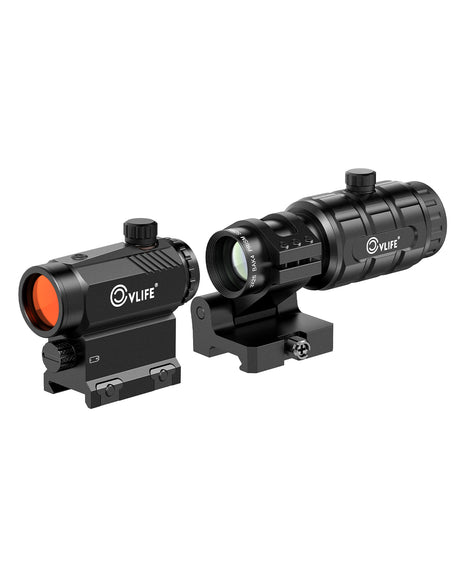
Die CVLIFE-Kollektion aus Rotpunktvisieren und Vergrößerungsgläsern bietet Vergrößerungsgläser in allen drei Standardhöhen. Drei repräsentative Optionen, alle zur Seite schwenkbar:
- Für ein absolutes Co-Witness-Setup bei 36 mm: das CVLIFE JackalHowl 3X Red Dot Magnifier auf einer 36-mm-Montagebasis. Augenabstand 2,95", IP67, stoßfest bis 1000 G. Kombiniert mit einem flachen Rotpunktvisier ermöglicht es ein absolutes Co-Witness-Setup, ohne dass das Vergrößerungsglas das Ziel verdeckt.
- Für ein hybrides Setup bei 38 mm: die CVLIFE Multi-Reticle Red/Green Dot & 3X Magnifier Combo mit einem Abstand von 0,39-0,79" zwischen Rotpunkt und Vergrößerungsglas. Augenabstand 2,95". Der Abstand des Sets ist die Variable, mit der Sie zwischen absolutem Co-Witness und einem unteren Drittel abstimmen können, ohne die Montage zu wechseln.
- Für ein unteres Drittel bei 40 mm: das CVLIFE Eaglefeather 3X/4X/5X Compact Magnifier with Mount auf einer 40-mm-Montage. Augenabstand 3,54". Es lindert die Ermüdung der Augen effektiv und sorgt für ein angenehmeres Seherlebnis.