
Featured collection
-
-
$159.99 $132.59
-

-
$64.99

Si vous choisissez une lunette à grossissement variable pour un marqueur de paintball, un dispositif récréatif de type arbalète, une plateforme d’airsoft ou une autre plateforme sportive équipée d’un rail de type Picatinny, le bon choix dépend de deux éléments : la compatibilité du montage et la plage de grossissement dont vous avez réellement besoin. Les lunettes LPVO commencent généralement à un grossissement plus faible et privilégient la polyvalence à faible grossissement ainsi qu’un champ de vision plus large, tandis que les lunettes de type MPVO commencent généralement à un grossissement plus élevé et offrent un grossissement supérieur à leur limite maximale. Aucune n’est automatiquement meilleure : le meilleur choix dépend de votre plateforme, des conditions d’observation, du système de montage et du champ de vision que vous préférez.
La première question de compatibilité est de savoir si le système de montage de la lunette correspond au rail de votre plateforme.
Une lunette à grossissement variable se fixe généralement à l’aide d’anneaux ou d’un montage dédié. Le montage se fixe ensuite au rail d’accessoires de la plateforme. La compatibilité ne dépend donc pas uniquement de la lunette.
Sur les plateformes équipées d’un rail de type Picatinny, celui-ci constitue une interface commune pour les accessoires compatibles. Toutefois, les utilisateurs doivent faire la distinction entre un rail désigné commercialement comme « 20 mm » ou « 21 mm » et un rail qui respecte la géométrie normalisée applicable.
La largeur indiquée pour un rail est une information utile, mais elle ne doit pas être le seul critère de compatibilité.
Même si une plateforme est décrite comme dotée d’un rail de 20–21 mm, il faut vérifier son profil réel et la configuration de ses fentes avant de choisir un montage.
Les rails Picatinny sont normalisés par la norme MIL-STD-1913, qui définit la géométrie de l’interface de montage et non une simple largeur totale. C’est pourquoi les désignations commerciales telles que « rail de 20 mm », « rail de 21 mm », « rail Picatinny » et « rail de type Weaver » ne doivent pas être considérées d’emblée comme interchangeables.
La liste de vérification pratique est simple :
· Vérifiez le type de rail réel.
· Vérifiez le montage fourni avec la lunette.
· Vérifiez le diamètre du tube de la lunette.
· Vérifiez l’interface de montage requise.
· Vérifiez qu’il y a suffisamment d’espace utilisable sur le rail.
· Vérifiez que la lunette peut être correctement positionnée sur la plateforme.
Les spécifications du rail indiquées par le fabricant doivent primer sur une description générique du produit.
La lunette et le montage doivent être considérés comme un seul système de compatibilité plutôt que comme deux produits sans lien.
Les anneaux ou le montage doivent correspondre aux spécifications du tube principal de la lunette, tandis que la partie inférieure du montage doit correspondre au rail de la plateforme. Le diamètre du tube principal est un critère important pour choisir des anneaux compatibles.
La meilleure question n’est donc pas simplement : « Cette lunette est-elle compatible avec mon rail ? » Il faut plutôt demander :
« L’ensemble lunette et montage peut-il se fixer sur mon rail et maintenir correctement cette lunette ? »
La lunette LPVO CVLIFE EagleTalon avec montage est un excellent exemple de cette configuration tout-en-un. Elle propose plusieurs options personnalisables pour répondre aux différents besoins des stands de tir.
Vous pouvez choisir parmi deux styles de réticule :
- BDC-I
- BDC-II
Et choisissez parmi quatre niveaux de grossissement :
- 1-4x24
- 1-6x24
- 1-8x24
- 1-10x24
Tous les kits sont fournis avec un montage en porte-à-faux assorti. La conception à faible grossissement variable permet d’acquérir rapidement la cible les deux yeux ouverts à 1× dans les situations de combat rapproché, tandis que les réglages de grossissement supérieur apportent davantage de netteté pour les tirs à moyenne distance. Les réticules BDC gravés sur verre comportent des repères de compensation pour vous aider à corriger la chute de la balle à longue distance.

LPVO signifie « optique variable à faible grossissement » et désigne généralement une optique à puissance variable dont le grossissement de départ est relativement faible.
Les LPVO sont généralement associés à des configurations qui commencent à 1× et atteignent des grossissements modérés. Vortex, par exemple, décrit les LPVO comme des optiques qui commencent généralement à 1× et peuvent atteindre 4×, 6×, 8× ou même 10×, la configuration 1-6× étant particulièrement courante.
Le principal avantage d’un faible grossissement de départ est un champ de vision plus large que celui obtenu avec la même optique à un grossissement supérieur.
Pour les utilisateurs qui souhaitent passer d’un champ de vision large à un grossissement modéré sans changer d’optique, un LPVO constitue une option polyvalente.
La principale caractéristique d’un LPVO est donc son faible grossissement de départ et sa conception à puissance variable, et non un grossissement maximal fixe.
MPVO désigne couramment les optiques à grossissement variable moyen, qui commencent généralement à un grossissement supérieur à celui des configurations LPVO typiques.
Contrairement aux LPVO, les MPVO n’ont pas de plage de grossissement universelle imposée. Une lunette qui commence à 2×, 3× ou à un autre grossissement modéré peut être qualifiée d’optique variable à puissance moyenne, selon le fabricant, l’utilisation et la catégorie du produit.
La distinction pratique est donc plus utile que la recherche d’une limite numérique stricte :
Les LPVO privilégient la facilité d’utilisation aux faibles grossissements, tandis que les MPVO offrent un grossissement supplémentaire dans la partie supérieure de la plage.
Ni les LPVO ni les MPVO ne sont automatiquement meilleurs ; chaque catégorie privilégie une partie différente de la plage de grossissement.
|
Caractéristique |
LPVO |
MPVO |
|
Grossissement de départ |
Généralement plus faible |
Généralement plus élevé |
|
Grossissement maximal |
Généralement modéré |
Généralement plus élevé |
|
Champ de vision à faible grossissement |
Généralement plus large |
Généralement plus étroit |
|
Agrandissement de l’image |
Modéré |
Plus élevé à l’extrémité haute |
|
Principal avantage |
Polyvalence |
Grossissement supplémentaire |
|
Meilleur choix lorsque |
L’observation à faible grossissement est importante |
Le grossissement supérieur est important |
Les optiques à grossissement variable impliquent par nature des compromis entre grossissement et champ de vision. À mesure que le grossissement augmente, le champ visible tend à rétrécir.
La bonne question n’est pas « Laquelle offre le plus fort grossissement ? », mais « Quelle plage de grossissement convient le mieux à mon utilisation ? »
Pour comparer concrètement les produits, la CVLIFE EagleTalon 1-6x24 représente l’approche LPVO, tandis que la CVLIFE EagleFeather 2-10x32 représente l’approche MPVO. L’EagleTalon utilise une configuration 1-6x24, son faible grossissement minimal constituant le principal critère de comparaison. L’EagleFeather utilise une configuration 2-10x32, offrant une plage de grossissement plus étendue tout en commençant à 2x.
Si vous privilégiez un grossissement minimal plus faible et un champ de vision plus large à faible grossissement, pensez à la lunette LPVO CVLIFE EagleTalon 1-6x24 avec montage. Si vous avez besoin d’un grossissement supérieur à l’extrémité haute de la plage, la lunette de tir MPVO AO CVLIFE EagleFeather 2-10x32 est l’équivalent en MPVO.

Une LPVO est un excellent choix si vous recherchez une lunette à grossissement variable qui reste utile à son grossissement minimal.
Le grossissement minimal d’une lunette à grossissement variable détermine l’étendue du champ de vision lorsque l’optique n’offre qu’un faible grossissement. Une configuration 1-6×, par exemple, permet de choisir un faible grossissement lorsque l’on préfère un champ de vision plus large, puis d’augmenter le grossissement lorsqu’un agrandissement supplémentaire de l’image est utile.
Cette polyvalence explique en partie pourquoi les optiques 1-6× sont devenues une configuration courante pour les LPVO.
Si vous prévoyez de passer beaucoup de temps à faible grossissement, une LPVO est généralement la catégorie la plus logique à envisager en premier.
Une LPVO est utile si vous ne souhaitez pas vous limiter à un seul niveau de grossissement.
Plutôt que de choisir entre une optique à faible grossissement et une optique à grossissement supérieur, une lunette à grossissement variable vous permet d’ajuster le grossissement selon les conditions d’observation.
Cela ne signifie pas qu’un grossissement supérieur est toujours préférable. Un grossissement plus élevé implique généralement un champ de vision plus étroit ; l’agrandissement supplémentaire de l’image n’est donc utile que lorsque les conditions d’observation le justifient.
Pour de nombreux utilisateurs, la caractéristique la plus utile d’une LPVO est la possibilité de choisir le grossissement adapté, plutôt que de disposer simplement de la puissance maximale.

Le CVLIFE EagleTalon 1-6x24 est un produit représentatif adapté à la catégorie LPVO, car sa plage de grossissement de 1-6x privilégie la polyvalence à faible puissance tout en offrant un grossissement supplémentaire au besoin.
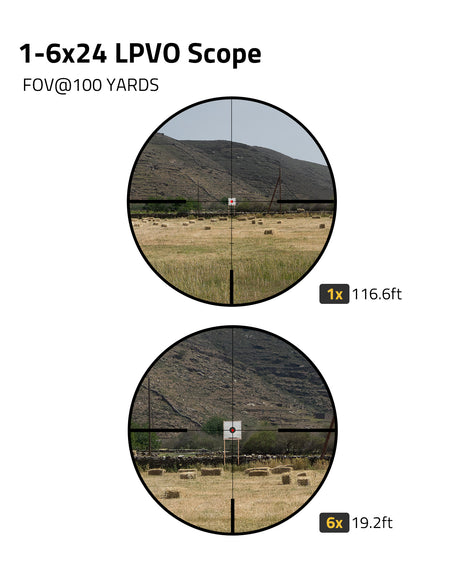
Cette optique présente une configuration 1‑6x24, un réticule BDC, des optiques entièrement multicouches, un éclairage à six niveaux et un montage déporté de 30 mm. Elle offre un champ de vision de 116.6 ft @100 yards à 1x et de 19.2 ft @100 yards à 6x.
Le kit complet comprend la lunette 1‑6x24, un montage déporté de 30 mm, des protège-lentilles, une bague de réglage amovible, des piles, un chiffon de nettoyage, une clé Allen et un manuel.
Une MPVO devient plus intéressante si vous savez déjà que vous souhaitez un grossissement supérieur à celui offert par une configuration à faible puissance classique.
Le principal avantage est évident : un grossissement maximal plus élevé agrandit davantage l’image. Le grossissement indique dans quelle mesure un objet paraît plus grand à travers l’optique que lorsqu’on le regarde sans grossissement.
Cela peut être utile lorsque l’utilisateur doit examiner des détails plus petits ou plus éloignés.
Cependant, le grossissement n’est qu’un aspect des performances optiques. La qualité de l’image, la résolution, l’éclairage, les conditions atmosphériques, le dégagement oculaire et la vue de l’utilisateur influent également sur ce qui est réellement visible.
Il faut donc considérer un grossissement supérieur comme une possibilité, et non comme une amélioration systématique dans toutes les situations.
Le principal compromis d’une MPVO est que son grossissement minimal est généralement supérieur à celui d’une LPVO.
Par exemple, une configuration 3-12× commence à 3×, tandis qu’une configuration 1-6× commence à 1×. Cette différence influe sur le champ de vision et sur la facilité avec laquelle l’utilisateur peut conserver un champ large au grossissement minimal.
Un grossissement initial plus élevé peut être avantageux si l’utilisateur prévoit de s’appuyer principalement sur une visée grossie, mais il peut être moins pratique lorsqu’un large champ de vision à faible puissance est important.
Choisissez une MPVO parce que vous avez besoin de sa plage de grossissement supérieure, et non simplement parce qu’un chiffre plus élevé figure sur la fiche technique.

La lunette de visée CVLIFE EagleFeather 2-10x32 MPVO AO est un exemple clair d’optique variable à grossissement moyen conçue avec un grossissement initial et maximal supérieur à ceux d’une LPVO 1-6x typique.
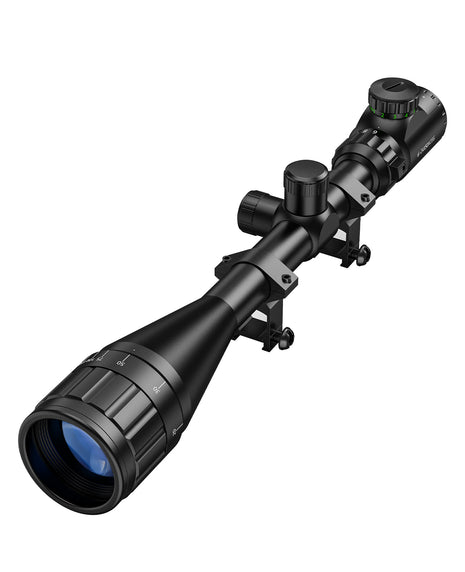
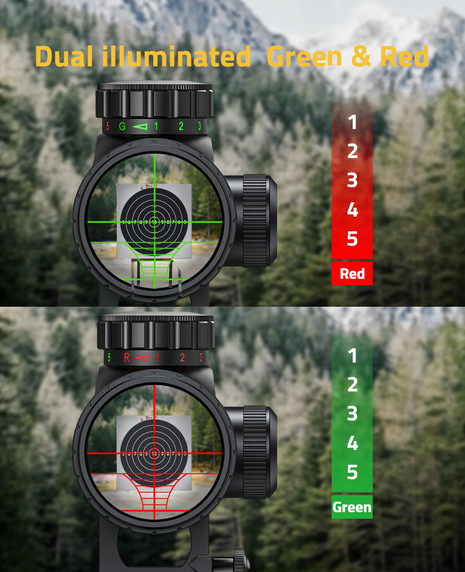
Cette lunette de visée 2‑10×32 est équipée d’un objectif réglable (AO), d’un réticule lumineux rouge et vert à cinq niveaux, de tourelles de réglage verrouillables exposées avec des clics de 1/2 MOA, ainsi que d’un réglage en dérive et en élévation de 70 MOA. Elle est dotée de lentilles vertes entièrement multicouches et est livrée avec un montage cantilever. Elle offre un champ de vision de 46.8 ft à 9.36 ft à 100 yards, ainsi qu’un dégagement oculaire de 4.1-3.5 inches.
Votre situation d’observation habituelle devrait déterminer la plage de grossissement, plutôt que de commencer par choisir le grossissement le plus élevé.
Avant d’acheter, posez-vous trois questions simples :
1. Ai-je besoin d’un large champ de vision à faible grossissement ?
2. Vais-je passer la plupart du temps à utiliser un grossissement faible à modéré ?
3. Ai-je régulièrement besoin d’un grossissement supérieur à celui qu’offre généralement une LPVO ?
Si les réponses aux deux premières questions sont oui, une LPVO est une catégorie logique à envisager en premier.
Si la réponse à la troisième question est oui, Une MPVO mérite d’être envisagée de plus près.
Cette approche est plus utile que de choisir une lunette uniquement parce que son grossissement maximal est plus élevé.
Le champ de vision devrait être l’une des premières caractéristiques à comparer entre les lunettes à grossissement variable.
Le champ de vision décrit la largeur de la zone visible à travers un système optique à une distance donnée. À mesure que le grossissement augmente, le champ de vision se rétrécit généralement.
C’est pourquoi deux lunettes aux plages de grossissement différentes peuvent offrir des sensations très différentes à l’utilisation.
Lorsque vous comparez des produits, consultez les spécifications du champ de vision indiquées par le fabricant pour les réglages de grossissement que vous comptez réellement utiliser.
Ne comparez pas les « 1-6× » et les « 3-12× » en vous basant uniquement sur le grossissement maximal ; comparez ce que chaque optique permet réellement de voir aux grossissements que vous comptez utiliser.
La règle de sélection la plus simple consiste à choisir une LPVO pour sa polyvalence à faible grossissement et une MPVO lorsque le grossissement supérieur est la priorité.
|
Votre priorité |
Catégorie à envisager |
|
Champ de vision plus large à faible grossissement |
LPVO |
|
Grossissement modulable |
LPVO |
|
Grossissement initial plus faible |
LPVO |
|
Besoins équilibrés en grossissement faible à modéré |
LPVO ou MPVO |
|
Grossissement maximal plus élevé |
MPVO |
|
Agrandissement supérieur de l’image |
MPVO |
|
Observation principalement avec grossissement |
MPVO |
Le choix du réticule doit aussi être pris en compte avec le grossissement. Les lunettes à grossissement variable peuvent être dotées d’un réticule au premier plan focal (FFP) ou au second plan focal (SFP). Dans une optique FFP, la taille apparente du réticule varie avec le grossissement, tandis qu’un réticule SFP conserve généralement la même taille apparente.
La compatibilité du montage est tout aussi importante. Le tube de la lunette doit être adapté aux anneaux ou au montage, et celui-ci doit être compatible avec le rail de la plateforme. Un rail compatible ne signifie pas automatiquement que la lunette et les anneaux sont compatibles entre eux.
La meilleure lunette à grossissement variable est celle dont la plage de grossissement utile, le champ de vision, le réticule, le système de montage et les dimensions correspondent à votre utilisation réelle.
C’est possible, à condition que le rail de la plateforme et le système de montage de la lunette soient compatibles. Avant l’installation, les utilisateurs doivent vérifier le type exact de rail, l’interface de montage, le diamètre du tube de la lunette et l’espace disponible pour le montage.
Aucune des deux catégories n’est universellement meilleure. Une LPVO privilégie généralement un grossissement initial plus faible et une plus grande souplesse à faible grossissement, tandis qu’une MPVO privilégie généralement un grossissement maximal plus élevé.
Oui, le 1-6× est une configuration LPVO courante. Les LPVO commencent généralement à 1× et vont jusqu’à des niveaux de grossissement modérés.
On peut raisonnablement décrire une lunette 3-12× comme une configuration à grossissement variable moyen, mais il n’existe pas de limite de grossissement unique et universellement reconnue pour les MPVO. La classification peut varier selon le fabricant et le contexte.
Non. La largeur du rail ne suffit pas à établir la compatibilité. Il faut vérifier le profil du rail, la configuration des fentes, l’interface de montage, le diamètre du tube de la lunette et l’espace disponible pour le montage.
Pour choisir entre une LPVO et une MPVO, le plus simple est d’adapter la plage de grossissement utile de l’optique à vos besoins réels.
La règle la plus simple est la suivante :
LPVO = grossissement initial plus faible et plus grande souplesse à faible grossissement.
MPVO = grossissement initial plus élevé et grossissement maximal supérieur.
Une fois que vous avez compris ce compromis, choisir une lunette à grossissement variable devient beaucoup plus facile. Au lieu d’acheter simplement le grossissement maximal disponible, choisissez l’optique en fonction de l’expérience d’observation dont vous avez réellement besoin.
$159.99 $132.59

$64.99


