Short answer. Nearly everything that attaches to a firearm attaches to a Picatinny rail through the same three numbers: slot width, slot spacing, and slot depth. Because those are standardized, accessories are largely interchangeable across rifles. The exceptions are accessories mounted to a handguard tube rather than a rail, and clamps that depend on a recoil lug notch the rail does not have.
What this guide covers. The geometry that determines fit, then the four accessory categories most often added to a rail, what each one needs from the rail, and how to spec a rail that will carry them.
The geometry behind the standard
A rail mount is a standardized platform for attaching optics, lights, lasers, and grips. The rail type most rifles use is defined by a military standard, and three dimensions carry nearly all of the practical meaning.
Slot width sets what physically fits into the rail. Slot spacing sets how accessories align relative to each other, which is why a red dot and a magnifier can be positioned so both are usable at once. Slot depth sets how deeply an accessory clamp can engage.
One additional feature matters more than buyers expect: square-bottomed slots. A flat slot floor gives a recoil lug something solid to bear against. Without it, a clamp has nothing to push against and the whole interface works differently. This is the reason some accessories specify a recoil lug requirement, and the reason two parts both described as Picatinny-compatible can still behave differently on the same rifle.
What each accessory category needs from the rail
The compatibility question is not really about brands. It is about which part of the rail the accessory uses and how many slots it consumes.
| Category | How it attaches | What to verify before buying |
|---|---|---|
| Bipods | Clamps onto the rail, typically at the front of the handguard or on an extended rail section | Slot count on the rail ahead of the trigger guard; whether the bipod uses a recoil lug and whether the rail has square-bottomed slots at that position |
| Weapon lights | Either side-mounted to a handguard tube with a clamp, or rail-mounted via an adapter | Whether the light is side-mount or rail-mount; on a rail mount, whether the adapter positions the light where you can reach it with your support hand |
| Lasers | Rail mount, handguard clamp, or grip-level mount | Whether the unit needs a rail section or works on the handguard; whether the mounting interface is a Picatinny clamp or a dedicated handguard bracket |
| Optic mounts and rings | Rail base or ring set with a cross-bolt through the slots | Ring height relative to the shooter's sight line; whether the base uses a recoil lug or a plain cross-bolt |
| Foregrips | Clamp with a screw, or a rail-mounted vertical grip | Whether the grip clamps to the handguard directly or needs a rail clamp |
Matching a bipod to the rail
A rail-mounted bipod is the most standardized of these accessories, which makes it the easiest to buy with confidence. Slot width and slot spacing are the same on every conforming rail, so a Picatinny bipod transfers between rifles without modification. The two things to check are slot count ahead of the trigger guard and the recoil lug question. A rail with only a few front slots may not give the bipod enough surface to clamp securely, and a bipod with a recoil lug needs square-bottomed slots to seat against.
Options on the market include adjustable-leg Picatinny bipods in carbon steel and aluminum, with leg spread and cant options that cover prone, seated, and standing positions — a range worth comparing in the CVLIFE bipod lineup and at equivalent suppliers.
Rail-mounted weapon lights versus side mounts
A side mount attaches to the handguard tube and keeps the light forward and low. A rail mount attaches through the rail slots, which puts the light higher and lets you position it exactly where you want it along the rail. Rail mounting is the practical choice on rifles whose handguard has no accessory slots, and on builds where the light needs to sit further forward than the side-mount position allows. The trade-off is added length ahead of the rail and a slightly heavier package.
The detail that catches people out is the light's own interface. Some lights are side-mount by design and need a rail adapter; some ship with both. Confirm before ordering.
Rail-mounted versus grip-mounted lasers
A training laser can be rail-mounted, handguard-mounted, or built into a grip. Rail mounting suits rifles that already have a rail and no free handguard slots; a grip-mounted unit needs no rail space at all, which matters when the rail is already carrying a bipod, a light, and an optic. The rail is the more flexible position because the laser's position along the rail can be adjusted, which lets you set it where it clears the optic body and stays visible through full recoil.
Current options include rail-mounted visible and infrared laser units, with bolt or rechargeable power options and mount patterns that fit standard rail slots.
Spacing accessories so both stay usable
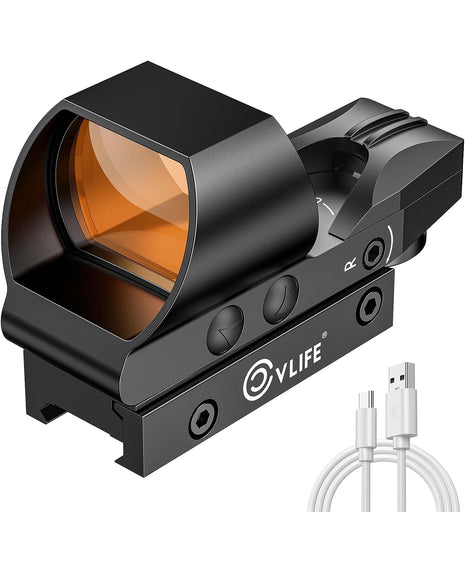
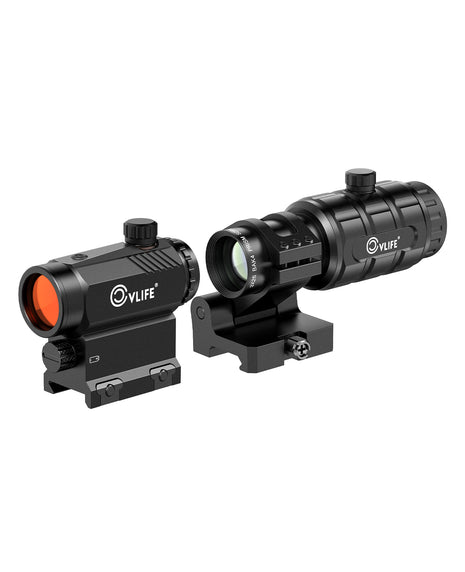
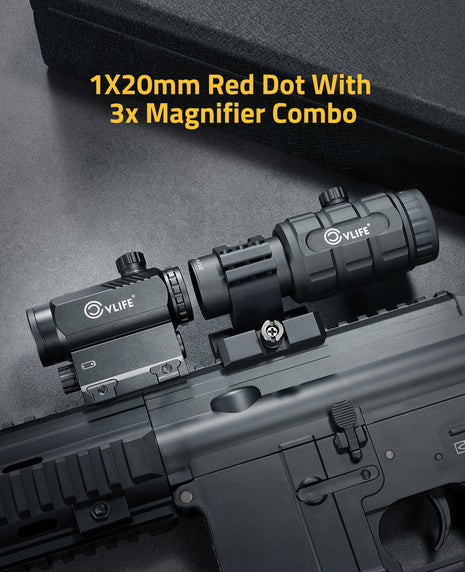
Slot spacing is the reason a red dot and a magnifier can share a rail and remain usable at the same time. With slots spaced 0.394 inches apart, you can place a magnifier directly behind a red dot sight so switching between them is a head movement rather than a mount swap. The same spacing logic applies to lights and lasers: the further forward they sit, the less they interfere with the optic's rear housing.
Count slots before buying a rail rather than after. A red dot plus a weapon light needs roughly eight to twelve usable slots of combined length. Adding a front-mounted bipod and a rear sling mount extends that requirement further, which is the practical reason many shooters choose an extended rail section over a short one.
Cross-system compatibility
Not every accessory is built on the rail interface. Some handguard systems use a different slot pattern, and adapters bridge the two. An adapter for compatible-with-M-LOK handguards to a Picatinny rail is a common example: it is a short rail section that bolts or clamps to the handguard and presents standard slots for a Picatinny accessory.
Adapters solve interface problems and create them. A bolted adapter is mechanically sound and predictable. A clamp-on adapter that does not bear on a recoil lug can shift under load, particularly on a rifle that is fired supported or from a rest. If you are bridging two systems, favor an adapter that clamps as many slots as it can reach and that has a positive mechanical stop rather than relying on friction alone.
Before you order. Confirm three things against the specific rifle, not the model family: the number of slots available in each position you plan to use, whether those slots have square bottoms where the accessory needs a recoil lug, and whether the accessory's own interface matches the rail or needs an adapter. Most incompatible purchases trace back to one of those three not being checked.
What the standard does and does not guarantee
The Mil-Spec 1913 interface is genuinely standardized, and that standardization is why the same Picatinny bipod, light mount, or laser fits across a wide range of rifles. It is the reason accessories can be moved between platforms without re-machining.
It does not guarantee that every rail is fully conforming. Rails that do not meet the standard in slot geometry produce the loose or shifting behavior described above, and they are usually the reason a well-regarded accessory feels like it does not fit properly. It also does not standardize mounting hardware position on the accessory itself, so the accessibility question — can you reach the light switch or the laser's controls with a support hand — stays a product-by-product judgment.
Frequently asked questions
What accessories are compatible with a Picatinny rail?
Anything built on the Mil-Spec 1913 interface: optic mounts and ring sets, weapon lights, lasers, bipods, foregrips, sling mounts, and rail covers. Because slot width and slot spacing are standardized, a Picatinny bipod made for one rifle will fit another rifle with the same rail. The exception is anything that depends on a different interface, such as a light mounted to a handguard tube rather than to a rail.
Will a Picatinny bipod fit any rifle with a rail?
Yes, if both the rail and the bipod are built to the Mil-Spec 1913 standard. Slot width of 0.206 inches and slot spacing of 0.394 inches center-to-center are what make the interface interchangeable. Two exceptions are worth checking: a bipod with a recoil lug requires a rail with square-bottomed slots to engage the lug, and a short rail with too few slots may not give the bipod enough surface to clamp securely.
Why do some Picatinny accessories feel loose?
Looseness usually comes from the clamp mechanism rather than the rail. Accessory clamps vary in how they engage the slot, and a clamp that only grips the slot shoulders instead of the recoil lug gap can shift under repeated handling. Slot geometry on a rail that does not fully meet the standard can also contribute. Check that the accessory clamp uses the recoil lug notch, and check that the rail has square-bottomed slots in that location.
Can I mount a weapon light to a Picatinny rail instead of the handguard?
Yes, with a rail-mounted light mount. This is a common choice on rifles where the handguard has no accessory slots, or where a light needs to be positioned further forward than the side-mount location. The trade-off is added length forward of the rail and a slightly heavier overall package. Confirm the light's mounting pattern is rail-based rather than side-mount before ordering a rail adapter.
How many slots do I need on a rail?
It depends on how many accessories you plan to run at once. A red dot plus a weapon light needs roughly eight to twelve usable slots of combined length. Adding a bipod at the front and a sling mount at the rear extends that further. Counting slots before buying a rail is simpler than discovering the shortfall after the accessories are installed.