
Featured collection
-
-
$159.99 $136.79
-
-
$59.99

he weeks before hunting season decide how the season goes. Four things matter most: get your rifle dialed in through live-fire practice, not just cleaning; verify your zero instead of trusting last year's settings; scout with your eyes from a vantage point rather than covering ground on foot; and read the wind before every approach. None of these require expensive gear — they require discipline and preparation. Do them early, and opening day becomes a matter of execution rather than improvisation.
The weeks before hunting season opens often decide how the whole season goes. Hunters who hit the ground running on opening day usually aren't lucky — they just got their homework done early.
This article covers the four most important parts of preseason preparation.
A lot of hunters spend the weeks before season wiping their rifle down until it shines, then shoot maybe twenty rounds. That's a mistake.
Range time isn't about confirming the gun still goes bang. It's about building muscle memory. You need to know this rifle's trigger break, its recoil impulse, and how it points when you shoulder it naturally. You don't get that from cleaning. You get it from shooting.
More importantly, field shooting positions are nothing like range positions. On the range, you're prone on a flat bench. In the field, you might be leaning against a tree, crouched behind brush, or kneeling on a slope. Before season opens, practice shooting from field positions — sitting, kneeling, standing with a rest — so your body knows what to do when it counts.

That zero you set last year — is it still good?
The answer is: maybe not. Rifles get bumped during storage and transport. Scope screws can loosen. Even temperature changes can shift your point of impact. Experienced hunters confirm their zero before the season rather than assuming last year's settings still hold.
The method is simple: put three rounds on paper at the range and see where they land. If they're off, re-zero. If they're on, you've just bought yourself something priceless in the field — certainty.
A lot of hunters think scouting means covering ground. They hike over ridges, push through timber, and come home exhausted — with nothing useful to show for it.
Effective scouting is actually about sitting still and watching. Deer move on patterns: they feed in the evenings and return to bedding areas in the morning. If you sit on a vantage point with a good field of view and glass those travel routes, you'll learn more than you ever would by crashing through the brush.
What you're looking for isn't just "are there deer here." It's where do they come from, where are they going, and what time do they show up. That's the information that tells you where to sit on opening day.
Wind is the most underrated factor in hunting.
No optic can solve a wind problem. A deer's nose is far more sensitive than yours. They can smell you from hundreds of yards away and slip out without ever showing themselves. If your scent is blowing toward where the game is coming from, no amount of camouflage will save you.
Old-school hunters are almost obsessive about wind. They stop before entering an area, toss a pinch of dry grass or leaves into the air, and watch which way it drifts. Then they plan their approach around it. The basic rule never changes: keep the wind in your face, not at your back.
If you don't want to carry a wind meter, watching treetops or feeling which side of your face the breeze hits will tell you enough to make a call.

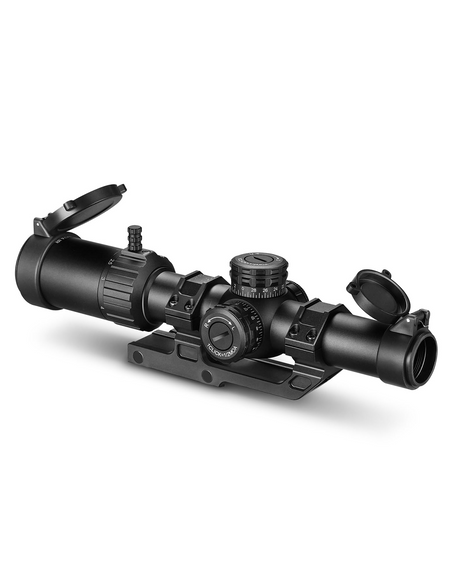
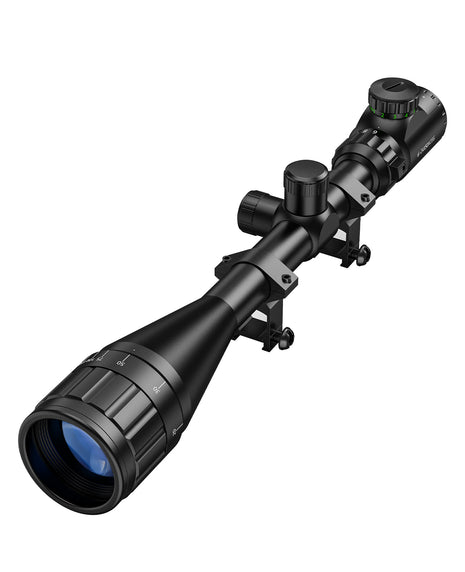
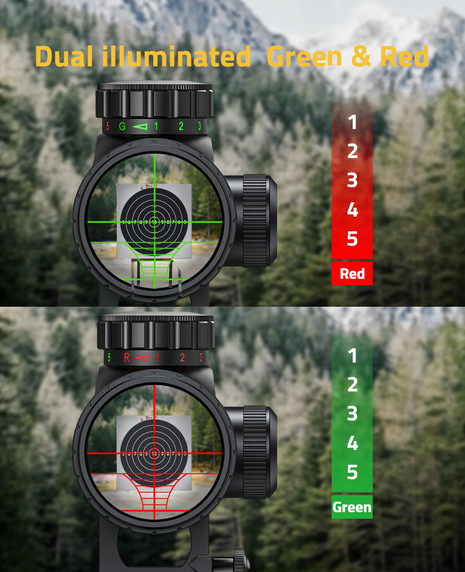
If you're looking for a scope to carry you through the season, the CVLIFE BearPower 5-25x56 FFP is worth a look. It uses a first focal plane (FFP) design, so the reticle subtensions stay accurate at any magnification — you can make holdover calls at 5× or 25× without second-guessing the math. The Christmas-tree MOA reticle has built-in windage and elevation reference points, and the 6-level red illumination keeps it visible in the low light of dawn and dusk.
The tube is a one-piece 6061 aircraft-grade aluminum construction that's passed 1000G impact testing, nitrogen-purged, and sealed for waterproof and fogproof performance. For a hunting rifle that sees rough terrain and unpredictable weather, that kind of reliability matters more than any extra feature.
$159.99 $136.79
$59.99


