
Featured collection
-
-
$159.99 $136.79
-
-
$59.99

Wildschweine (Sus scrofa) sind zu 80 % nachtaktiv - sie sind bei schlechten Lichtverhältnissen, in dichtem Buschwerk und in mondlosen Nächten aktiv. Das Absehen Ihrer AR-15 ist die wichtigste einzelne Variable zwischen einer sauberen Erlegung und einer verpassten Gelegenheit. Dieser Leitfaden konzentriert sich ausschließlich auf die Logik von Absehenmuster + Stärke + Beleuchtung für die typische Begegnung mit Wildschweinen: 50 bis 250 Yards, bewegliche Ziele, komplexe Hintergründe (Buschwerk, Schatten, hohes Gras).
Kannst du das Zentrum innerhalb von 0,1 Sekunden vor dem Hintergrund von Eichen- und Zedernbewuchs erfassen? „Weihnachtsbaum“-Absehen mit Haltepunkten für Seitenwind verdecken die Schulter eines Wildschweins auf 80 Yards optisch.
Die menschliche Kontrastempfindlichkeit bei schwachem Licht bevorzugt Pfosten/Linien mit einer Dicke von >2 MOA. Zu dünne Linien (<0,75 MOA) verschwinden im Morgengrauen; zu dicke (>8 MOA) verdecken die lebenswichtigen Trefferzonen eines 150-Pfund-Wildschweins auf weniger als 75 Yards. Das ideale Wildschwein-Absehen verwendet dicke äußere Pfosten (6-8 MOA) für eine schnelle Zielerfassung und ein feines Zentrum (1-2 MOA) für Präzision.
Eine 5,56-mm-Kugel mit 62 gr Geschossgewicht fällt auf 200 Yards um etwa 3-5 Zoll ab (abhängig von Lauf und Einschuss). Brauchst du markierte Haltepunkte? Das hängt davon ab, ob du beim Sprint der Wildschweine lieber die Verstellung bedienst.
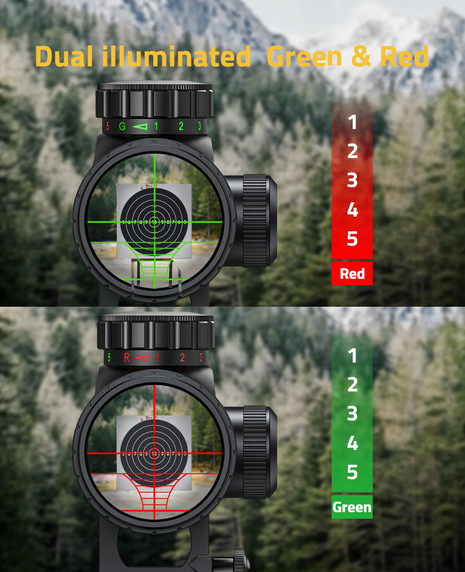
Bei der Beleuchtung geht es um Kontraststeuerung. Rot (650 nm) bewahrt die natürliche Nachtsicht; Grün (525 nm) wirkt heller, kann sich aber mit der Vegetation vermischen. Eine einstellbare Intensität ist unverzichtbar - ein zu heller Punkt lässt das Wildschwein nachts verblassen.
Aufbau: dicke Außenlinien, die zu einem feinen Fadenkreuz zulaufen. Stärken: blitzschnelle Zielerfassung, nachts aus dem Augenwinkel gut sichtbar. Ideal für Schüsse auf Entfernungen von <120 Yards in dichtem Bewuchs. Das Fehlen von Haltemarken ist irrelevant, wenn das Wildschwein 40 Yards entfernt ist und rennt.

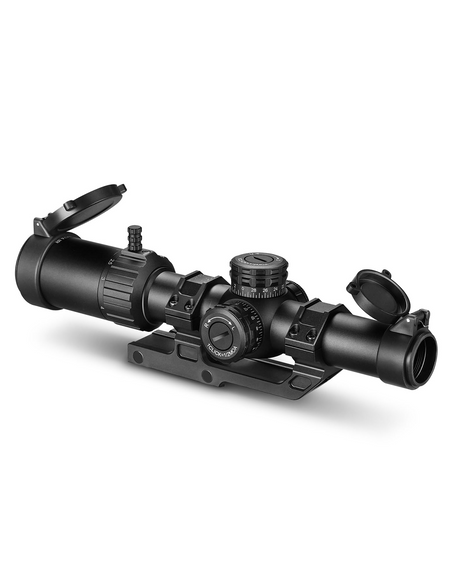
Voreingestellte Haltemarken für die Flugbahnen von 5.56 / .223. Beispiel: ein BDC-600, kalibriert auf 55 gr bei 3200 fps. Praktischer Vorteil: Auf 200 Yards setzt du einfach den ersten unteren Punkt auf die Schulter. Selbst bei unterschiedlichen Lauflängen deckt die Stärke der Haltemarken die meisten Munitionsunterschiede in der Praxis ab. Am besten für gemischtes Gelände auf 100-250 Yards geeignet.

Gleichmäßig verteilte Markierungen für präzise Haltepunktkorrekturen und Windvorhalte. Hervorragend für offene Felder, aber die visuelle Unübersichtlichkeit ist real - besonders wenn ein Wildschwein auf 180 Yards bei schwindendem Licht schräg auf dich zukommt. Übertrieben, sofern du nicht häufig auf Entfernungen von über 250 Yards schießt.
Klares Zentrum + ein oder zwei Referenzen für die Haltepunktkorrektur. Zum Beispiel ein Duplex-Absehen mit einer einzelnen unteren Markierung für 200 Yards. Es bietet ein ausgewogenes Verhältnis zwischen Geschwindigkeit und Nutzen.
Die Beleuchtung hilft bei Situationen mit geringem Kontrast: ein schwarzes Absehen vor einem dunklen Wildschwein in der Dämmerung. Die optimale Helligkeit ist die niedrigste Einstellung, bei der das Absehen gerade noch sichtbar ist - damit es nicht „glüht“ und das Ziel verdeckt.
Das sind allgemeine Bereiche. Wenn du in Flussniederungen jagst, wo 60 Yards die maximale Entfernung sind, reicht ein einfaches unbeleuchtetes Duplex-Absehen aus. Wenn du an einem 180-Yard-Sendero sitzt, macht ein BDC-Absehen den entscheidenden Unterschied.
Nicht notwendig, aber besonders praktisch, wenn du häufig auf 150-250 Yards schießt. Ein einfaches BDC-Absehen (wie beim CVLIFE 3x32-Prismenvisier) macht Rätselraten bei der Haltepunktwahl überflüssig.
Rot schont die Nachtsicht im Allgemeinen besser. Grün kann heller erscheinen, aber möglicherweise mehr Blendung verursachen.
Ja, bei typischen bewegten Zielen auf 50-200 Yards gewinnt die Einfachheit. Du brauchst keine Windkorrekturpunkte in 0,2 Mil für ein laufendes Wildschwein.
Ja – eine Waffenlampe beleuchtet das Ziel, nicht das Absehen. Ein unbeleuchtetes schwarzes Absehen vor einem beleuchteten Wildschwein kann trotzdem verschwinden. Die Beleuchtung sorgt für ausreichenden Kontrast zwischen Absehen und Tier.
Für die Wildschweinjagd ist das beste Absehen dasjenige, das du in den letzten fünf Minuten der erlaubten Jagdzeit sofort erkennen kannst, ohne nachzudenken. Duplex für dichte Deckung, BDC für unterschiedliche Entfernungen, Beleuchtung für die Dunkelheit.
Verwende beim Bezahlvorgang den Code REA20 · Das Spring-Ready-Angebot endet bald
$159.99 $136.79
$59.99


