1. The three costs that actually decide range performance
Range rifles get discussed as if precision were the headline. It is not. Three costs govern whether a rifle is good at the range, and only the third one is about accuracy.
Cost per round
The rifle that shoots a $2-per-round cartridge will see a fraction of the rounds of the rifle that shoots $0.15 rimfire. Round count is the largest single predictor of shooter improvement.
Heat tolerance
Point of impact that walks after twenty rounds makes zeroing a moving target. A rifle that holds its zero hot is worth more at the range than one that is more precise cold.
Group consistency
Repeatable small groups matter more than a single best group. The practical definition of precision is the size of the worst group in a session, not the best.
Ergonomics
Cheek weld, length of pull, and trigger reach determine how many rounds before fatigue changes the shooter. Fatigue changes groups as reliably as heat does.
2. Calibers that keep practice affordable
| Cartridge | What it teaches well | What it will not tell you |
|---|---|---|
| .22 LR | Trigger control, sight alignment, follow-through, and wind reading at close range | Recoil management, and anything about ballistic drop past 100 yards |
| .223 / 5.56 | Fundamentals with real recoil, positional shooting, and the widest accessory ecosystem | Nothing important - it is the default training cartridge for a reason |
| 6.5 Creedmoor | Long-range wind calls and drop compensation with modest recoil | Cheap volume practice; round cost limits how much time you can log |
| .308 Win | Recoil management and fundamentals under meaningful impulse | Modern ballistic efficiency, which it deliberately traded away |
The pattern is simple: pick the cartridge that lets you fire 200 rounds per session without resenting the bill, then add a second rifle or a conversion for the long-range discipline once the fundamentals are consistent.
3. Barrel profile and what it actually changes
Barrel profile is the most over-interpreted specification in the category. Three things follow from it, and only three.
- Heat soak. Thinner profiles reach a point of impact shift sooner than heavier profiles, at the same round count and cadence.
- Harmonics. Thin barrels are more load-sensitive, so ammunition changes move groups further than they would on a heavy barrel.
- Balance. Weight forward changes how steady the rifle sits on a rest and how quickly it settles after recoil.
What profile does not do is set the ceiling of a rifle's precision. A well-made light profile barrel can outshoot a poorly made heavy one, especially in the first ten rounds of a string. The profile question only becomes decisive once you are firing long strings, quickly.
4. Handguard, bedding, and heat
Heat is a system problem, and the receiver-handguard interface is the system's weakest joint. Two failure patterns are common enough to be worth checking on any rifle you plan to shoot hard.
- Free-float that is not actually free. A handguard that touches the barrel after the barrel warms will bend the barrel as it expands. The symptom is a stable cold group and a hot group that has walked.
- Bedding and action screw torque. A stock or chassis that was bedded for one temperature will settle in the shape it was tightened at. Re-check action screw torque after the first full heat cycle.
Both of these produce the same diagnostic signature: groups that move rather than groups that grow. Moving groups are mechanical; growing groups are usually load or shooter.
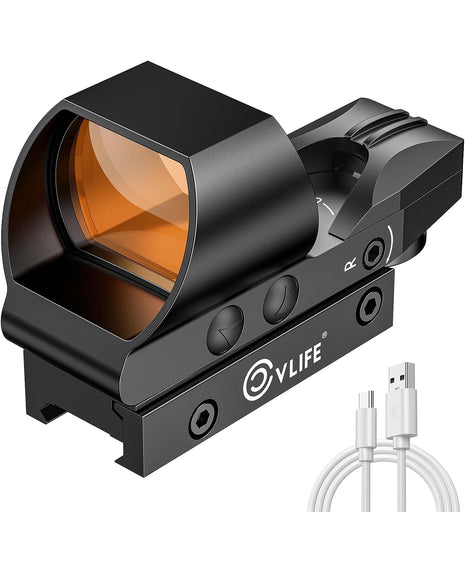
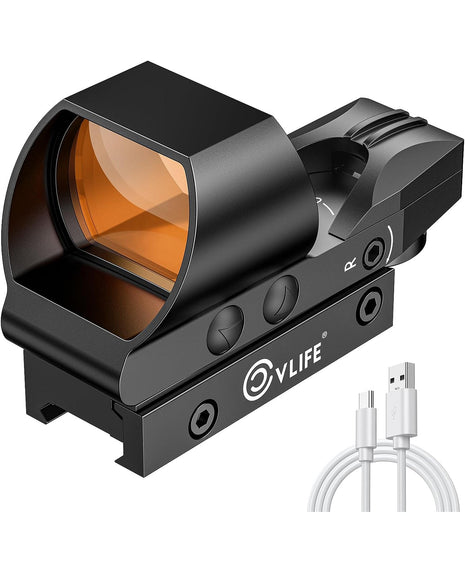
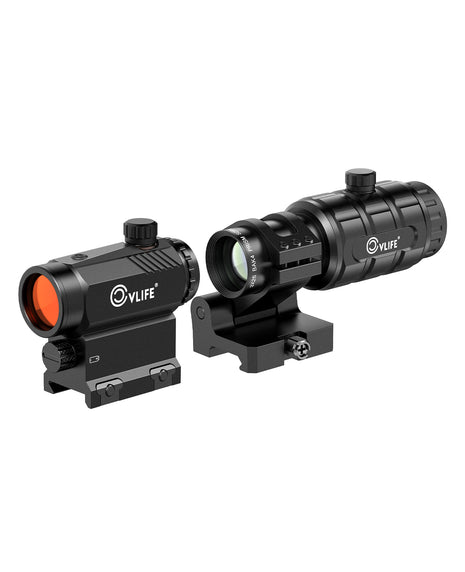
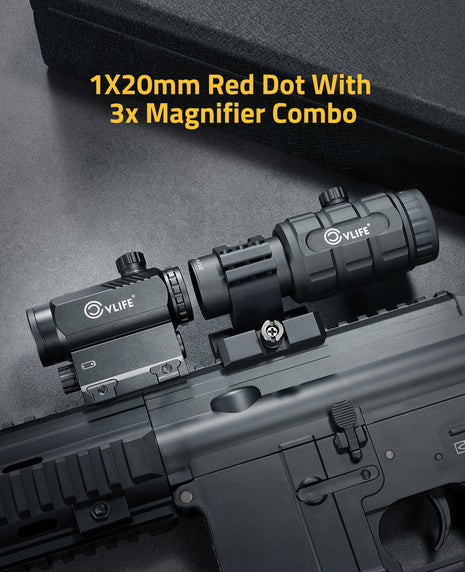
5. The optic a range build needs
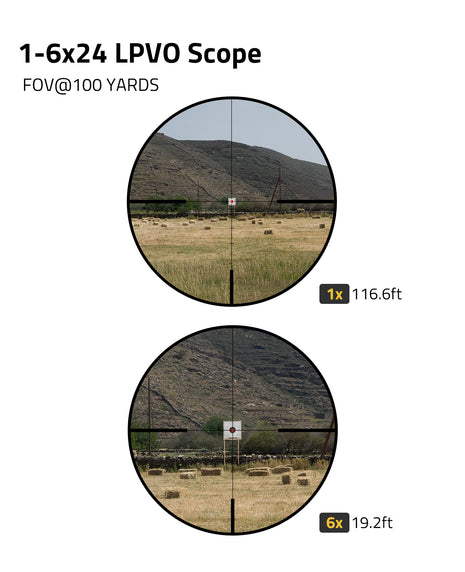
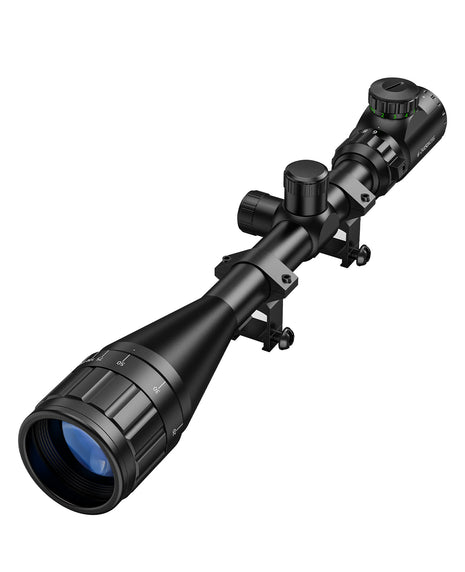
Range optics serve a different purpose than field optics. The requirement is a repeatable, fine-grained adjustment and a reticle you can read against a paper target at the distances you actually shoot - not the lightest weight or the fastest acquisition.
What matters
Adjustment value you can divide mentally (quarter-MOA or tenth-mil), a reticle that subtends usefully at your target size, and a parallax adjustment that actually focuses at your distance.
What is optional
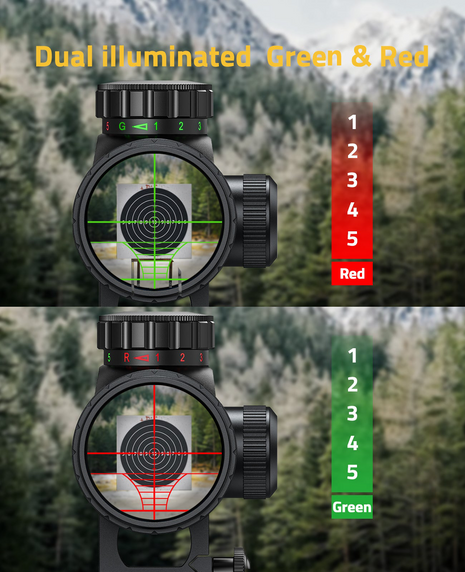
Illumination, shake-awake, and extreme light transmission. Those are field features. Cosmetics and popularity of a reticle variant are not features at all.
The most common range-build mistake in the optics category is spending enough on a scope to get good glass and then mounting it in rings that shift. Rings and mounts deserve the same scrutiny as the optic, and burnishing or lapping a ring set is a structural step rather than an optional refinement.
6. The evaluation procedure
One session, one page, and a decision. This is the procedure I would use to judge whether a rifle earns a permanent spot on the range rotation.
- Cold, three groups of five. Record group size and center.
- Hot, three groups of five. Same cadence, no breaks. Record group size and center, and measure the shift between cold center and hot center.
- Re-check zero after heat. A rifle that needs a click of windage after twenty rounds is a rifle that will not hold zero at the end of a session.
- Sustained trigger string. Fifty rounds at a steady cadence. A trigger that stacks becomes visible here.
- Optic mount verification. Level check and torque check after the hot strings, before blaming the rifle.
If group centers are within an inch between cold and hot, the rifle is suitable for volume work. If they move more than that at 100 yards, the handguard, bedding, or barrel profile is the thing to fix - and fixing any of those costs less than buying a more precise barrel.
Questions that come up before every range purchase
What calibers are best for a first range rifle?
A .22 rimfire first, because volume builds fundamentals, and then a .223 or 5.56 for real-recoil practice. Most shooters skip the rimfire step and pay for it in trigger-control habits they have to unlearn.
What range distance should I zero a range rifle at?
Zero at the distance you shoot most. For most 100-yard ranges that is 100 yards; for 25-yard indoor lanes, zero at 25 and learn your hold at 100.
How much should a range rifle's barrel profile cost me?
Profile is a heat-management decision, not a status symbol. Spend the money on barrel quality and chamber work first, and add profile weight only if you fire long strings fast.
Does a lighter trigger make the rifle more accurate?
No, and only partly. A better trigger makes the rifle easier to shoot accurately by removing inconsistency. Group size itself does not change unless the shooter's error does.
What optic power do I need for a range rifle?
Enough to see your target at the distances you shoot and enough adjustment granularity to move the group where you want it. For 100-yard paper, 4-12x covers almost everyone; for 500 yards and beyond, add magnification and a proper parallax adjustment.