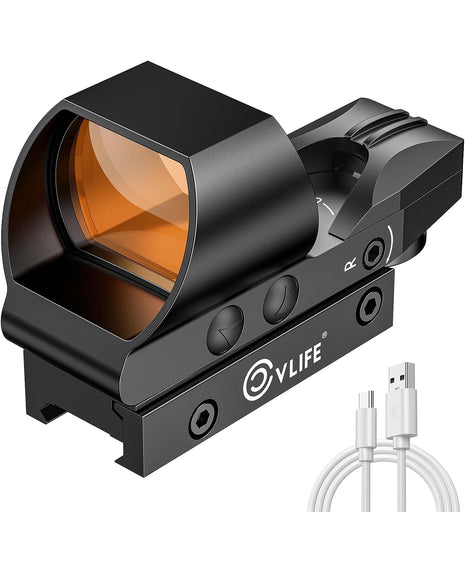
Short answer. A dovetail mount installs without permanent modification and can be removed to return the pistol to factory configuration. A frame or side mount does not move with the slide and works on slides that cannot take a plate. A milled slide or optics-ready slide with a bolt-on plate gives the lowest mount height and the most stable zero, but requires the slide to be machined.
Choose by constraint, not preference. If the pistol already has a machined pocket, use it. If it has a usable rear sight dovetail and you want to keep the pistol reversible, use a dovetail mount. If it has neither and slide machining is unavailable, use a frame mount.
The three mounting methods at a glance
A red dot sight for a handgun has to attach to something. On modern pistols that something is either a pocket machined into the slide, the dovetail that the rear sight occupies, or the frame beside the slide. Each of the three produces a different mount height, a different recoil behavior, and a different amount of work, which is why the choice matters more than the optic.
| Criterion | Dovetail mount | Frame / side mount | Milled or optics-ready slide |
|---|---|---|---|
| Install complexity | Owner can install; no machining | Gunsmith normally required | Plate is owner-installable; the pocket is factory or gunsmith cut |
| Mount height | Higher than a milled setup | Highest; adds bulk above the slide | Lowest, closest to the bore axis |
| Optic movement during recoil | Reciprocates with the slide | Static; does not reciprocate | Reciprocates with the slide |
| Effect on the pistol | Reversible; rear sight is replaced | Additive; original rear sight can remain | Requires machining unless factory optic-ready |
| Best fit when | Reversibility and swappable optics matter | The slide cannot accept a plate and machining is unavailable | The pistol is a duty or competition build and zero stability is the priority |
Dovetail mounts: reversible, and the right answer for most standard slides
A dovetail mount is a plate that slides into the rear sight dovetail on the slide and carries the optic on top. The rear sight comes off, the plate goes on, and the original rear sight can be reinstalled at any time. That reversibility is the main reason it is popular with owners of a standard pistol, and it is why the method works on any pistol that has a usable cut.
The trade-off is height. Because the plate sits in place of the rear sight rather than in a pocket machined into the slide, the optic ends up higher than on a milled setup. A taller sight line is more noticeable in a carry bag and can make a backup co-witness alignment harder. The second trade-off is fit quality: a mount that has visible slop in the dovetail will shift under recoil, and a walking zero is the most common complaint with incorrectly fitted plates.
Three rear sight cuts account for most handgun dovetail mounts. A Novak dovetail is the most common on modern production pistols. A GI-style cut is a simple notch rather than a full dovetail and needs a GI-pattern plate. Adjustable rear sight cuts used on some competition pistols will usually not accept a red dot mount at all unless the cut allows both.
Frame and side mounts: static, adaptable, and bulkier
A frame mount attaches to the frame beside the slide rather than to the slide itself. Because it does not sit on the slide, it does not reciprocate during the firing cycle, and it works on pistols whose slides have neither a machined pocket nor a usable rear sight cut.
The costs are height and installation. A frame mount is the tallest of the three options, since it extends above the slide line, and installation normally requires a gunsmith because the mount has to be fitted to the frame contour. For a duty pistol that will carry backup irons, that added bulk can interfere with the co-witness sight picture, which is the main reason frame mounts are less common than the other two methods.
Milled and optics-ready slides: lowest height and the most stable zero
A milled slide has a recessed pocket machined into the top so the optic body sits lower and the screws thread directly into the slide steel. An optics-ready slide is the same result achieved by the factory, which means the machining is warrantable and confirmed when the pistol is purchased rather than depending on an individual gunsmith.
This is the best-performing option on the criteria that matter for precision: lowest mount height, closest alignment to the bore axis, and the most stable zero under recoil. It is the usual choice for duty pistols and competition builds. The trade-off is that the pistol must have the pocket in the first place, either from the factory or from a gunsmith, and a pocket cut into a slide can affect how the pistol is later resold or returned to service.
A universal mounting system takes a third approach: a standardized slide cut machined to accept interchangeable plates, where each plate supports a different optic footprint. That design gives the widest optic compatibility from a single slide cut, at the cost of one more layer between the screws and the slide steel. The red dot footprint reference maps which plates correspond to which optic patterns.
What you need for a dovetail install
- A dovetail mount matched to your exact rear sight cut
- An optic whose footprint the mount accepts
- A torque driver in the 4-6 in-lb range for the securing hardware
- A rear sight push tool or soft-faced punch
- Optic cleaning wipes
Installing a dovetail mount
- Confirm the rear sight cut. Identify whether the pistol has a Novak dovetail, a GI-style notch, or a manufacturer-specific cut. Manufacturer-specific spacing exists on some modern pistols and will not accept a standard Novak plate.
- Verify the optic footprint against the mount. The mount accepts one or more footprints, commonly Docter, FastFire, or ACRO on handgun patterns. Confirm your optic matches before you begin, because a single-footprint mount will not accept a different pattern.
- Remove the existing rear sight. Unload the firearm and confirm the chamber is clear. Support the slide and back the rear sight out of the dovetail with the appropriate tool so the dovetail is not damaged.
- Seat the mount fully. Slide the mount in until it sits flat against the slide. If it rocks or has visible slop, it is the wrong pattern for the cut. Do not force it and do not shim it.
- Secure the mount to specification. Cross bolts, setscrews, and fit-only designs all exist. Tighten to the manufacturer's specified torque; over-tightening a small aluminum mount strips the hardware.
- Attach the optic and check clearance. Install the optic with its supplied screws, tightening in a cross pattern. Confirm the optic does not contact the slide or frame through full slide travel, and check the co-witness relationship with your front sight if you plan to use backup irons.
- Verify zero at the range. Fire a group and confirm the optic holds zero after several rounds of slide cycling. A mount that shifts under recoil will walk the zero off, which is the most common failure mode for a badly fitted plate.
If you want the lowest mount height and already own an optics-ready pistol
Skip the mount search entirely. An optics-ready pistol already has a machined pocket, so order a plate for that pocket and the footprint your optic uses. This is the shortest path and gives the most stable result. Confirm the pocket standard and the footprint before ordering, because plates are not interchangeable across different pocket standards.
If the pistol has no usable dovetail and no machined pocket
You have two options: have a gunsmith mill a pocket into the slide, which gives the best performance but is permanent, or use a frame mount, which is reversible and does not move with the slide but is taller and usually needs professional installation. Between those two, milling is the better performing answer and a frame mount is the better answer if you intend to keep the pistol in standard configuration.
Frequently asked questions
Which pistol red dot mounting method is best?
There is no single best method. A milled slide or an optics-ready slide with a bolt-on plate gives the lowest mount height and the most stable zero, and is the usual choice for duty or competition use. A dovetail mount is the best choice when reversibility matters, since it installs without permanent modification and can be removed to return the pistol to factory configuration. A frame or side mount is the practical option when the slide cannot accept a plate and slide machining is not available.
Do I need to mill my slide to mount a red dot?
Not in most cases. An optics-ready pistol has a factory-machined pocket that accepts a plate with two screws. A standard pistol with a dovetail rear sight cut accepts a plate that slides into the cut. A frame-mounted optic avoids slide work entirely. Actual milling is only required when the pistol has neither a machined pocket nor a usable rear sight cut, and it should be done by a gunsmith.
Will a dovetail red dot mount hold zero?
A correctly fitted dovetail mount holds zero well. The failure mode is not the mount design but a poor fit: a mount with visible slop in the dovetail will shift under recoil and walk the zero off. Match the mount to the exact cut, verify the optic footprint matches what the mount accepts, and torque the securing hardware to the manufacturer's specification.
What is the difference between a milled slide and an optics-ready slide?
An optics-ready slide is machined by the factory with a recessed pocket, and a plate bolts into that pocket with two screws. A milled slide refers to a slide that has been machined after production, usually from a standard configuration, to create the same kind of pocket. Functionally the result is similar; the difference is that factory machining is warrantable and confirmed at purchase, while aftermarket milling depends on the individual gunsmith.
Do red dot mounts work with the same optics as rifle mounts?
Not always. Handgun footprints such as Docter, FastFire, and ACRO are smaller than the rifle patterns, and a handgun mount or plate is designed for those specific footprints. Mounts are also frequently built to accept one footprint or a small number of them, so check the mount's supported footprints before ordering. Universal mounting systems based on a standardized slide cut with interchangeable plates give the widest optic compatibility.