
Featured collection
-
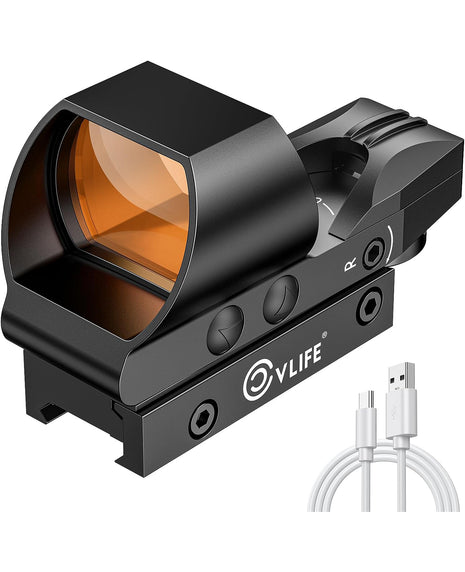
-
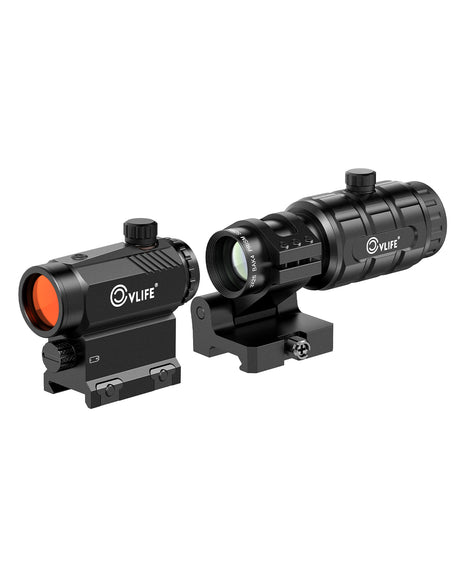
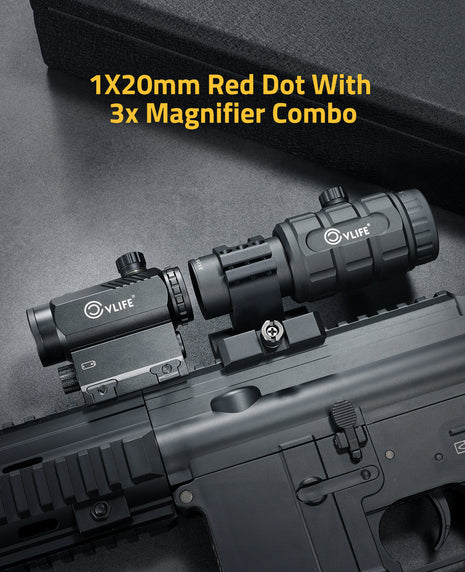
$159.99 $132.59
-

-
$64.99

To give you some real-world perspective on using optics in the field, we invited Hank—a hunter with over ten years of experience navigating the thick timbers and open brushlands of North America—to share his honest take on the simple, everyday mistakes many of us make when running a red dot setup.
Hey folks, Hank here. To be completely upfront with you, I’m not a professional competition marksman or some kind of optics theorist. I’m just a guy who has spent the last decade tracking whitetail through the heavy hardwoods of Michigan and keeping an eye out for feral hogs in the dense Texas brush country. I’ve missed my fair share of targets over the years, and if I’m being honest, almost every lesson I've learned came from making an embarrassing mistake first.
When you are hunting in tight, overgrown areas, a lightweight red dot sight (RDS) is a incredibly practical tool. It is fast, keeps your rifle balanced, and doesn't get snagged on branches. But a red dot only works as well as the shooter using it. Here are a few common slip-ups I've made—or seen my buddies make in camp—that can easily put a hitch in an otherwise great hunt.
This is probably the easiest mistake to make, and it usually happens when you're anxious or excited. I remember a freezing, grey morning during turkey season. The light was just barely breaking, and in my rush, I cranked my red dot's brightness up to one of its highest settings, thinking it would make my aim clearer. When a mature tom finally stepped out at twenty-five yards, I raised my shotgun and squinted. Instead of a sharp aiming point, I saw a fuzzy, glowing red ball that completely covered the turkey’s head and neck.
In optics, this is what we call reticle blooming. When the LED projector is too bright for the surrounding environment, the excess light scatters across the lens coatings. If you have even a mild astigmatism, this extra glare makes the dot look like a starburst or a smear rather than a crisp circle. It makes precise placement incredibly difficult, especially in the low-light hours of dawn and dusk when game is most active.
A Simple Rule of Thumb: Try to keep your dot set to the lowest brightness level that still lets you see it clearly. Your eye should naturally look *through* the reticle, not get distracted by the glow. When hunting in low light, a dimmer dot preserves your eyes' natural night adaptation and keeps your target detail visible.
Many of us grew up shooting with iron sights or traditional magnified scopes where you are trained to align your eye with the reticle or front post. Naturally, when people mount a reflex optic for the first time, they tend to stare directly at the red dot.
But these sights are designed to be shot with **both eyes wide open**, relying on what is known as target focus. When you stare at the dot itself, your brain treats the aluminum housing like a solid frame, which immediately cuts down your peripheral vision and slows down your transition time. Keeping your gaze fixed directly on the target allows the brain to superimpose the red dot over your point of focus naturally. This simple change keeps your field of view wide open, helping you spot movement in the brush much faster.
Optic technology has come a long way, and many red dots can run for thousands of hours on a single coin battery. It is easy to get comfortable and assume the battery will last forever. But extreme cold has a habit of draining lithium batteries far quicker than expected.
I learned this during a late-season deer hunt in northern Michigan. Temperatures had dropped into the teens. My red dot was working fine when I left the cabin, but after three hours of sitting in the freezing cold, the dot faded away completely just as a deer stepped into my clearing. To avoid this, many hunters look for features like Motion Activation / Shake Awake technology, which puts the optic into a sleep state when your rifle is still and wakes it up the instant you move, saving precious battery. It's also wise to choose a design with a side- or top-loading battery compartment so you can make a swap in the field without losing your zero.
Sighting in your red dot doesn't have to be complicated. Here is the straightforward process I use to get a reliable zero at the range:
Depending on how and where you hunt, different optics offer distinct trade-offs. Here is a quick look at how they compare:
| Optic Category | The Good | The Bad | Best For |
|---|---|---|---|
| Traditional Riflescopes | Clear magnification for long shots. | Heavy, narrow field of view, slower up close. | Open country and long-range stands. |
| Standard Red Dots | Very fast, lightweight, simple. | Can drain the battery if you forget to turn it off. | Close-to-medium range brush hunting. |
| Motion-Activated Red Dots | Extremely long battery life, always ready, light. | A bit more advanced than a basic iron sight. | Cold-weather hunts and unpredictable situations. |
While well-known industry options from brands like Vortex or Holosun are excellent choices, you don't necessarily have to spend a fortune to get a dependable piece of glass. If you're looking for a solid, practical option that works hard without draining your wallet, our team at CVLIFE has built something worth looking at.
At the end of the day, a red dot sight is meant to make your time in the woods simpler, not more complicated. If you keep your reticle appropriate, keep your focus on the target rather than the dot, and choose a setup that handles battery life intelligently, you’ll be in a much better position when a clean shot presents itself.
$159.99 $132.59

$64.99


