FFP vs SFP Scopes: Which Focal‑Plane Reticle Is Right For You
7 min reading time
What Are FFP & SFP Scopes? How They Work
The core difference between FFP and SFP lies in where the reticle is placed inside the scope lens system. This single mechanical difference controls whether your reticle scales with magnification or stays fixed.
FFP (First Focal Plane) Scopes
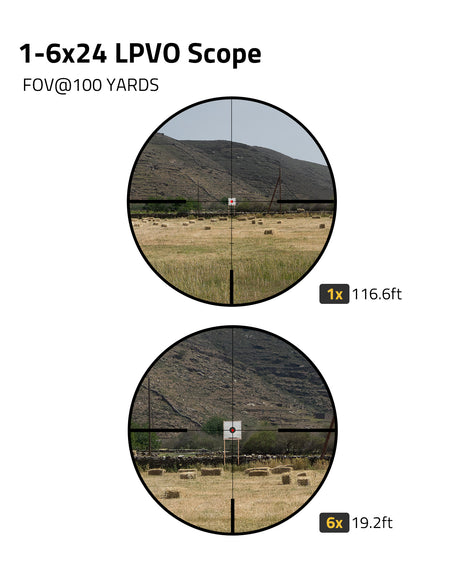
In FFP riflescopes, the etched reticle sits in front of the magnification lens assembly, close to the objective lens. As you zoom the scope up or down, the reticle scales with the target image.
Visual behavior: The reticle shrinks at low magnification and grows larger at high magnification. Its spacing, dots, and holdover marks maintain the exact same MOA/MIL measurement proportion relative to the target at every zoom level.
This means your ranging and holdover marks are 100% accurate at any magnification setting — the biggest advantage of FFP optics.
SFP (Second Focal Plane) Scopes
In SFP riflescopes, the reticle is positioned behind the magnification lens system, near the eyepiece. The reticle’s visual size never changes, no matter how you adjust magnification.
Visual behavior: The reticle stays fixed and crisp at all zoom levels, while only the target image grows or shrinks. The downside is critical: reticle subtensions (holdover dots, MIL/MOA spacing) areonly mathematically accurate at one specific magnification — almost always the maximum zoom setting.
FFP vs SFP Full Comparison Table
Use this quick reference to compare performance across key shooting scenarios:
Feature
FFP Scope
SFP Scope
Reticle Size
Scales with magnification (small at low power, large at high power)
Fixed size at all magnification levels
Ranging & Holdover Accuracy
Accurate at ANY zoom level
Reticle subtensions are calibrated accurate at max magnification
Low-Light Clarity
Weak reticle visibility at low magnification (very fine lines)
Consistently bright, clear reticle in all light
Hunting Performance
Great for variable-distance open terrain hunting
Perfect for close-to-medium range woodland hunting
Range Day Training
Ideal for multi-distance drill sets
Simpler, faster target acquisition for basic drills
Price & Value
Higher cost, premium feature set
Budget-friendly, cost-effective
FFP Scope: Key Pros & Cons
FFP Advantages
Universal ranging capability: MIL and MOA reticle measurements work perfectly at 1x, 6x, 10x, or any intermediate magnification. You never need to lock into max zoom for accurate holdovers.
Dynamic long-range flexibility: Perfect for competitive shooting, precision range drills, and open-area hunting where target distances constantly change.
Consistent precision: Eliminates human error from incorrect magnification settings, making it easier to build repeatable shooting muscle memory.
FFP Disadvantages
Too thin at low magnification: At low power settings, the scaled-down reticle becomes extremely fine, which can be hard to see in low light or dense foliage.
Higher learning curve: New shooters may struggle with the shifting reticle size during quick zoom adjustments.
Premium pricing: FFP internal lens construction is more complex, raising overall scope cost compared to equivalent SFP models.
SFP Scope: Key Pros & Cons
SFP Advantages
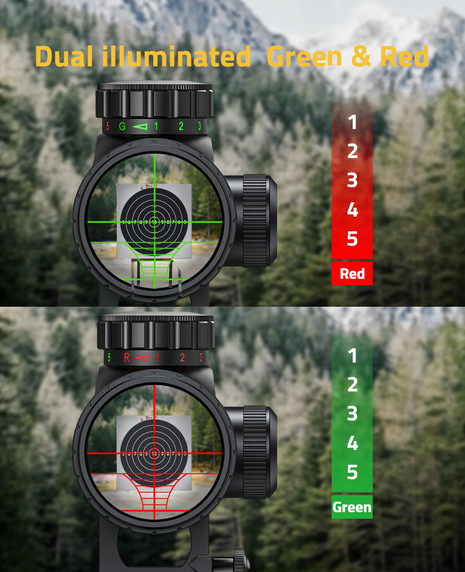
Always clear reticle: Fixed reticle size delivers crisp, unobstructed aiming at every magnification, improving fast target acquisition in close-quarters scenarios.
Beginner-friendly: No confusing scaling behavior, simpler operation, and faster setup for casual shooters and new hunters.
Better low-light performance: Consistent reticle thickness ensures visibility during dawn, dusk, or heavy shade conditions.
Superior value: Delivers excellent optical clarity and durability at a more budget-friendly price point.
SFP Disadvantages
Limited ranging accuracy: Holdover marks and MIL/MOA spacing only deliver true measurements at maximum magnification. Ranging at partial zoom will produce wrong distance calculations.
Fixed workflow restriction: Precision long-range shots require you to manually zoom all the way in every time, slowing down follow-up shots and dynamic drills.
Real-World Use Case Breakdown
Choose FFP If You:
Run multi-distance precision range drills
Hunt open fields, mountains, or variable-distance terrain
Regularly use MIL/MOA holdovers and quick ranging
Want consistent accuracy across all magnification levels
Choose SFP If You:
Primarily hunt wooded, close-to-medium range terrain
Prioritize fast, simple target acquisition over complex ranging
Want reliable performance without a premium price tag
Prefer a clean, always-visible reticle for casual range days
Biggest FFP/SFP Buying Myth Debunked
The most harmful misconception in optics shopping: “FFP scopes are always better than SFP.”
This is completely false. FFP is aspecialized feature for precision and dynamic shooting, not a universal upgrade. For 80% of casual hunters and recreational range shooters, SFP scopes deliver clearer sight pictures, faster aiming, and better value without unnecessary complexity.
You only need FFP if your shooting routine relies on variable-magnification ranging and holdover corrections. If you mostly shoot fixed-distance targets or close-range game, SFP is the smarter, more practical choice.
Final Verdict: Which Should You Buy?
Pick FFP for precision long-range work, competitive drills, and variable-distance hunting where accurate holdovers at any zoom are non-negotiable.
Pick SFP for casual range training, woodland hunting, low-light environments, and budget setups that prioritize simplicity and clear sight pictures.
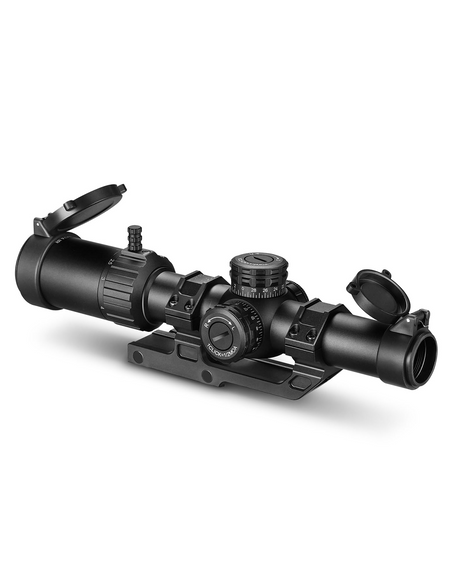
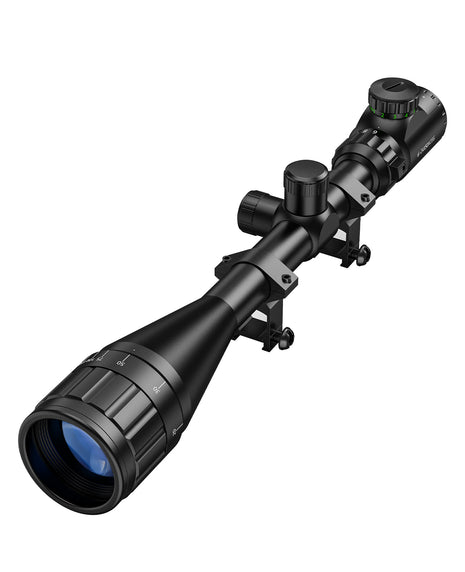
Both CVLIFE FFP and SFP rifle scopes feature fully multi-coated lenses, shockproof aircraft-grade aluminum construction, waterproof/fogproof performance, and precise click adjustments — delivering reliable zero retention and optical clarity for every shooting scenario.
Explore the full lineup of CVLIFE FFP & SFP series rifle scopes to match your hunting and range-day shooting style.