
Featured collection
-
-
$159.99 $136.79
-
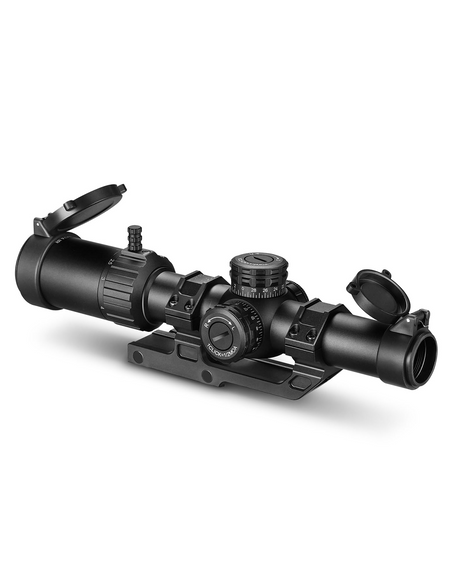
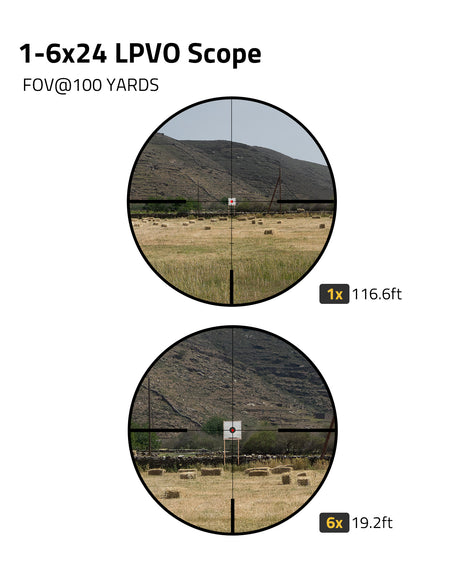
-
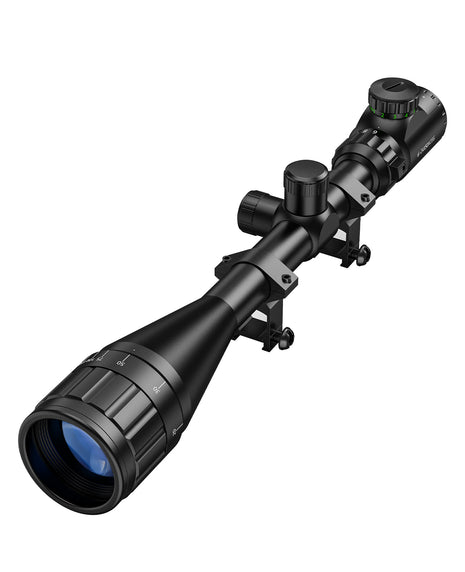
$57.59

Choosing the right scope for your .22LR is about more than just magnification—it's about conquering parallax error, mastering the cartridge's steep trajectory, and matching the reticle to your shooting style. Whether you're a weekend plinker, a small-game hunter, or a precision competitor, this in-depth guide breaks down everything you need to know: adjustable objective vs. fixed parallax, BDC reticles for holdover, and the ideal magnification for every rimfire task. Plus, get an inside look at CVLIFE's purpose‑built rimfire optics, including real user reviews and an exclusive 20% Easter discount (code Saleea20). Read the full article to stop guessing and start shooting tighter groups with your favorite .22 rifle.
A .22LR scope (or rimfire riflescope) is not just a smaller centerfire optic. It’s engineered specifically for the unique ballistic trajectory of the .22 Long Rifle cartridge, and crucially, for the distances at which rimfire shooting takes place. While a standard centerfire scope is often factory-set for parallax at 100 or 150 yards, a true rimfire scope accounts for the fact that .22LR engagements frequently occur between 25 and 75 yards. A parallax setting around 50-60 yards or an adjustable option matters more than big zoom. If you mount a 100-yard parallax scope on a .22LR, your reticle can appear to shift relative to the target, causing frustrating misses on small game or tight competition plates.
The ballistic reality is stark: a 40gr CCI Standard Velocity load zeroed at 50 yards drops approximately 12 inches at 100 yards. That’s over a foot of drop! This steep trajectory means that even modest range changes demand thoughtful holdover—or a scope with a rimfire BDC (Bullet Drop Compensator) reticle. Unlike centerfire cartridges that shoot relatively flat, the .22LR teaches you to read wind, estimate distance, and dial or hold precisely. A scope built for rimfire simplifies that learning curve.
In this definitive guide, we’ll unpack everything from parallax adjustment (AO/Side Focus) to magnification sweet spots, reticle types, and mounting considerations. Whether you’re a weekend plinker, a competitive shooter in NRL22 or PRS22, or a small-game hunter stalking squirrels at dawn, you’ll find the exact knowledge to select a scope that transforms your .22LR from “good enough” to “tack-driving.”
Parallax is the apparent movement of the reticle against the target when you shift your head position. On a centerfire scope set to 100 yards, shooting a .22LR at 35 yards introduces parallax error that can open groups by several inches. Most rimfire scopes either feature a fixed 50-yard parallax (ideal for plinking and hunting) or adjustable objective (AO) / side focus down to 10-15 yards (essential for close-range pesting and competition). The best .22 rimfire scope should have adjustable parallax for maximum precision across the rimfire distance spectrum. Adjustable parallax eliminates guesswork; you focus the target and know the reticle is true.
With a 50-yard zero, a standard velocity 40gr .22LR round drops 7.6 inches at 100 yards and over 25 inches at 150 yards. High-velocity loads can flatten that slightly, but the drop is still significant. A scope with a BDC reticle (Bullet Drop Compensator) calibrated for .22LR trajectories, or a MIL/MOA-based reticle, allows you to use holdover points without constantly dialing turrets. For example, the Dead-Hold BDC reticle found on popular rimfire scopes lets shooters consistently hit steel at 100 yards after a 50-yard zero. Understanding your scope’s reticle subtensions turns .22LR ballistics from a liability into a skill-building opportunity.
While .22LR isn’t a long-range cartridge, clarity at 50-75 yards is critical for seeing small targets (squirrel heads, .22 holes on paper). Fully multi-coated lenses maximize dawn/dusk light—exactly when small game is active. A 40mm objective lens paired with a 32-40mm tube (common in rimfire scopes) provides a bright sight picture without excessive bulk.
| Shooting Style | Ideal Magnification Range | Parallax Preference | Reticle Type |
|---|---|---|---|
| Plinking / Casual | Fixed 4x or 2-7x | Fixed 50 yd or AO | Simple Duplex / Crosshair |
| Small Game Hunting | 3-9x40 or 2-7x32 | Fixed 50-60 yd or AO | BDC or Duplex |
| Competition (NRL22/PRS) | 4-16x, 6-24x | Side Focus (10 yd to ∞) | MIL-Dot / Christmas Tree |
| Long-Range Plinking | 4-16x, 6-24x50 | Side Focus / AO | MIL or MOA hash |
For 95% of rimfire shooting (25-100 yards), a 3-9x or 4-12x scope is more than adequate. Higher magnification (16x+) is beneficial for reading trace and spotting tiny impacts on paper at 100+ yards, but it often comes with a narrower field of view and more critical eye relief. A compact 4x32 scope offers fast target acquisition for woods hunting and plinking, while a 6-24x50 is suited for long-range rimfire enthusiasts pushing past 150 yards.
Keep it simple for hunting: a duplex or simple BDC reticle. For competition, a MIL or MOA grid reticle allows for precise holdovers and wind calls. The Armstrong Precision 4-16×44 rimfire scope, for example, features a MIL-DOT reticle calibrated for 16x magnification to assist with ranging targets. The CVLIFE JackalHowl 4X32 incorporates a BDC reticle to enable quick aiming up to extended ranges without turret adjustments.
Most .22LR rifles use 3/8" or 11mm dovetail rails, while some use Picatinny (Weaver) bases. Ensure your scope rings match the rail. Many CVLIFE scopes include 11mm dovetail mounts in the box, simplifying installation. Use a torque wrench to avoid crushing the scope tube—stick to 15-18 in-lbs for ring screws.
(All CVLIFE optics are engineered with multi-coated lenses, durable one-piece tubes, and rimfire-appropriate features.) Easter Sale: 20% OFF with code Saleea20

This is the ultimate rimfire workhorse. Featuring an Adjustable Objective from 10 yards to infinity, it eliminates parallax error at distance you’ll shoot a .22LR. The 3-9x magnification is versatile for plinking, hunting, and even casual target work. Fully multi-coated 40mm objective provides bright images, and the reticle offers a clean aiming point. Includes picatinny rings.
Specs: Magnification: 3-9x | Obj: 40mm | Eye Relief: 3.8-4.6" | Parallax: 10yd–∞ | Tube: 1" | Weight: ~14.1 oz

Designed for quick acquisition and reliable field performance. The fixed 4x magnification is ideal for small-game hunting and fast plinking. Its BDC reticle is a game-changer for .22LR trajectories, allowing accurate aiming out to extended distances without dialing. The one-piece aluminum body is nitrogen-purged and waterproof. Extremely lightweight, it pairs beautifully with lightweight rimfire rifles and carbines.
Specs: Magnification: 4x | Obj: 32mm | Eye Relief: 3" | Weight: ~16.2 oz
Technically yes, but you may encounter parallax issues. Centerfire scopes are often fixed at 100-150 yards parallax. This can cause the reticle to “float” at close range (25-50 yards), degrading accuracy. It’s best to use a rimfire-specific scope (fixed 50-yard parallax) or an adjustable objective (AO) scope that focuses down to 10-15 yards.
For most shooters, 3-9x or 4-12x is the sweet spot. A 2-7x32 is excellent for hunting and plinking, while 4-16x or 6-24x is preferred for long-range rimfire competitions like NRL22 and PRS22. A fixed 4x scope offers a wide field of view and simplicity for quick shots in the woods.
With a 50-yard zero and standard velocity 40gr ammo (1070 fps), expect approximately 12 inches of drop at 100 yards. High-velocity loads reduce that slightly but still drop significantly beyond 75 yards. A scope with a .22LR-specific BDC reticle helps compensate for this rainbow trajectory.
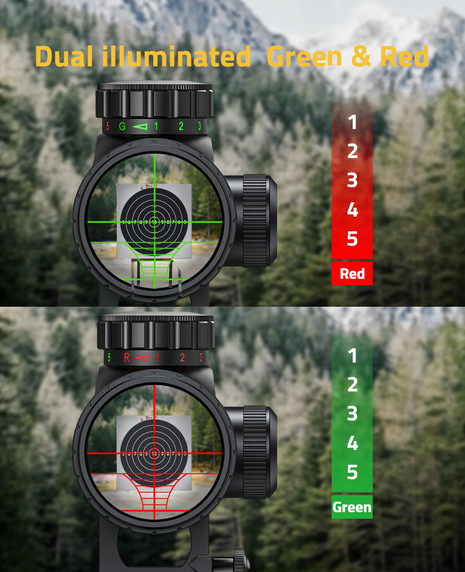
It’s not mandatory, but it’s extremely helpful during low-light conditions (dawn/dusk) when small game is most active. Illuminated reticles (red/green) provide contrast against dark backgrounds and help ensure precise shot placement. Many CVLIFE scopes offer multi-level illumination for this exact scenario.
$159.99 $136.79
$57.59


