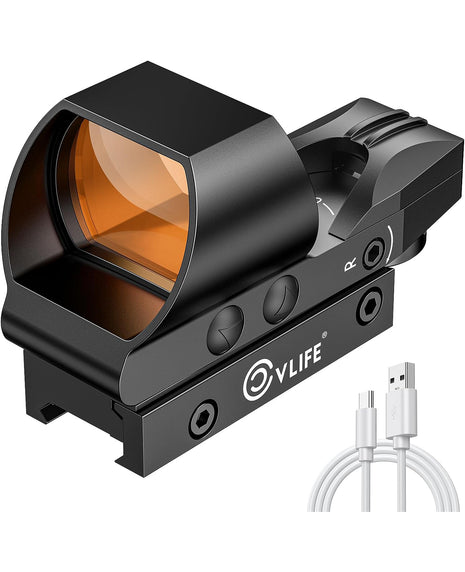
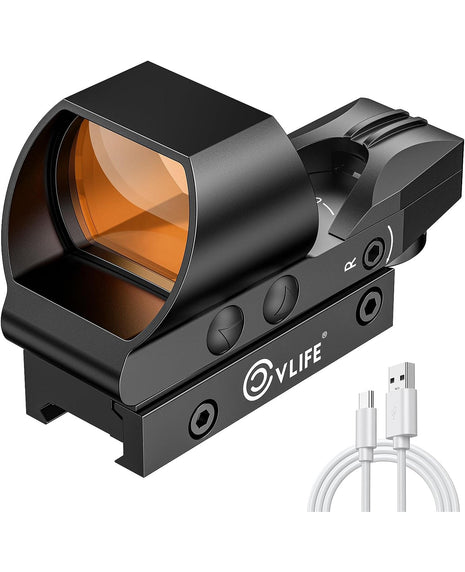
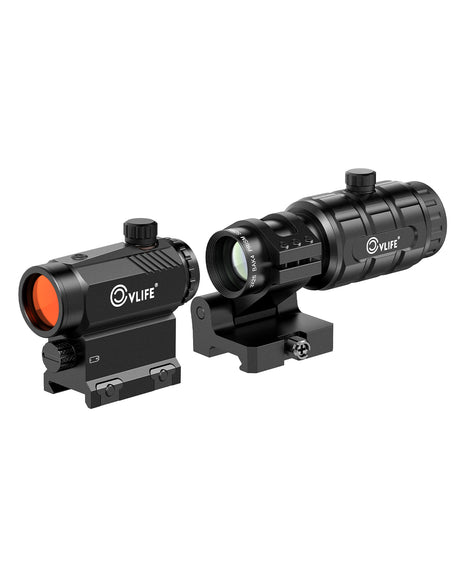
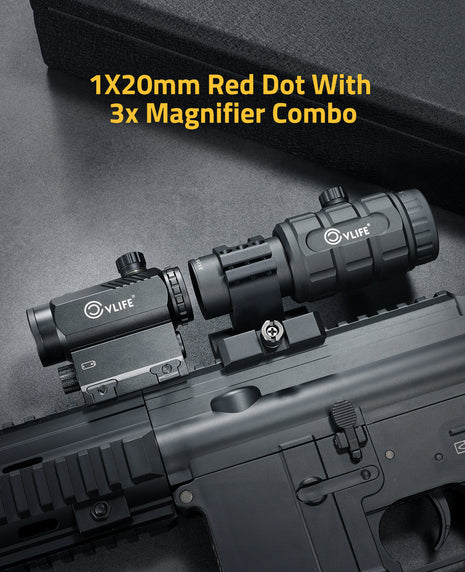
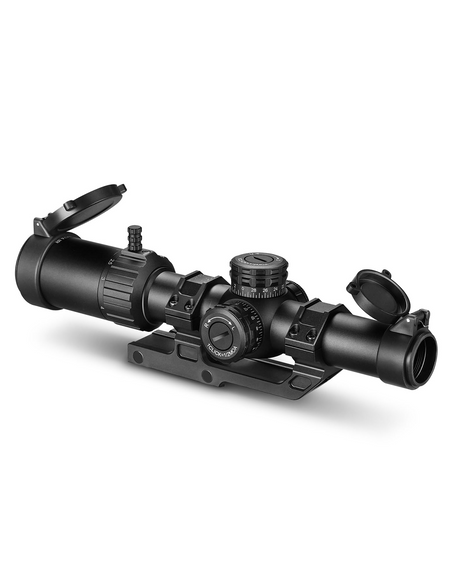
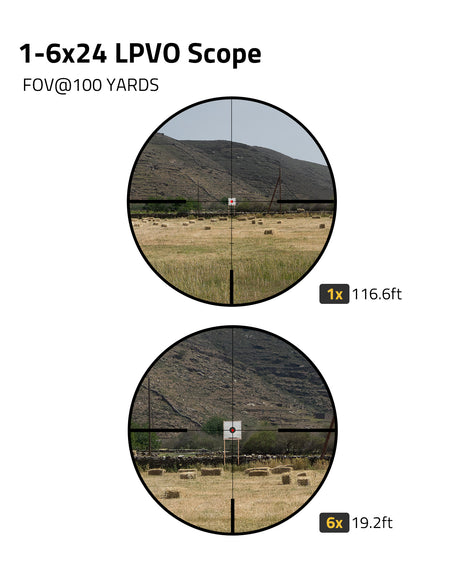
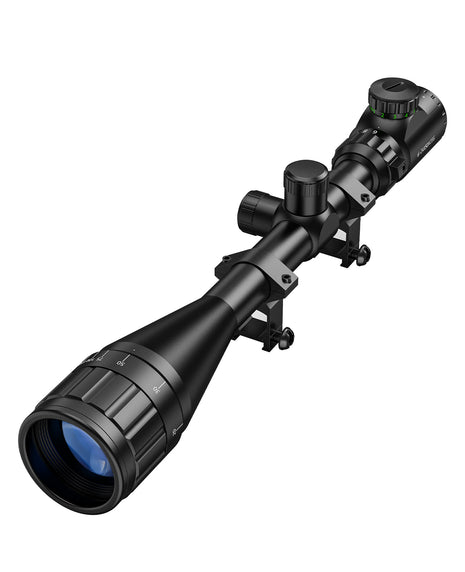
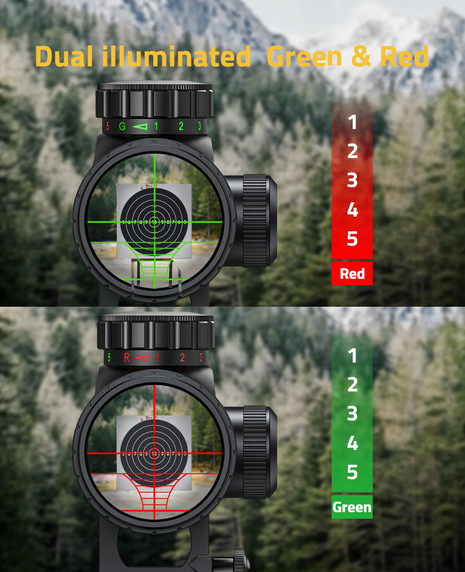
A red dot sight for home defense needs four things: fast target acquisition under stress, a daylight-bright reticle, reliable battery life, and a mount that co-witnesses with iron sights. Five 2026 picks — the CVLIFE 1x22x33, CVLIFE JackalHowl 1x20mm 2MOA, Sig Sauer Romeo5, Holosun 515CM, and Aimpoint Patrol Rifle Optic — each excel at a different feature. Pick the right optic that matches your specific use case.
Why a red dot — and not iron sights or a magnifier?
The case for a red dot on a home-defense rifle is practical fashion:
- Both-eyes-open shooting — A red dot allows both-eyes-open aiming, preserving peripheral vision and depth perception at close quarters.
- Target acquisition under stress — Under stress, the human eye narrows focus. A red dot reticle sits at optical infinity and remains visible when iron-sight focus wavers.
- Faster follow-up shots — Re-acquiring an iron sight after recoil is slower than re-finding a red dot.
- Low-light reliability — Illuminated reticles function in dim hallways; tritium or fiber-optic iron sights fade in low light.
The case against iron sights as primary is battery dependency. The case against a magnifier is weight and a slower CQB transition. Iron sights remain the most reliable backup, which is why an absolute co-witness mount — covered below — is the standard home-defense setup.
Selection criteria that actually matter
Six criteria separate a usable home-defense red dot from a frustration:
- Mount footprint — Picatinny clamp or RMR-pattern plate. Picatinny clamp is faster to swap between rifles.
- Tube / reflex housing — Sealed tubes resist water and fog better than open reflex designs.
- Battery life — Minimum 5,000 hours at mid-brightness. Shake-awake or motion-activated saves battery.
- Reticle daylight visibility — A 2 MOA dot stays visible in afternoon sun. Larger dots (3-4 MOA) find targets faster but cover more of the bullet hole at distance.
- Co-witness with iron sights — Absolute co-witness (1.41" riser) or lower 1/3 co-witness is the standard for AR-15 home-defense setups.
- Parallax behavior — Most modern red dots are parallax-free at typical engagement distances.
Five 2026 picks — each optimized for a different priority
| Spec | CVLIFE 1x22x33 | CVLIFE JackalHowl 2MOA | Sig Sauer Romeo5 | Holosun 515CM | Aimpoint PRO |
|---|---|---|---|---|---|
| Approximate price (2026) | $50 | $82 | $119 | $340 | $420 new |
| Weight | 5.18 oz | 5.18 oz | 5.1 oz | ~4 oz | 7.8 oz |
| Battery | 2x CR2032 + 1x 14250 | 2x CR2032 | 1x CR2032 | 1x CR2032 | DL1/3N |
| Battery life | Lower (no shake-awake) | 50,000 hr (Shake Awake) | 40,000 hr (MOTAC) | 50,000 hr (Solar + Shake Awake) | 30,000+ hr |
| Reticle options | 4 patterns, red/green | 2 MOA dot | 2 MOA dot | 2 MOA / 65 MOA circle | 2 MOA dot |
| Mount | 20mm Picatinny clamp | Co-witness riser + low mount / Riser mount | Low + 1.41" co-witness | Lower 1/3 riser | Picatinny mount integrated |
| Daylight bright | 5 settings | 10 (8 day / 2 NV) | 10 (8 day / 2 NV) | 10 (8 day / 2 NV) | 6 NV-compatible settings |
| Sealed tube | No (reflex) | Yes (IPX7) | Yes (IPX-7) | Yes (IP67) | Yes (submersible) |
Pre-purchase checklist
- ✓ Confirm the mount matches your rifle's rail (Picatinny 1913 or Weaver)
- ✓ Confirm absolute co-witness with iron sights, or budget for a riser mount
- ✓ Verify reticle brightness covers indoor-outdoor use (8+ settings)
- ✓ Check battery type is common (CR2032) — avoid proprietary cells
- ✓ Confirm sealed tube if you plan to train in rain or store the rifle in a vehicle
Mounting, batteries, and care
Three maintenance rules keep a home-defense red dot ready:
- Torque the mount to 30-35 in-lb — Loose mounts shift zero on recoil. Use a torque driver and medium-strength thread locker.
- Replace the battery annually — Even on 50,000-hour optics, annual battery swap is cheaper than a failed optic in an emergency.
- Verify zero every 6 months — Fire 5 rounds at 25 yards. Confirm the dot center matches the bullet group center.
- Keep the optic covered — Flip-up caps protect the lens from dust and impacts. The cost of caps is trivial; the cost of a scratched reticle is real.
What mistakes do new home-defense buyers make?
Five mistakes show up repeatedly:
- Buying a magnifier instead of a red dot — A magnifier adds weight and slows CQB. Most home-defense rifles work best with a dedicated red dot.
- Skipping the co-witness — A red dot that does not co-witness iron sights removes the most reliable backup.
- Choosing reticle dot size based on distance, not role — A 2 MOA dot is the right answer for almost all home-defense AR-15s.
- Skipping absolute co-witness height verification — A 1.41" riser on some rifles ends up taller than absolute co-witness. Verify before relying on the iron-sight backup.
- Ignoring eye relief on shotgun red dots — Shotgun ribs sit further back; eye relief compatibility matters for proper sight picture.
Frequently Asked Questions
What features matter most in a home-defense red dot?
Six features dominate: mount footprint, sealed-tube vs reflex housing, battery life, reticle daylight visibility, co-witness with iron sights, and parallax behavior.
Is a red dot better than iron sights for home defense?
For most shooters, yes. A red dot allows both-eyes-open aiming, faster target acquisition in low light, and faster follow-up shots.