Quando un cannocchiale da caccia smette di funzionare a 600 iarde?
Il rapporto tra ingrandimento e distanza effettiva:
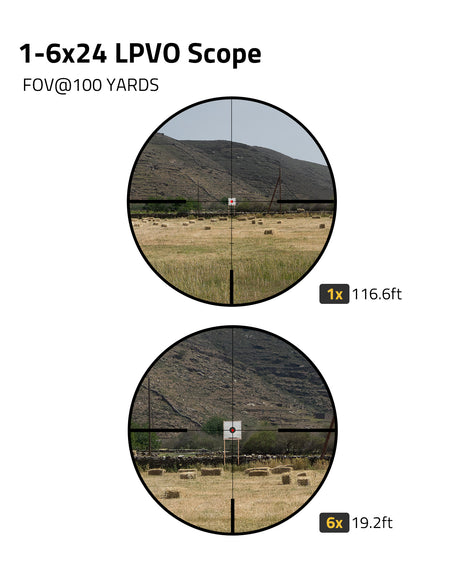
- 1-6x — 0-300 iarde (3-gun, caccia, tiro a distanza ravvicinata)
- 3-9x — 100-500 iarde (cannocchiale da caccia classico; al limite a 600)
- 4-12x — 200-600 iarde (lunga distanza entry-level)
- 6-24x — 400-1.000+ iarde (standard per la lunga distanza)
- 8-32x — 600-1.500+ iarde (F-class ed ELR)
Il 4-12x è l'escursione minima che può arrivare a 600 iarde. Il 6-24x è la scelta dedicata più comune. Nessuna delle escursioni inferiori offre un ingrandimento massimo sufficiente per individuare con affidabilità i punti d'impatto o leggere il miraggio.
5 specifiche importanti a 600 iarde
| Specifica | Cosa cercare | Perché a 600 iarde |
|---|---|---|
| Ingrandimento | 5-25x o 6-24x | Da 18x a 25x per individuare i punti d'impatto e leggere il miraggio; sotto 12x è al limite. |
| Piano focale | Primo piano focale (FFP) | Le suddivisioni si adattano all'ingrandimento; le correzioni Mil/MOA funzionano a qualsiasi ingrandimento. |
| Torretta | Torretta da tiro con zero stop | Oltre 10 MOA di regolazione a 600 iarde; lo zero stop torna allo zero a 100 iarde senza contare gli scatti. |
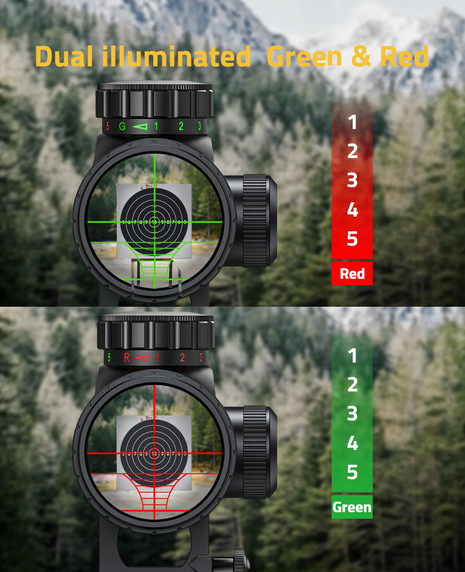
| Reticolo | Mil, MOA o BDC per la tua carica | Le correzioni sostituiscono la regolazione della torretta; i reticoli con riferimenti per la stima della distanza confermano la distanza senza telemetro. |
| Parallasse | Messa a fuoco laterale, da 50 iarde all'infinito | L'impostazione errata sposta il punto d'impatto di 1-3 pollici a 600 iarde. È imprescindibile oltre 200 iarde. |
4 categorie di ottiche per 4 tipi di tiratori
Scegli la categoria che corrisponde a come spari davvero, non quella con i numeri più impressionanti.
| Categoria | Ingrandimento | Ideale per |
|---|---|---|
| Ingrandimento medio | 4-16x | Soprattutto 200-400 iarde; interessato alle 600 |
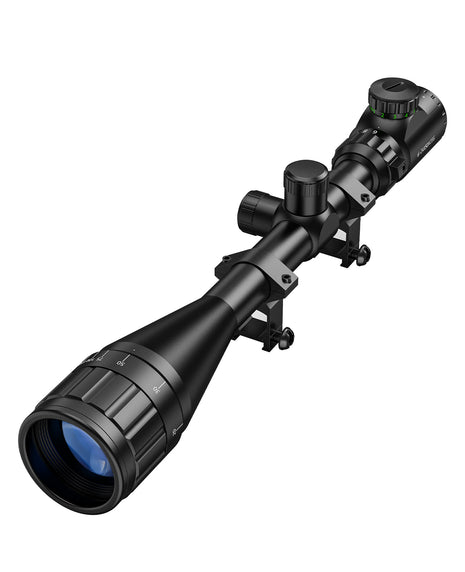
| Lunga distanza | 5-25x o 6-24x | 600 iarde come distanza principale, capace di arrivare a 1.000 iarde (lo standard) |
| Lunga distanza estesa | 6-36x | Competizioni F-class ed ELR |
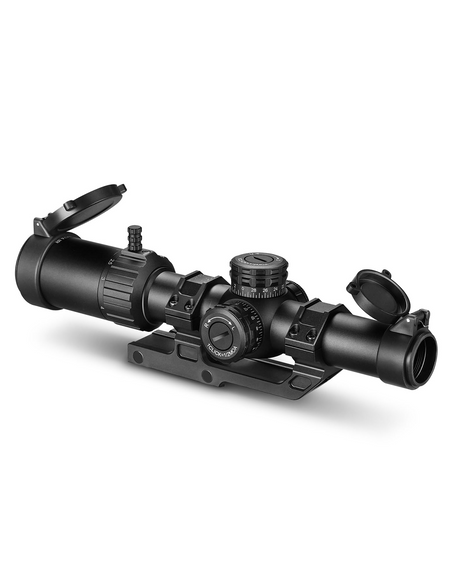
| LPVO | 1-6x | 3-gun e uso tattico; non per il tiro di precisione dedicato a 600 iarde |
Se 600 iarde è la tua distanza principale, la scelta giusta è il 5-25x o il 6-24x. Se spari anche a oltre 1.000 iarde, il 6-36x. Se spari soprattutto a 200-400 iarde, il 4-16x. L'1-6x serve a uno scopo diverso.
FFP, BDC, Mil o MOA: quale reticolo è adatto a 600 iarde?
Il reticolo FFP (primo piano focale) si adatta all'ingrandimento: una tacca da 1 Mil vale 1 Mil a 1x o 25x. Le correzioni e la stima della distanza funzionano a qualsiasi ingrandimento. L'SFP (secondo piano focale) è preciso solo a un ingrandimento dichiarato; devi impostare quello prima di usare i riferimenti per la compensazione. A 600 iarde, vince l'FFP.
BDC (compensatore della caduta del proiettile) è precalibrato per una carica a determinate distanze. I reticoli Mil e MOA con suddivisioni ad albero di Natale sono flessibili con cariche diverse. Il BDC è più rapido se spari con una sola carica. Mil/MOA è più rapido se cambi carica.
I numeri (JBM Ballistics, azzeramento a 100 yd):
200 yd: 1,2 MOA · 300 yd: 3,1 MOA · 400 yd: 5,2 MOA
500 yd: 7,6 MOA · 600 yd: 10,2 MOA (~2,97 Mil)
6,5 CM 140 gr @ 2.710 fps, azzeramento a 100 yd:
600 yd: 9,0 MOA (~2,62 Mil)
Vento trasversale di 10 mph a 600 yd (JBM):
.308 Win 175 gr: 10-12 in · 6,5 CM 140 gr: 8-10 in
Montaggio in 5 passaggi, messa in bolla, azzeramento, verifica
Il lavoro al banco dura circa 60 minuti. La verifica a 600 yard richiede altri 30-45 minuti, oltre al viaggio.
-
Guida, anelli, diametro del tubo.
Verifica la presenza di una guida Picatinny da 20 MOA o più lunga. Abbina il diametro degli anelli al tubo del cannocchiale (30 mm o 34/35 mm). Serrare gli anelli a 15-25 in-lb secondo le specifiche del produttore.
-
Metti in bolla la base e gli anelli.
Usa una livella per cannocchiali sulla guida e sulla parte superiore degli anelli. Un'inclinazione di 1 grado sposterà la deriva a 600 yd. È il passaggio più trascurato.
-
Imposta la distanza dall'occhio a 3,5-4 pollici.
Imbraccia il fucile nella tua naturale posizione prona o sul banco. Stringi le viti degli anelli in croce in due passaggi (50%, poi 100%).
-
Collima a 25 yd, azzera a 100 yd.
Prima un collimatore laser o magnetico. Conferma a 100 yd con 3 colpi, sposta il reticolo verso il centro del gruppo.
-
Verifica a 600 yd e annota i valori effettivi da tenere.
Spara un gruppo di 5 colpi a canna fredda a 600 yd. Confrontalo con la tua previsione balistica (10,2 MOA per .308 da 175 gr; 9,0 MOA per 6,5 CM da 140 gr). Regola la torretta dell'elevazione in modo che corrisponda. Annota su una scheda fissata al calcio il valore effettivo da tenere per ogni distanza.
4 domande frequenti degli acquirenti
-
Quale ingrandimento per 600 yard?
Un minimo di 10-12x è utile; 18-25x è il punto ottimale pratico. Un 4-12x può raggiungere i 600 yd, ma offre poco margine per osservare i punti d'impatto. Il 5-25x o 6-24x è la scelta standard per la lunga distanza.
-
FFP o SFP per 600 yard?
FFP. I subtensionamenti variano con l'ingrandimento, quindi i calcoli del sovrallineamento e la stima della distanza funzionano a qualsiasi potenza. L'SFP è corretto solo a un ingrandimento dichiarato.
-
Ho bisogno di un fermo dello zero?
Sì. A 600 yd regolerai oltre 10 MOA. Un fermo dello zero riporta la torretta al tuo azzeramento a 100 yd senza contare gli scatti.
-
Tubo da 30 mm o 34 mm?
30 mm sono sufficienti per l'impiego con calibri della classe .308 a 600 yd. È preferibile un tubo da 34-35 mm per avere margine oltre i 1.000 yd.