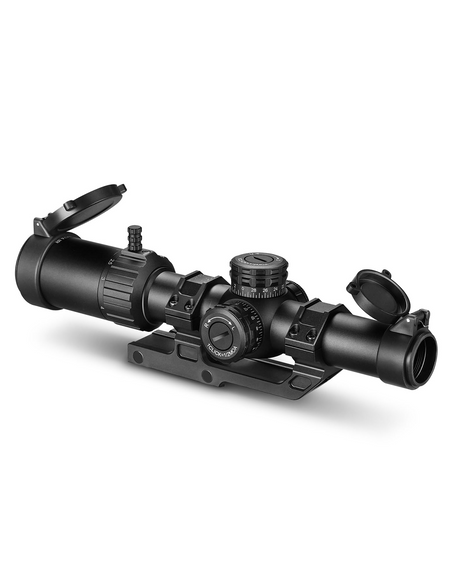
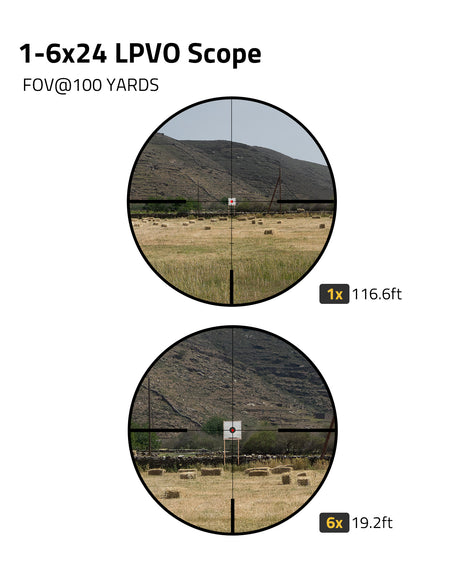
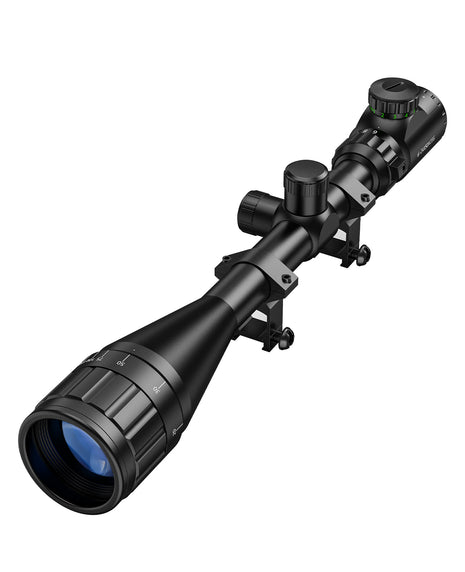
La maggior parte dei cacciatori statunitensi non acquista un apposito "cannocchiale per fucile a canna liscia". Acquista un cannocchiale da carabina a bassa potenza (LPVO 1-4x o 1-6x, oppure uno variabile 2-7x o 3-9x), lo monta su un attacco a sbalzo e lo considera un cannocchiale per slug. Questa configurazione funziona, ma solo se la distanza dall'occhio, l'ingrandimento e il reticolo BDC corrispondono al comportamento effettivo degli slug. Le cinque specifiche importanti sono distanza dall'occhio, ingrandimento, reticolo, attacco e parallasse. Se sono corrette, il resto è una questione di preferenze personali.
Perché un'arma per slug ha bisogno di un cannocchiale diverso?
Un'arma calibro 12 per slug ha un rinculo molto più forte di una carabina .308, e la direzione del rinculo è direttamente all'indietro, verso la spalla, non verso il viso. Questo secondo dettaglio è importante. Anche la gittata utile degli slug è limitata: la maggior parte dei cacciatori statunitensi spara entro 150 yard, e 200 yard sono il limite pratico per uno slug rigato con munizioni di qualità. Il cannocchiale montato su un'arma per slug deve sopportare il rinculo, essere abbastanza avanzato da non colpire il sopracciglio e offrire riferimenti utili per tiri a 50, 100, 150 e 200 yard.
La precisione dei proiettili slug è diversa. Un tipico slug rigato da 1 oncia per calibro 12 raggruppa a 3-4 MOA a 100 yard (circa 3-4 pollici). Un sabot slug premium (Brenneke, Hornady SST, Federal Barnes Expander) scende a 1,5-2,5 MOA. In ogni caso, non serve un cannocchiale da precisione 6-24x. Serve un LPVO 1-6x con reticolo BDC e 3,5-4 pollici di distanza dall'occhio.
Quali sono le 5 specifiche più importanti per l’ottica di un fucile a palla?
Lascia perdere il marketing. Abbina questi cinque elementi e il resto è una questione di preferenze.
| Specifiche | Cosa cercare | Perché è importante |
|---|---|---|
| Distanza dall’occhio | 3.5-4.0 in | Il rinculo del calibro 12 riduce il margine. Troppo vicino significa colpire il sopracciglio con l’ottica. |
| Ingrandimento | LPVO 1-4x o 1-6x; variabile 2-7x o 3-9x | La maggior parte dei colpi è a meno di 150 yard. 1x per la boscaglia, 4-6x per i tiri a 200 yard. |
| Reticolo | BDC tarato per la palla, oppure un semplice duplex | Il BDC evita di dover regolare la torretta. Il duplex costa meno ed è altrettanto rapido se memorizzi i riferimenti di mira. |
| Attacco | A sbalzo (in un unico pezzo, offset in avanti di 3-4 pollici) | La maggior parte dei fucili a palla non ha una slitta integrata. Un attacco a sbalzo offre la corretta distanza dall’occhio. |
| Parallasse | Impostata a 50 yard (azzeramento per palla) o fissa a 100 yard | La palla è adatta alle brevi distanze; non serve pagare per una manopola di parallasse con messa a fuoco laterale che non userai. |
Come si confrontano i 4 tipi di ottica?
Abbina l’ottica al modo in cui cacci davvero. La maggior parte dei cacciatori con fucile a palla rientra in una di queste quattro configurazioni.
| Tipo di ottica | Ingrandimento | Ideale per |
|---|---|---|
| LPVO 1-4x | 1-4x | Cervo dalla coda bianca nei boschi orientali, boscaglia, acquisizione rapida |
| LPVO 1-6x | 1-6x | Come l’1-4x, più spazio per i riferimenti BDC, occasionalmente oltre 200 yard |
| Variabile 2-7x o 3-9x | 2-7x o 3-9x | Tiro a una sola distanza, configurazioni economiche, tradizionalisti |
| Red dot (1x) | 1x | Tacchino, difesa domestica, boscaglia con acquisizione rapida (red dot; senza ingrandimento) |
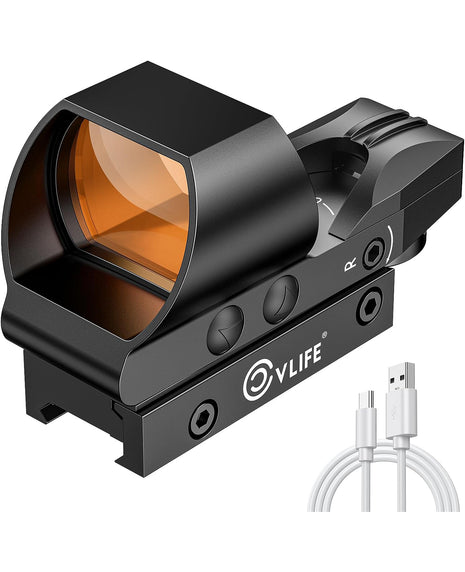
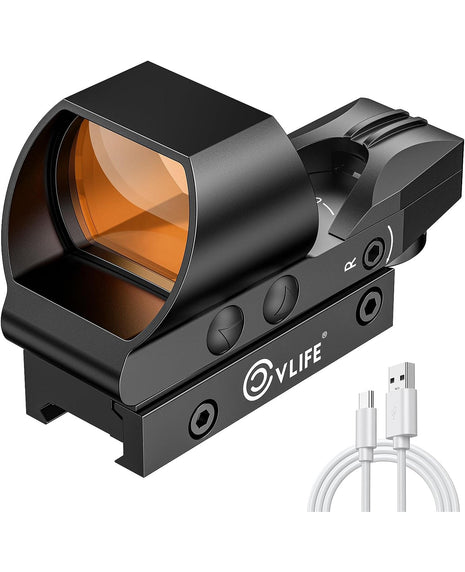
Se scegli un red dot 1x per acquisire rapidamente il bersaglio, cerca un modello con tecnologia red dot con attivazione al movimento (spegnimento e riattivazione automatici tramite sensore di movimento, spesso abbinati a un’alimentazione di riserva solare): preserva la batteria durante le lunghe attese ed è ideale per la caccia al tacchino e per la difesa domestica, dove la stessa arma da fuoco funge anche da fucile a palla. Un red dot rinuncia all’ingrandimento, quindi i tiri oltre i 150 yard restano un’incognita, ma a distanza ravvicinata è l’opzione con l’acquisizione più rapida tra i quattro tipi sopra indicati.
Se spari a una sola distanza (per lo più 50 o 100 yard) e vuoi semplicità, un variabile 2-7x con reticolo duplex è la scelta più economica e affidabile. Se cacci nei boschi e vuoi acquisire rapidamente il bersaglio nel sottobosco fitto, l’LPVO 1-4x è difficile da battere. L’1-6x è la via di mezzo moderna: vero 1x per la boscaglia, 6x per una mira a 200 yard in una radura.
Perché un fucile per slug ha bisogno di un supporto a sbalzo?
La maggior parte dei fucili a pompa e semiautomatici per slug (Remington 870, Mossberg 500/835/930, Benelli M4) viene fornita con un castello forato e filettato, ma senza una rotaia Picatinny integrata. Senza un supporto a sbalzo, un normale set di anelli monta il cannocchiale così indietro che, durante lo sparo, l’estrazione pupillare diventa negativa: il cannocchiale colpisce con forza la fronte a ogni colpo. Un supporto a sbalzo si avvita al castello e prolunga la rotaia di 3-4 pollici in avanti, esattamente l’offset necessario per posizionare la pupilla d’uscita del cannocchiale alla giusta distanza dall’occhio.
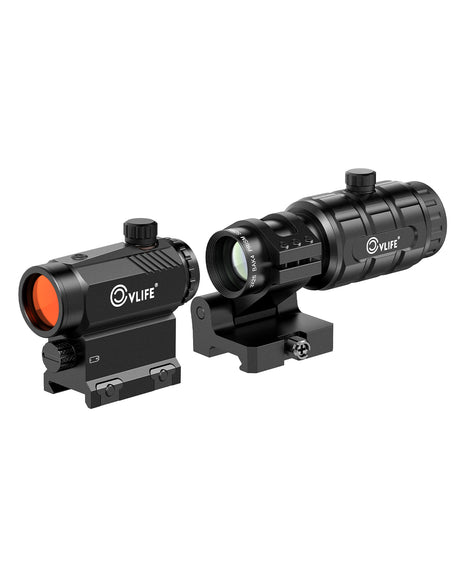
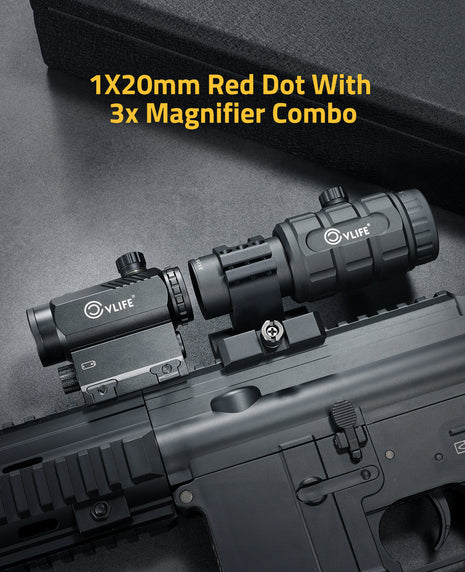
Un’opzione pronta all’uso è il CVLIFE JackalHowl 1-4x20 LPVO con supporto a sbalzo — un LPVO 1-4x abbinato direttamente a una base a sbalzo compatibile, così non devi acquistare separatamente una base o un set di anelli. Per un fucile a pompa o semiautomatico calibro 12 per slug, questa è la configurazione più semplice con un solo acquisto.
Se rinunci al supporto a sbalzo e provi a montare un normale set di anelli sul castello, incontrerai due problemi: il cannocchiale sarà troppo vicino al viso e gli anelli dovranno serrarsi su una superficie sottile del castello, spesso dalla forma irregolare, non progettata per sopportare la sollecitazione degli anelli. Il supporto a sbalzo risolve entrambi i problemi. Se non acquisti una configurazione in bundle, prevedi un supporto monopezzo aftermarket di qualità.
Come funziona un reticolo BDC per gli slug?
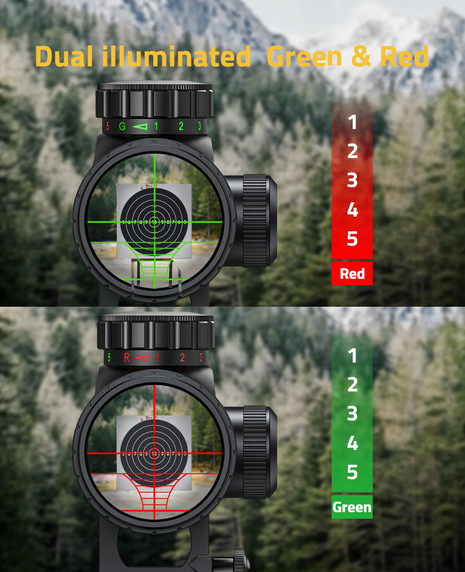
Un reticolo BDC tarato per gli slug (ad es., Leupold UltimateSlam) posiziona i punti di compensazione più comuni direttamente sul reticolo. Con un azzeramento a 100 iarde e un tipico slug Foster da 1 oz a 1.500 fps, la scala standard delle compensazioni è questa:
50 iarde: mira al centro · il proiettile colpisce ~1,5 pollici PIÙ IN ALTO (la linea di mira è inclinata verso l’alto, mentre il proiettile sta ancora salendo)
100 iarde: mira al centro · punto di mira / impatto
150 iarde: mira al centro · caduta di ~6-8 pollici · usa il riferimento da 4-5 MOA (≈ 6,3-7,9 pollici a 150 iarde)
200 iarde: mira al centro · caduta di ~14-18 pollici · usa il riferimento da 7-9 MOA (≈ 14,7-18,8 pollici a 200 iarde)
La maggior parte dei reticoli BDC per palle da fucile è calibrata per palle Foster da 1 oncia a 1.500 fps. Se usate una palla sabot da 7/8 di oncia a 1.800 fps, le correzioni saranno diverse: verificatele al poligono. Se usate una palla pesante da 1-1/8 di oncia a 1.300 fps, le correzioni saranno più accentuate. Scegliete il BDC adatto al caricamento che utilizzate effettivamente.
Il concetto di BDC è lo stesso su un cannocchiale tattico (ad esempio, un LPVO 1-6x su un fucile a fuoco centrale): la matematica è identica, cambia solo la spaziatura dei riferimenti, calibrata per la balistica del .223 o del .308, non per quella delle palle da fucile. Se cacciate anche con un cannocchiale da fucile su un’arma a fuoco centrale, aspettatevi correzioni diverse quando spostate l’ottica su un’arma a palla. Un BDC calibrato per le palle da fucile non corrisponderà al BDC di un cannocchiale alla stessa distanza, anche con la stessa piattaforma di reticolo.
Come si monta un cannocchiale su un’arma a palla? (5 passaggi)
Il tempo totale al banco è di circa 45 minuti, inclusi il centraggio dell’anima e l’azzeramento a 25 iarde. Un gruppo di verifica a 100 iarde richiede altri 20 minuti circa.
- Verificare lo schema di foratura del castello e scegliere il supporto. La maggior parte delle armi a palla usa uno specifico schema di foratura del castello. Scegliete un supporto a sbalzo compatibile con il vostro modello esatto. Esistono supporti universali per coda di rondine, ma introducono gioco e non sono consigliati per il rinculo del calibro 12.
- Impostare la distanza dall’occhio a 3,5-4 pollici prima del serraggio. Montate gli anelli lasciandoli allentati. Imbracciate l’arma nella posizione di caccia e fate scorrere il cannocchiale avanti o indietro finché il reticolo riempie il campo visivo con una distanza dall’occhio di 3,5-4 pollici. Il rinculo del calibro 12 ridurrà la distanza al momento dello sparo; se è troppo vicino, il cannocchiale colpirà la fronte.
- Serrare le viti degli anelli alla coppia indicata dal produttore. Serrate le viti degli anelli alternativamente in due passaggi (50% e poi 100% della coppia prevista, in genere 15-20 in-lb per gli anelli in alluminio). Non superate 20 in-lb: il tubo del cannocchiale potrebbe deformarsi. Usate una chiave dinamometrica calibrata in pollici-libbra, non un cacciavite serrando a sensazione.
- Effettuare il centraggio dell’anima a 25 iarde. Usate un collimatore laser o magnetico. Centrate il reticolo sul bersaglio di collimazione, quindi verificate a 25 iarde con 3 colpi. Portate il reticolo al centro del gruppo usando le torrette. Saltate questo passaggio solo se avete già a disposizione un poligono a 100 iarde.
- Azzerare a 100 iarde e verificare il BDC a 50, 150 e 200. Sparate un gruppo di 3 colpi a canna fredda a 100 iarde. Regolate la torretta dell’elevazione finché il centro del gruppo non coincide con il punto di mira. Poi sparate gruppi di verifica a 50, 150 e 200 iarde per verificare i riferimenti del BDC (o la vostra tabella di correzione, se usate un reticolo duplex).
Dopo aver azzerato l’ottica a 100 iarde, annota su una scheda fissata con nastro al calcio le compensazioni effettive per il caricamento di slug che utilizzi. La caduta degli slug varia di 1-3 pollici in base al caricamento e i riferimenti del reticolo BDC sono tarati sui caricamenti Foster più diffusi, non sulle tue munizioni specifiche.
E se volessi sparare in posizione prona a 175-200 iarde?
Per i tiri più lunghi da un appoggio stabile, un bipiede per fucile montato sull’astina o sul tubo del caricatore è utile. Un bipiede Picatinny si fissa a una guida con morsetto che avvolge il tubo del caricatore; un bipiede M-LOK richiede un’astina compatibile con M-LOK (rara sugli slug gun di serie; verifica il tuo modello specifico). Un bipiede è opzionale: la maggior parte dei cacciatori di slug negli Stati Uniti spara in piedi o da seduta e la distanza tipica d’ingaggio è di 75-150 iarde. Tuttavia, se hai un’ampia radura e vuoi una posizione stabile per un tiro sicuro a 175-200 iarde, un bipiede trasforma un tiro al limite in un tiro ben saldo.
Quali domande pongono gli acquirenti di ottiche per slug gun?
-
Di quale ingrandimento ho bisogno per uno slug gun?
Un ingrandimento 1-4x o 1-6x copre quasi tutti gli scenari di caccia con slug negli Stati Uniti. La gittata efficace degli slug è in genere di 75-200 iarde; la maggior parte dei tiri avviene entro 150 iarde. Un LPVO 1-6x offre un vero 1x per la vegetazione fitta a breve distanza e 6x per le compensazioni a 200 iarde, senza costringerti a cercare il bersaglio tra i cespugli a 6x. Un variabile 2-7x o 3-9x va bene se non spari entro 50 iarde.
-
Ho bisogno di un reticolo BDC per uno slug gun?
Un reticolo BDC è utile, ma non indispensabile. Se spari a 50-200 iarde con un solo tipo di slug, un BDC tarato per quel caricamento (ad esempio, Leupold UltimateSlam) evita di dover regolare la torretta. Se cambi caricamento o spari principalmente a una sola distanza, un semplice reticolo duplex con una tabella di compensazione nota è altrettanto rapido e più economico.
-
Di quale distanza dall’occhio ho bisogno su uno slug gun?
Per uno slug gun calibro 12, una distanza dall’occhio di 3,5-4 pollici è il minimo pratico. Il rinculo del calibro 12 è significativamente più potente di quello di un .308 Win e, allo sparo, l’ottica si muoverà verso il viso. La maggior parte delle ottiche LPVO 1-4x e 1-6x e delle tradizionali ottiche 3-9x rispetta questo requisito; verifica la distanza dall’occhio prima dell’acquisto.