Ottiche per il tiro a lunga distanza · Guida balistica · 2026
Risposta rapida
Un reticolo per cannocchiale da carabina è calibrato per una specifica cartuccia, un determinato peso del proiettile, una velocità alla volata e una distanza di azzeramento. Le tacche non sono generiche. Se le tue munizioni corrispondono alla calibrazione pubblicata del reticolo, i riferimenti di mira funzionano, senza bisogno di un calcolatore. Se non corrispondono, il reticolo inganna. Tre famiglie di reticoli coprono il campo: reticoli BDC (riferimenti di mira pre-calibrati per la caduta), reticoli mil-dot (stima della distanza + compensazione flessibile della caduta) e reticoli duplex basati sui MOA (semplici reticoli a croce per la caccia). Abbina il reticolo al tuo intervallo operativo, quindi verifica con tiri a canna fredda a 100, 300, 500 e 700 iarde.
Punti chiave
- Un reticolo è calibrato, non generico. Le tacche BDC, mil-dot e MOA sono preimpostate per una specifica cartuccia, un determinato peso del proiettile, una velocità alla volata e una distanza di azzeramento.
- Reticolo BDC = compensazione della caduta preimpostata. Le tacche del Bullet Drop Compensator consentono di mirare più in alto senza regolare la torretta. Economico, rapido e specifico per la cartuccia.
- Reticolo mil-dot = stima della distanza + compensazione della caduta. 1 mil equivale a 3,6 pollici a 100 iarde. Usalo per stimare la distanza di bersagli sconosciuti e compensare la caduta con sicurezza a qualsiasi distanza.
- FFP e SFP cambiano i calcoli. I reticoli sul primo piano focale si adattano all'ingrandimento: la subtensione è corretta a qualsiasi ingrandimento. Il secondo piano focale è corretto solo a uno specifico ingrandimento.
- Verifica a canna fredda a 100, 300, 500 e 700 iarde. Un calcolatore balistico gratuito ha uno scarto entro 1-2 MOA per le munizioni di fabbrica. Il tuo fucile e le condizioni ambientali hanno l'ultima parola.
01Perché abbinare il reticolo alla balistica è davvero importante
Un reticolo per cannocchiale da carabina sembra un motivo statico inciso nel vetro. Non è statico. Le tacche sotto il reticolo centrale sono riferimenti di mira calibrati per un determinato proiettile a una determinata distanza, e la calibrazione fa la differenza tra un reticolo che aiuta e uno che inganna.
Prendiamo un tipico reticolo BDC per 5,56 mm calibrato per un proiettile M193 da 55 grani a 3.200 fps, azzerato a 100 iarde. La tacca dei 300 iarde è calibrata sulla traiettoria di quel caricamento specifico. Carica un OTM (Open Tip Match) da 77 grani a 2.750 fps e la stessa tacca ora porta a uno scarto di 4-6 pollici a 300 iarde. Il reticolo non è cambiato. È cambiato il proiettile.
Questa è la parte che la maggior parte dei tiratori trascura. Acquistano un'ottica con un «reticolo BDC», la azzerano a 100 e presumono che i riferimenti funzionino. Funzionano se le munizioni corrispondono alla calibrazione pubblicata. Non funzionano se le munizioni hanno un peso del proiettile, una velocità o un BC (coefficiente balistico) diverso. Il reticolo è uno strumento, non una magia.
02Tipi di reticolo: BDC, mil-dot, MOA e duplex
Quattro famiglie di reticoli coprono il 95% dei casi d'uso. Ognuna ha una funzione specifica, e scegliere quella sbagliata è peggio che scegliere quella giusta.
- Reticolo duplex — centro sottile, montanti esterni spessi. Il classico reticolo da caccia. Nessun riferimento per la compensazione del tiro. Regola la torretta in base alla distanza oppure accetta il limite. Ideale per la caccia entro 250 iarde, dove la maggior parte dei tiri viene eseguita sul punto di azzeramento.
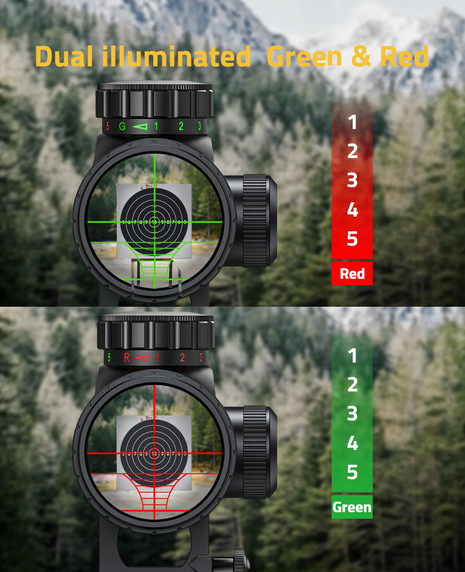
- Reticolo BDC — mirino a croce con tacche pre-calibrate sotto il centro per 200, 300, 400, 500 e 600 iarde. Calibrato per una cartuccia specifica. Economico e rapido. Ideale per cartucce note e per i cacciatori che non vogliono regolare la torretta.
- Reticolo mil-dot — mirino a croce con punti distanziati di 1 mil (3,6 pollici a 100 iarde). Usa i punti per misurare la distanza di un bersaglio di dimensioni note, quindi compensa il tiro usando il numero corretto di mil in base alla distanza. Versatile. Ideale per il tiro di precisione e a distanza sconosciuta.
- Reticolo ad albero di Natale / reticolo a forma di albero — basato sui mil, con tacche verticali e orizzontali. Misura la distanza, compensa il tiro e anticipa i bersagli in movimento usando lo stesso reticolo. Ricco di informazioni. Ideale per l'uso agonistico e tattico.
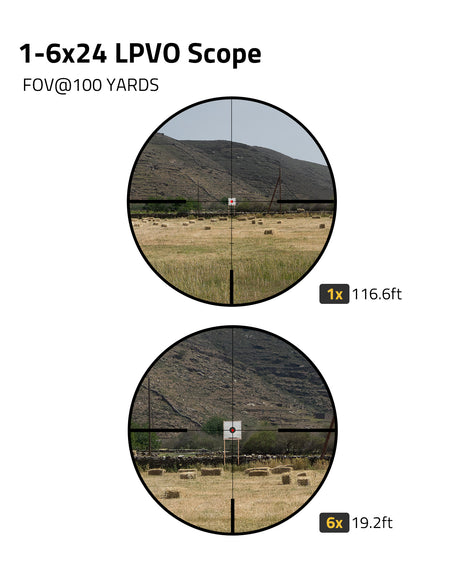
Per un AR-15 con punto rosso o LPVO 1-6x, un reticolo BDC calibrato sul tuo caricamento 5.56 copre il 95% delle attività di caccia e difesa domestica. Per un fucile di precisione calibro .308, un reticolo mil-dot copre tutto ciò che copre un BDC e aggiunge la misurazione della distanza. La scelta sbagliata è il duplex senza riferimenti per la compensazione del tiro durante una caccia al cinghiale a 600 iarde, oppure il reticolo ad albero di Natale per un cervo dalla coda bianca in rapido movimento a 80 iarde.
03Reticolo BDC + calcolatore balistico: come rendere effettivi i riferimenti di mira
Un reticolo BDC è pre-calibrato. Un calcolatore balistico è uno strumento per caricamenti non standard e distanze insolite. Per la maggior parte dei tiratori, il flusso di lavoro è:
- Scegli un reticolo la cui calibrazione pubblicata corrisponda alla tua cartuccia. La maggior parte dei reticoli BDC è pubblicata per 5.56 da 55 grani, .308 da 168 grani, .223 da 77 grani o 6.5 Creedmoor da 140 grani.
- Inserisci i tuoi dati reali in un calcolatore gratuito: peso del proiettile, coefficiente balistico (BC, dai dati pubblicati dal produttore), velocità alla volata (misura il tuo fucile con il cronografo - i valori pubblicati possono differire di +/- 100 fps), distanza di azzeramento, altezza del mirino sopra l'asse dell'anima e atmosfera standard.
- Il calcolatore restituisce una tabella delle correzioni: "300 iarde = 2,1 mil verso l'alto" oppure "400 iarde = 1 sul BDC."
- Conferma con colpi a canna fredda a 100, 300, 500 e 700 iarde. La traiettoria reale ha l'ultima parola.
Tre calcolatori gratuiti sono sufficientemente precisi per le munizioni di fabbrica: Applied Ballistics Lite, Strelok e Hornady 4DOF. Per le munizioni di fabbrica 5.56, .308 e 6.5 Creedmoor, tutti e tre restano entro 1-2 MOA dall'impatto reale fino a 800 iarde. Per le ricariche, le transizioni transoniche oltre 800 iarde o gli ambienti estremi (altitudine, temperatura, vento trasversale), il coefficiente balistico verificato e la velocità misurata fanno la differenza tra un colpo a segno e uno mancato.
 Reticolo BDC
04Verifica a canna fredda a 100, 300, 500 e 700 iarde
Il risultato del calcolatore è un punto di partenza. Il tuo fucile e l'ambiente in cui spari hanno l'ultima parola. La verifica a canna fredda - quattro colpi, uno ciascuno a 100, 300, 500 e 700 iarde, da un bipiede stabile, con il reticolo impostato sulla correzione calcolata - trasforma la previsione del calcolatore in dati confermati. La maggior parte delle munizioni di fabbrica 5.56, .308 e 6.5 Creedmoor resta entro 1-2 MOA dal calcolatore fino a 800 iarde. Oltre 800 iarde, la resistenza nella zona transonica diventa difficile da prevedere e diventano indispensabili un coefficiente balistico verificato e una velocità misurata.
054 errori comuni nell'abbinamento tra reticolo e balistica
- Acquistare un reticolo BDC senza abbinarlo alle munizioni. Il reticolo è calibrato per una specifica munizione. Un BDC per 5.56 calibrato per M193 da 55 grani a 3.200 fps non funzionerà con OTM da 77 grani a 2.750 fps. Abbina la munizione oppure accetta di mancare il bersaglio.
- Utilizzare la velocità pubblicata senza effettuare la misurazione con il cronografo. La velocità alla volata dichiarata dal produttore può differire di +/- 100 fps rispetto al tuo fucile. A 500 iarde, ciò equivale a 2-3 MOA. Misurala una volta con il cronografo e il risultato del calcolatore rientrerà entro 1 MOA.
- Non verificare la calibrazione del reticolo con un tiro a canna fredda. Il reticolo è uno strumento. Il calcolatore è uno strumento. Il tuo fucile e l'ambiente sono la verità. Quattro colpi a canna fredda a 100, 300, 500 e 700 yard sono il modo per trasformare gli strumenti in dati.
06Piano in 4 passaggi per abbinare il reticolo alla balistica
- Scegli la famiglia di reticoli in base all'uso. BDC per la caccia e il tiro a distanza nota, mil-dot per la precisione e le distanze sconosciute, duplex per le brevi distanze.
- Abbina la calibrazione del reticolo alla tua munizione reale. I reticoli BDC sono pubblicati per cartucce specifiche. Scegli un reticolo la cui calibrazione pubblicata corrisponda al peso del proiettile e alla velocità alla volata. In alternativa, scegli un reticolo mil-dot e usa un calcolatore gratuito per qualsiasi munizione.
- Misura la velocità del tuo fucile con un cronografo e inserisci i dati reali in un calcolatore gratuito. Applied Ballistics Lite, Strelok, Hornady 4DOF. Peso del proiettile, coefficiente balistico, velocità alla volata, distanza di azzeramento, altezza del mirino, atmosfera standard.
- Verifica il tiro a canna fredda a 100, 300, 500 e 700 yard. Registra la correzione. La prossima volta che sparerai quella munizione a quella distanza, i riferimenti saranno corretti.
07Domande frequenti
Che cos'è un reticolo BDC?
BDC significa Bullet Drop Compensator, ovvero compensatore della caduta del proiettile. Un reticolo BDC presenta tacche sotto il reticolo centrale, calibrate su specifici valori di caduta del proiettile a determinate distanze per una cartuccia specifica. Posiziona la tacca sul bersaglio invece di regolare l'elevazione e il proiettile colpirà il punto indicato dal reticolo, purché le munizioni corrispondano alla calibrazione pubblicata.
Qual è la differenza tra i reticoli FFP e SFP?
I reticoli FFP (First Focal Plane) si adattano all'ingrandimento: una tacca da 1 mil corrisponde a 1 mil a qualsiasi ingrandimento. I reticoli SFP (Second Focal Plane) mantengono le stesse dimensioni, quindi la subtensione è precisa solo a un determinato ingrandimento (di solito quello massimo). Per la compensazione della caduta e la stima della distanza, l'FFP è più tollerante; per la caccia a distanza ravvicinata, l'SFP mantiene il reticolo sottile e ordinato a basso ingrandimento.