
Featured collection
-
-
$159.99 $136.79
-
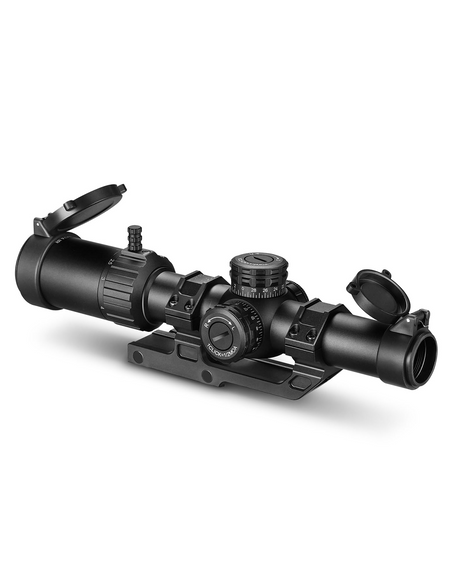
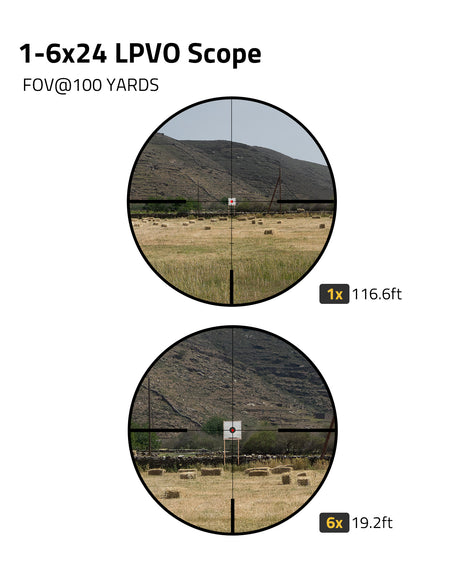
-
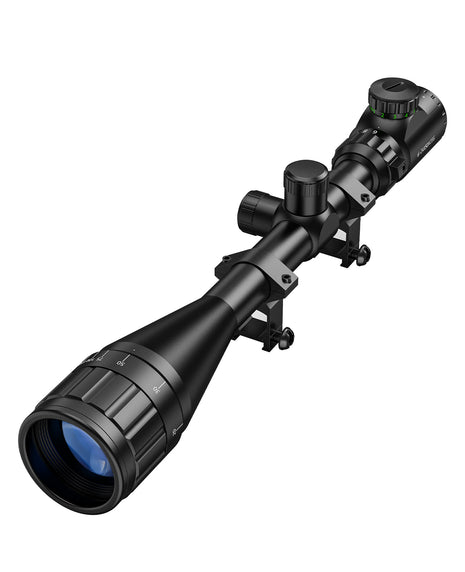
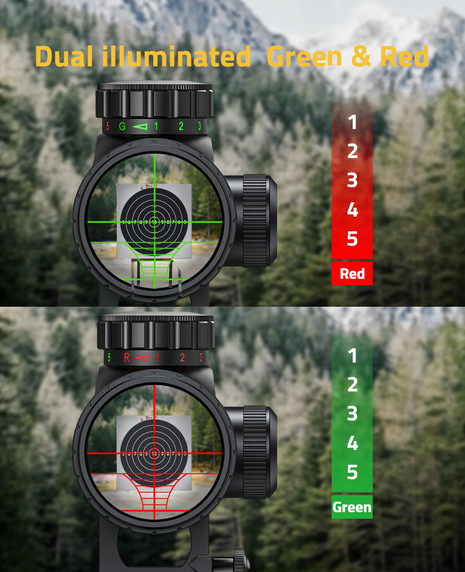
$59.99

Un point rouge est rapide et efficace à moins de 50 yards, mais au-delà, l'absence de grossissement rend la visée nette et précise difficile. Ajouter un magnificateur offre un grossissement de 3× ou 5× tout en conservant la rapidité du point rouge à courte distance lorsqu'il est rabattu sur le côté. Pour la plupart des tirs à moins de 100 yards - défense du domicile, entraînement ou chasse aux prédateurs -, c'est une amélioration solide qui étend votre portée efficace sans remplacer votre optique. Au-delà de 200 yards ou pour la chasse au cerf, une LPVO est un meilleur choix à long terme, offrant une plage de grossissement plus étendue et un réticule adapté aux corrections de hausse et de dérive. Choisissez en fonction de vos distances de tir réelles.
Les viseurs point rouge sont probablement les optiques pour courtes distances les plus populaires actuellement sur le marché. Légers, rapides, avec un champ de vision très ouvert - à moins de 50 yards, ils sont incroyablement efficaces. Mais de nombreux utilisateurs de points rouges finissent par rencontrer un problème familier : à moins de 50 yards, vous êtes redoutable. Au-delà de 50 yards, vous devinez.
Cela ne signifie pas que le point rouge vous fait défaut. Cela signifie simplement qu'il vous faut peut-être un accessoire supplémentaire - un magnificateur. Cet article va droit au but : ce que fait réellement l'association d'un point rouge et d'un magnificateur, quand il vaut la peine d'en ajouter un et quand il serait préférable de passer entièrement à une lunette à grossissement variable.
Un point rouge est conçu pour une seule chose : tirer rapidement à courte distance. Aucun grossissement, les deux yeux ouverts, une vue dégagée. Dès que la cible apparaît dans votre champ de visée, placez le point dessus et tirez. À moins de 50 yards, il est pratiquement imbattable.
Mais le point rouge présente une limite évidente : ce n'est qu'un point unique. Aucun repère de contre-visée, aucune marque de dérive, aucun mil-dot - rien pour vous aider à compenser la chute de la balle ou corriger le vent. À 100 yards, ce point de 2 MOA couvre environ deux pouces de la zone de la cible - suffisamment pour masquer les points de visée précis. Et sans grossissement, vous ne pouvez pas voir clairement ce que vous visez - est-ce un cerf ou une souche ? À 100 yards avec un point rouge, il est honnêtement difficile de faire la différence.
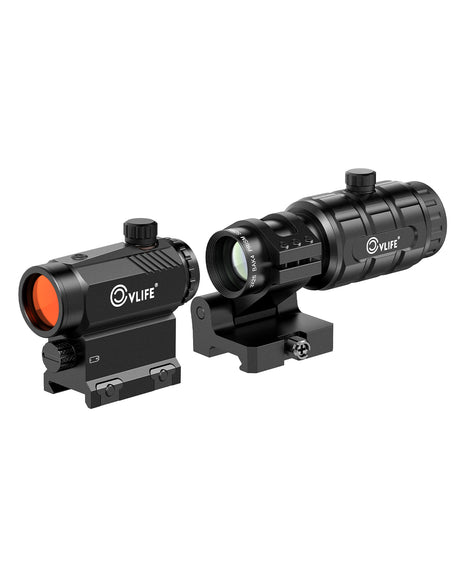
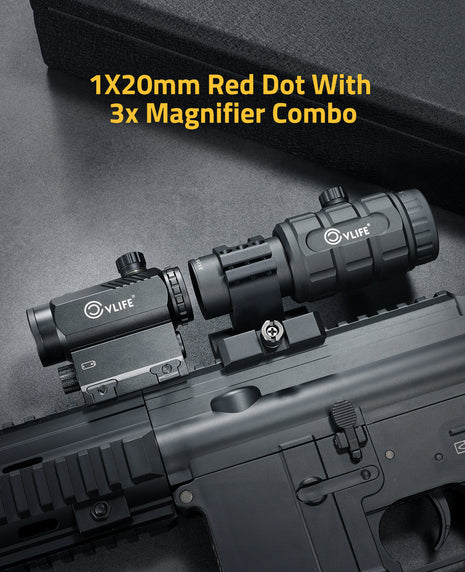
Un magnificateur se monte derrière votre point rouge. Rabattez-le en position et il augmente votre grossissement à 3× ou 5×. Ce qu'il résout est simple : vous pouvez réellement voir. À 100 yards, vous pouvez distinguer des détails qui vous échapperaient autrement, et votre point de visée devient suffisamment précis pour être fiable.
Plus important encore, il préserve la polyvalence du point rouge. Lorsque le magnificateur est rabattu sur le côté, vous disposez toujours d'un point rouge pur - rapide, les deux yeux ouverts, prêt pour les courtes distances. Besoin de tirer plus loin ? Relevez le magnificateur et vous disposez en quelques secondes d'une optique grossissante à faible grossissement. Cette capacité - un fusil, deux modes - est tout l'intérêt.
Pour le dire simplement : ajouter un magnificateur revient à obtenir deux systèmes de visée pour le prix d'une petite amélioration - un point rouge pour les tirs rapprochés, un grossissement pour les distances moyennes, avec un simple mouvement du poignet pour passer de l'un à l'autre.

Si vous utilisez un AR-15 ou un fusil de sport moderne similaire, en tirant principalement à moins de 100 yards - que ce soit au stand ou sur des prédateurs comme les coyotes et les sangliers - et que vous êtes déjà à l'aise avec votre viseur point rouge, un magnificateur constitue un excellent complément.
Il en va de même si votre fusil est configuré pour la défense du domicile ou l'entraînement tactique, avec des séances occasionnelles au stand à 100 yards. Vous n'avez pas besoin d'apprendre un nouveau réticule ni de vous habituer à un nouveau système de visée. Cela étend simplement votre portée efficace sans changer vos habitudes.
Si vous tirez régulièrement au-delà de 200 yards, ou si vos usages principaux sont la chasse au cerf et le tir sur cible à longue distance, cessez de vous encombrer d'un magnificateur et passez à une lunette à grossissement variable.
Voici pourquoi : un magnificateur offre au maximum un grossissement de 3× ou 5×. Un véritable LPVO (par exemple 1-6× ou 1-8×) offre une plage de grossissement plus étendue et un vrai réticule avec des repères précis de compensation de trajectoire et de correction du vent. De plus, une configuration point rouge + magnificateur se compose de deux équipements : davantage de poids et d'espace occupé sur le rail. Pour un fusil principalement utilisé à moyenne ou longue distance, une seule lunette variable intégrée est plus épurée, plus légère et plus fiable.
Voici une règle générale pratique : si plus de la moitié de vos tirs dépassent 100 yards, un magnificateur n'est en réalité qu'une étape intermédiaire. Il règle temporairement le problème du « je n'arrive pas à voir », mais vous finirez par utiliser ce grossissement 3× de plus en plus souvent — et c'est à ce moment-là que vous devrez admettre qu'une lunette variable est réellement nécessaire. Si vous vous surprenez à vouloir un peu plus de grossissement à chaque séance au stand, remplacez cette combinaison par un LPVO et ne vous retournez pas.

|
Scénario |
Configuration recommandée |
Pourquoi |
|
Défense du domicile + séances occasionnelles au stand (jusqu'à 100 yd) |
Point rouge seul |
Cela suffit. Inutile d'ajouter quoi que ce soit. |
|
Défense du domicile + séances fréquentes au stand (100-200 yd) |
Point rouge + magnificateur 3× |
Équilibre entre rapidité à courte distance et précision à moyenne distance. |
|
Entraînement tactique + chasse au coyote |
Point rouge + magnificateur 3× |
Changement flexible, tout en gardant un poids raisonnable. |
|
Chasse au cerf + tir à longue distance (200 yd+) |
LPVO ou lunette variable classique |
Le point rouge n'est plus l'outil adapté. |
|
Un seul fusil pour tout faire |
Point rouge + magnificateur, ou LPVO 1-6× |
Les deux conviennent ; cela dépend des préférences personnelles. |
Un point rouge avec un magnificateur n'est pas un gadget et n'est pas réservé aux tireurs expérimentés. La logique est simple : conserver votre rapidité à courte distance et combler le manque de visibilité à moyenne distance. Si votre usage réel correspond à ce créneau idéal, c'est probablement l'amélioration la plus rentable que vous puissiez faire : inutile d'abandonner un point rouge que vous appréciez déjà, ou de réapprendre un système de visée entièrement nouveau.
Q1 : Puis-je utiliser un magnificateur avec n'importe quel viseur à point rouge ?
R : La plupart des magnificateurs fonctionnent avec les points rouges standard, mais deux éléments sont à vérifier. Premièrement, le diamètre du tube : la plupart des points rouges font 30 mm, mais certains font 20 mm ou 1 pouce. Assurez-vous que le montage du magnificateur est compatible. Deuxièmement, la luminosité du réticule : certains points rouges ne sont pas assez lumineux pour rester visibles une fois grossis, surtout en plein jour. Si votre point s'efface à 3×, ce n'est pas la faute du magnificateur ; votre point rouge manque simplement de puissance.
Q2 : Le magnificateur affectera-t-il le réglage du zéro de mon point rouge ?
R : Non. Le magnificateur ne change pas le point visé par le point rouge : il fait simplement paraître le point et la cible plus grands. Le réglage du zéro est toujours déterminé par le point rouge lui-même. Cela dit, un magnificateur mal monté peut ajouter une erreur de parallaxe s'il n'est pas parfaitement aligné avec le point. Fixez-le solidement, centrez le point dans le champ de vision du magnificateur et tout ira bien.
$159.99 $136.79
$59.99


