6 solutions classées par effort · 1 tableau · guide de la sévérité de l’astigmatisme
Pourquoi un point rouge ressemble-t-il à une étoile pour moi ?
La plupart des points rouges projettent une petite LED sur un miroir incurvé à l’intérieur de l’optique. Le miroir réfléchit le point vers votre œil sous la forme d’une image virtuelle à l’infini optique. Si votre œil est rond et que le point est rond, vous voyez un point rond. Si votre cornée ou votre cristallin présente une courbure irrégulière - de l’astigmatisme, selon l’Académie américaine d’ophtalmologie - le point se focalise en plusieurs endroits de votre rétine au lieu d’un seul, et votre cerveau l’interprète comme un éclat d’étoile, une comète ou un flou.
L’orientation du flou est révélatrice. Faites pivoter le point rouge de 90 degrés dans son montage. Si l’éclat d’étoile pivote avec l’optique, celle-ci présente un défaut. Si l’éclat d’étoile conserve la même orientation, quelle que soit la rotation de l’optique, le problème vient de votre œil. Ce test d’une minute est le diagnostic le moins coûteux que vous puissiez effectuer.
Un magnificateur 3x aide-t-il vraiment en cas d’astigmatisme ?
Oui, dans la plupart des cas, mais pas tous. Un magnificateur 3x multiplie par 3 la taille apparente du point, ce qui donne à votre cerveau davantage d’informations visuelles pour reconstituer une forme nette à partir d’une source floue. Le flou est toujours présent, mais la cible plus grande est plus facile à lire.
La raison pour laquelle un grossissement 3x aide davantage qu’un 5x : à 5x, vous agrandissez le point et son flou dans les mêmes proportions, et à 5x la distorsion devient si importante qu’elle domine l’image. Un grossissement 3x est la limite pratique pour les tireurs astigmates. En cas d’astigmatisme sévère, la véritable solution de repli est un réticule gravé (lunette prismatique ou LPVO), car le réticule est physiquement gravé dans le verre et non projeté par une LED.
Il y a un cas où un magnificateur aggrave le problème : si le point du point rouge est déjà très petit (2 MOA ou moins) et que votre astigmatisme est sévère, l’agrandissement 3x peut révéler chaque irrégularité de votre cornée sous la forme d’un éclat d’étoile chaotique. Dans ce cas, préférez un point plus grand de 6 MOA ou un réticule circulaire de 65 MOA, car votre cerveau centre mieux un cercle qu’un point flou.
6 solutions, classées par effort
- Baissez la luminosité. Les points trop lumineux paraissent flous à tout le monde, pas seulement aux personnes astigmates. Utilisez le réglage le moins lumineux qui reste clairement visible sur la cible. Effort : 30 secondes.
- Passez à un réticule à point plus grand ou à point encerclé. 2 MOA → 6 MOA, ou un cercle de 65 MOA (style MRS de Holosun). Le cercle reste une forme nette même lorsque le point central s’élargit. Effort : amélioration du point rouge pour 30 à 60 $.
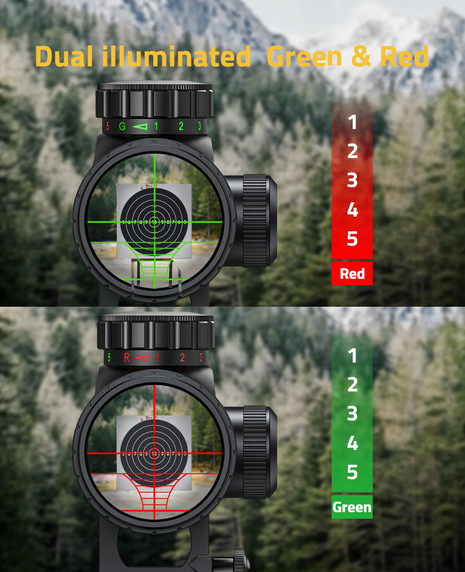
- Essayez une autre couleur de point. Certains types d'astigmatisme réagissent mieux au vert qu'au rouge, car la sensibilité photopique de l'œil atteint son maximum à 555 nm dans le vert. Il est recommandé de tester les deux. Effort : 5 minutes pour changer.
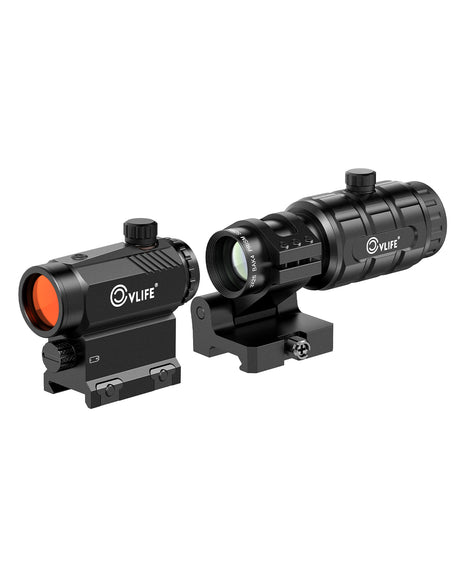
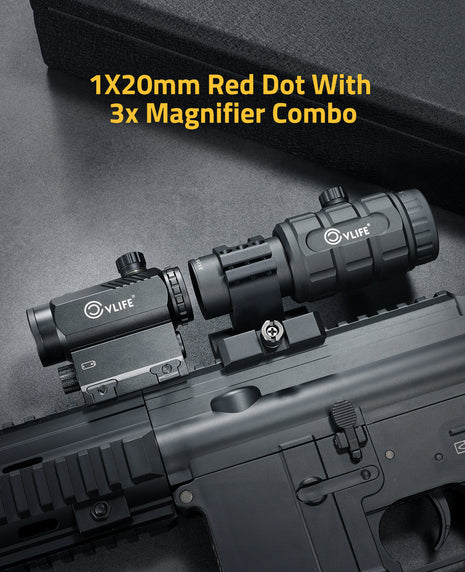
- Ajoutez un grossisseur 3x. Il s'agit de la correction structurelle. Le grossissement 3x agrandit le point jusqu'à une taille que votre cerveau peut distinguer malgré la bavure. Le CVLIFE JackalHowl 3X avec un dégagement oculaire de 2,95" ou le CVLIFE Eaglefeather 3X avec un dégagement oculaire de 3,54" ajoutent tous deux un grossissement 3x grâce à un montage rabattable sur le côté. Effort : 80 $ à 170 $ + 5 min pour le montage.
- Effectuez le test de rotation. Faites pivoter le point rouge de 90 degrés dans son montage. Si l'effet d'étoile pivote avec lui, l'optique est en cause. Si l'effet d'étoile reste en place, c'est l'œil. La réponse en 1 minute à la question « est-ce moi ou l'optique ? ». Effort : 1 minute.
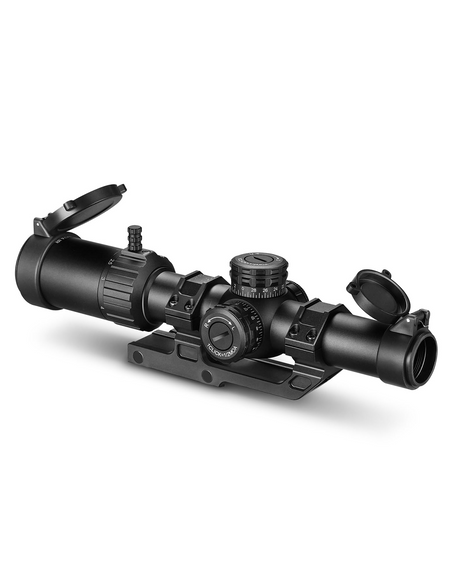
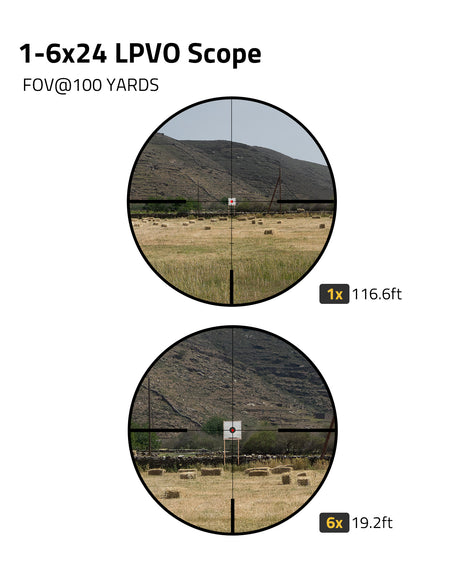
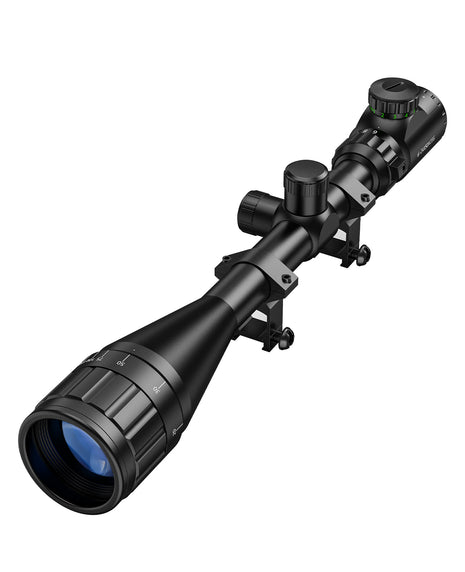
- Passez à une optique à réticule gravé. Lunette prismatique ou LPVO. Le réticule est physiquement gravé dans le verre, et non projeté par une LED, de sorte que l'astigmatisme ne peut pas le faire baver. La solution de secours lorsque les cinq premières corrections ne suffisent pas. Elle est recommandée uniquement en dernier recours, car vous renoncez à la simplicité d'un point rouge 1x. Effort : remplacement complet de l'optique, 150 $ à 500 $.
La gamme de grossisseurs CVLIFE selon le degré d'astigmatisme
Choisissez selon la gravité :
| Degré d'astigmatisme | Meilleur choix de départ CVLIFE | Pourquoi |
|---|---|---|
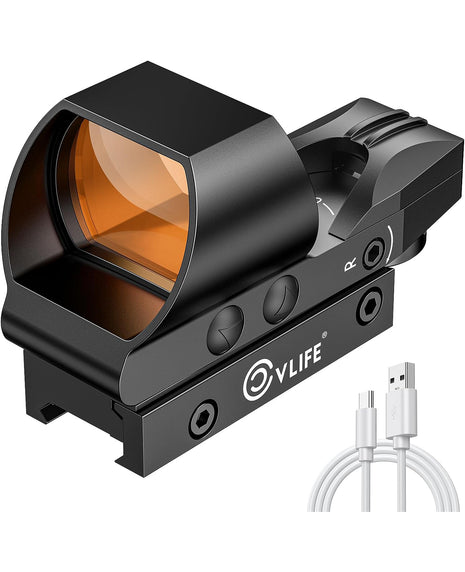
| Léger (bavure uniquement à forte luminosité) | Commencez par réduire la luminosité ; aucun grossisseur n'est nécessaire. Essayez le combo point rouge/vert à réticules multiples et grossisseur 3X CVLIFE comme ensemble complet. | Un éclairage à 10 niveaux de luminosité serait utile. L'ensemble offre 3 formes de réticule, plus un grossissement 3x pour une utilisation ultérieure. |
| Modéré (bavure à toutes les luminosités, mais visée encore possible) | CVLIFE JackalHowl 3X + n'importe quel point rouge de 6 MOA ou à réticule en cercle avec point. | Un grossisseur 3x + un réticule à point plus grand constituent la correction structurelle. Le dégagement oculaire de 2,95" du JackalHowl est tolérant avec l'appui-joue de l'AR-15. |
| Sévère (bavure, effet d'étoile ou point totalement invisible) | Évitez le grossisseur et passez directement à une lunette prismatique ou une LPVO CVLIFE avec réticule gravé. | Le grossisseur amplifie la distorsion. Un réticule gravé n'est absolument pas affecté par l'astigmatisme. |